
The 12 Most Preposterously Awful Things About M. Night Shyamalan?s ?The Happening? and ?Lady in the Water?
 By Zac Bertschy
It would seem the entirety of the internet?and probably 90 percent of the nation?s movie critics, not to mention most of the studio executives he?s worked with?love to hate on M. Night Shyamalan. People cite a variety of reasons?most commonly, his ego, and the increasingly goofy ?twist endings? that populate his films. For a while, the endless torrent of negativity aimed at Shyamalan seemed excessive?after all, The Sixth Sense, Unbreakable and Signs were pretty good. Then The Village came out, and it was pretty terrible, so the hatred seemed a little more justified.
And then Shyamalan gave everyone a concrete reason to dismiss him forever?Lady in the Water, a movie so awful it erased most of the goodwill people still had left over from his earlier films. In honor of Shyamalan?s new film The Happening, which opened last Friday, we at TR were going to point out these problems, until we discovered a twist of our own?The Happening is somehow, against all logic, even worse than Lady in the Water.
Incredible, but true. But you?re welcome to compare for yourself, as here are the six more insultingly awful parts?moments, characters, plot device, outrageous egomania on the part of the director?in both flicks. Be warned: contained herein are massive spoilers for The Happening, but you shouldn?t give a shit because you shouldn?t see it anyway.
EXHIBIT A: LADY IN THE WATER
6) Magic Water People Prevent War
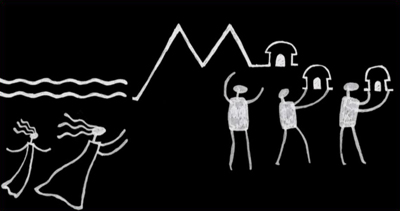
The main thrust behind the plot of Lady in the Water is that a long time ago, humankind interacted with a bunch of magical water people called ?The Narf? (insert Thundercats joke here) who kept them in check. According to the heavy-handed opening narration, mankind?s ?need to own things? drove them inland and they left the Narf behind. Then of course the humans started warring with one another, because I guess the only thing keeping us from killing each other was the advice of a bunch of undersea pacifists. Eventually the Narf ?stopped trying? (seriously, that?s what the narrator says) and just retreated to the ocean to bitch about how we don?t listen, or something.
5) There’s a Zany Cast of Lovable Psychotics
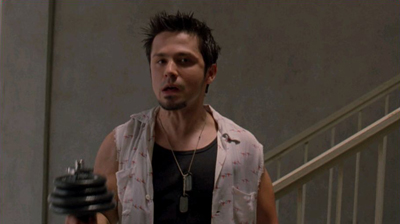
The film starts out by introducing the movie?s second most ridiculous character, a movie critic named Harry Farber, who has just moved into The Cove, the apartment building where the rest of the movie takes place. He?s met by apartment manager Cleveland Heep, played by a stuttering Paul Giamatti, who then proceeds to show Farber around the apartment complex and introduce him to all of his zany neighbors, exactly in the way that nobody ever does. Firstly, it?s an apartment complex, not a dormitory. Secondly, the ham-fisted way of introducing The Cove?s residents?including stereotypical Japanese girl who speaks in broken English and dresses like a pop star from the ’80s, a crazy workout guy who?s only building one side of his body, and token lovable ethnic family?is more than a little insulting to the viewer. If it weren?t so transparent, it wouldn?t be so insulting to watch.
4) It’s the Story of “Story”
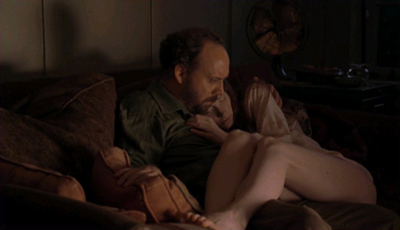
The movie centers around Heep?s discovery of a Narf in the community pool, who then proceeds to stand around, stare into nothingness, say cryptic things, respond with blank gazes to obvious questions and generally behave like a macguffin. It?s not really clear what the hell she wants, but Shaymalan keeps us all riveted by loading the film up with long shots of Heep and the Narf staring at each other. The worst thing, however, is that Shyamalan named this character ?Story?. That?s right; the thing driving the story of his film is actually fucking named ?Story.”
3) There’s a Mean Dog Made of Sticks
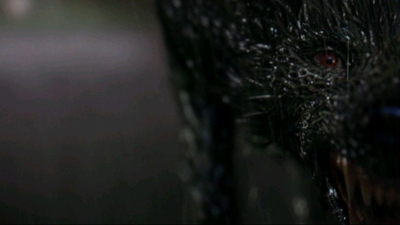
Initially, while Heep tries to decipher Story?s glassy-eyed prophecies, they?re routinely and inexplicably attacked by a mean dog made of twigs called a ?Scrant.” The Scrant?s reason for existing on a Narf-only diet (and if you?re not sick of these contrived fairy tale creature names yet, good for you) isn?t revealed until it?s explained to Heep that the Scrant are basically the law enforcement officers of these evil overload monkey things who live in the trees, and for some reason they want to keep the Narf from ever contacting mankind again. Also they are apparently ?so evil anyone who looks at them dies.” Please remember, this theoretically was written by a adult man, not a second grader.
2) The Movie Critic in the Movie Notices How Shitty the Movie Is
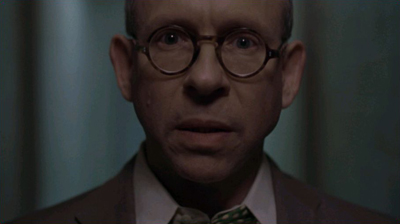
At one point, the residents of The Cove are all involved in the whole Narf thing and realize that they all have roles to play in getting Story back to her own world. One of them is a movie critic, who spends most of his time bristling at the plot developments?every time something happens, he?s there to talk openly about how contrived or stupid or nonsensical it is. At this point in the film, he?s an unintentional audience identification character; it?s impossible not to nod your head at his observations, even though he?s obviously supposed to be hated, because everyone else in the complex thinks he?s a dour jackass (not to mention he actually calls himself an ?unlikable side character? in one of his many deconstructionist analyses). Naturally, he?s mauled by the Scrunt.
What happened here is that Shyamalan honestly thought it?d be a good idea to childishly write in a stereotypical critic who criticizes the movie as it?s happening and then gets eaten by a monster, as if to say ?Ha ha, take that you critics!? Seriously.
1) The “M” in M. Night Shyamalan Stands for “Messiah”
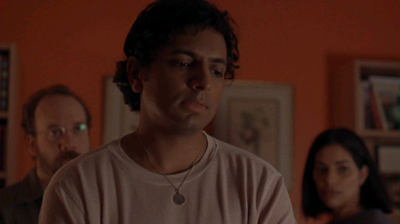
Okay, plenty of directors cast themselves in their own films. It?s standard practice?maybe they have a small cameo appearance, or they?re directing themselves. If the director happens to be multi-talented, why not?
In Lady in the Water, Story tells Heep that she?s come to the Human world to contact a writer whose writing will literally save the world. So Heep goes around the apartment complex asking all of the tenants if they?re writing anything; turns out one guy is, and guess what, it?s a book about his thoughts on how to solve all the problems in the world! Guess who?s playing that guy? Shyamalan himself. No kidding.
Shymalan has written a story wherein a writer is prophesized to be so brilliant, his prose so spectacular, that it will save the world. Shyamalan then proceeded to cast himself in the role of the messianic writer. There has ever been a more ridiculously self-fellating casting decision in the history of film. It?s as if Shyamalan said to himself, ?Hmm? what?s the best way to get the audience to tell me to go fuck myself??
So that’s Lady in the Water; Citizen Kane it isn’t. But can The Happening possibly be stupider? The answer is on the next page! And it’s yes! It’s much stupider!
—-
EXHIBIT B: THE HAPPENING
6) No Acting Was Allowed
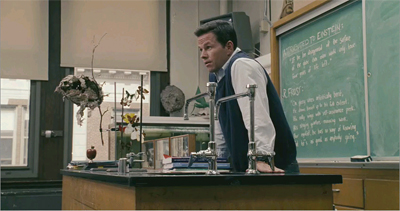
People love to give Mark Wahlberg a lot of shit; be it for his salad days cavorting with a particularly Funky Bunch or his early role in Tim Burton?s epically terrible Planet of the Apes movie, but the truth is, he?s a good actor. He gets an immense amount of leeway for Boogie Nights and was nominated for an Oscar for The Departed. So what in the fuck is he doing in this movie? Destroying all the goodwill he ever received.
Wahlberg?s delivery is so terrible it derails the picture from frame one. It doesn?t help that everyone else around him?normally talented folks like Zooey Deschanel and John Leguizamo and oh, every other person in the film also turns in a laughably bad performance, but Wahlberg has the misfortune of having more screen time than anyone else in a film where the director clearly told the actors ?Okay, now for this scene, I want you to be as terrible as you possibly can. I mean, like career-destroyingly bad.? It doesn?t help that Wahlberg is playing a high school science teacher named Elliot and manages to come across as so empty-headed and clueless that he couldn’t work a pencil-sharpener, much less bunsen burner.
5) iPhone Lions
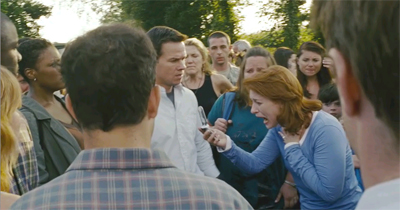
By the time you reach the 15-minute mark in The Happening it?s already clear that the movie is terrible because every line has been delivered with all the acting skill of a 7th grade drama student, but things really start to go down when a random stranger shows Elliot a video on her iPhone from Philadelphia she just received from her sister where a zookeeper is feeding himself to the lions as a result of being ?happened? (no, that?s not what they say in the film but it?s just retarded enough to have been included). He provokes one lion by reaching his hand out and the lion just rips his forearm off, and then they cut back to another lion ripping his other forearm off, as though the lions thought their bizarre, sudden hunger for human flesh should be choreographed. It doesn?t help that the CG is terrible and it looks incredibly fake even though it?s supposed to be a cellphone video, where they could?ve at least blurred it up a bit.
4) It’s Man Vs. Grass
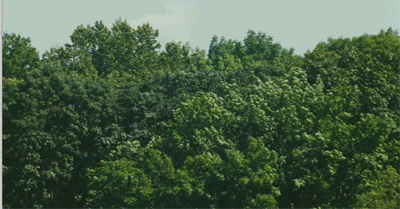
By now the ?big reveal? of The Happening has probably been spoiled for you; it turns out plants in the northeastern part of American have decided that people are jerks and are polluting the earth too much and it?s time to exterminate. So they start excreting toxic gasses that make people kill themselves in increasingly elaborate ways (one guy starts up a thresher and throws himself under it, the toxic gas apparently not powerful enough to cloud his thresher-operating abilities) but the ludicrousness of this story does not hit you in full force until Elliot?s gang of refugees split off into three groups, just before a huge gust of wind rolls across the plain and chases each group individually, like a pack of wolves, catching some of the slower, weaker ones. That?s right?you?re watching a tense, hurried chase where humans are the prey, and the hunter is sentient wind and crab grass.
3) Love Hurts

The ?B? plot in The Happening deals with the weak relationship between empty-headed, doe-eyed Elliot and his empty-headed, doe-eyed girlfriend Alma, played by Zooey Deschanel. Alma has a deep, dark secret: she lied to Elliot one night and told him she was working late when in reality she was out having tiramisu with a guy named Joey. Just when the evil plant wind menace hits a fever pitch, Elma confesses her cake-eating infidelity to Elliot, who then decides to get back at her later with this baffling exchange:
Elliot: ?Well I just wanted to tell you that one time I was in a pharmacy and there was a really hot pharmacist and I almost bought a bottle of cough syrup that I didn?t even need so I would have an excuse to talk to her!?
Alma, pausing, staring: ?Are you? joking??
Elliot, pausing, staring, slowly nods his head.
Alma, with tears welling up in her eyes: ?Th?THANK YOU!?
What the fuck is this scene even doing in this movie? Who writes dialogue like this? Oh right, M. Night Shyamalan does.
2) There’s a Needless and Needlessly Insane Old Lady
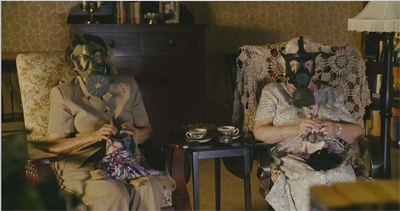
The final act of The Happening is basically a completely different movie from the rest of the film. Elliot and Alma come across a ramshackle old farm house in the middle of nowhere, trying to get as far away from other people as possible to avoid the evil wind. Turns out a cranky old lady lives here, who notices that Elliot?s posse must be hungry because Elliot ?seems to be eying her lemon drink?. Turns out she?s a crazy old bat who lives in isolation and hates the world. She goes from behaving like a normal cranky old lady to accusing Elliot of wanting to murder her in her sleep, and then accuses him of wanting to steal her junk before screaming at him to get out of her house. This takes up a good 15 minutes of the film and the villain has switched from windy trees to this coot, who at long last wanders outside for no reason and gets Happened (yep, gonna keep using that!) and uses her head to bash in the windows of the house so that Elliot isn?t safe from the wind either. And to think, if they?d left out this completely meaningless subplot, everyone could?ve left the theater that much earlier.
1) The End (Thank God)
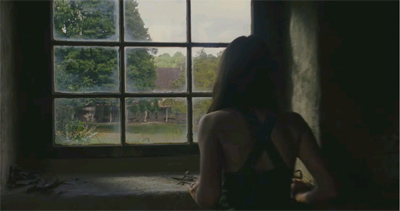
At the tail end of the film Elliot is separated from Alma, who went out to explore the old spring house behind the farm, connected to the main house by an underground pipe that allows communication between the two buildings. Naturally, the tempest outside has all of the plant life surrounding the farm whipped up in a tizzy, and Elliot huddles in the basement of the farm house, communicating with Alma using the speaking pipe. They decide that they love eachother too much to be apart when they die (notably by discussing a mood ring Elliot carries around, and ?neither of them can remember the color for love!?). So, instead of holding his breath and running the 30 feet to the spring house to duck inside to avoid the wind, Elliot just slowly steps outside, takes Alma?s hand and they stand there while the wind blows around. Turns out the Happening is over and the wind isn?t deadly anymore. Why? Who cares? The movie?s over, right?
Nope! Turns out France is next! We?re treated to a final scene where two guys are walking in Versailles and the wind starts rustling the trees, and suddenly everyone halts in their tracks, and one of the French guys gets a ?Sacre Bleu!? face on and then credits. So I guess we can all look forward to Shyamalan?s next masterpiece, It?s Happening Again!.
So which of these films is worse? To be frank, this list doesn?t contain half of the incredibly stupid shit that goes on in The Happening, just the stupidest. If you used to win arguments about Shyamalan?s merits by merely mentioning Lady in the Water, you have a new trump card.
About The Author

Robert Bricken is one of the original co-founders of the site formerly known as Topless Robot, and its first editor-in-chief, serving from 2008-12. He brought the site to prominence with “nerd news, humor and self-loathing” as its motto, raising it from total internet obscurity to a readership in the millions, with help from his savage “FAQ” movie reviews and Fan Fiction Fridays. Under his tenure Topless Robot was covered by Gawker, Wired, Defamer, New York magazine, ABC News, and others, and his articles have been praised by Roger Ebert, Avengers actor Clark Gregg, comedian and The Daily Show correspondent John Hodgman, the stars of Mystery Science Theater 3000 and Rifftrax, and others. He is currently the managing editor of io9.com. Despite decades as both an amateur and professional nerd, he continues to be completely unprepared for either the zombie apocalypse or the robot uprising.