
Science Fiction’s 6 Excuses for Everything
 |
By Cory Casicato
Science fiction was born as the literature of ideas, but by the time it made it to TV and the movies, it had developed its own clich? ridden set of plot devices and crutches. Each era has its favorite cheap sci-fi and horror deus ex machine. Most of them seem plausible enough at first, but the more they are used – and the more the reality behind them becomes familiar in everyday life – the less believable they become. Unfortunately, it takes the geniuses behind our entertainment a little while to catch up. Therefore we’ve provided this overview of the most popular and overused science fiction memes, complete with some advice to writers, directors and producers about how to proceed with each.
1) Lightning/Electricity
What they think it
does: Grant superpowers (Powder, What Women Want, X-Files episode “D.P.O”); reanimate the dead (Frankenstein, The Chilling);
grant sentience to a robot (Short Circuit).
What it actually
does: Flash fry/electrocute the living shit out of you; power your
ridiculous entertainment center.
What it might do in
the future: The same thing. We pretty much got this one figured out.
The original sci-fi catch-all causative factor was
electricity, usually in the form of lightning. Back before electricity was as
mundane and ubiquitous as the air we breathe, it was considered a powerful,
semi-magical force, which led to it being called on by lazy sci-fi writers to
explain, well, everything. Is there anything lightning can’t do? Even in the
modern era, where there aren’t many people unacquainted with the workings of
electricity, lightning and other forms of electricity crop up as explanations
for any number of bizarre phenomena with plausibility-straining frequency.
Verdict: It’s long
past due that lightning and/or electricity be abandoned as any sort of
causative factor for anything but third degree burns and severe shocks.
2) Radiation
What they think it
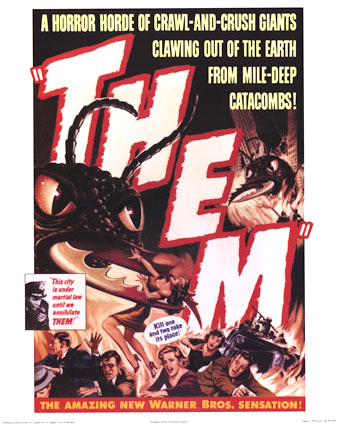
does: Cause enormous growth (Them!);
awaken ancient monsters (Godzilla);
grant superpowers (The Hulk, any
number of other superheroes); reanimating the dead (Creature with the Atom Brain)
What it actually
does: Makes you really, really sick (loss of hair/teeth/skin/etc.); kill
you; generate energy and/or ginormous fucking explosions.
What it might do in
the future: The same thing. No surprises here either. Maybe more power
plants.
Just as people were getting used to this new-fangled
electricity thing, along came the atomic age and its wonderful radiation to
take its place. Pretty soon, our friend the atom was filling every gaping plot
hole Hollywood sci-fi writers could dig even more efficiently than lightning
had done a few short years ago. Now it seems, at best, self consciously kitschy
and retro. At worst, it just seems lazy and stupid.
Verdict: The
all-time great accomplishment of radiation in the world of entertainment has to
be awakening/enraging Godzilla, because the idea of a giant, prehistoric
monster that is also an anti-nuclear activist is just too fucking awesome.
There’s no way to top that. Radiation’s real effects are terrifying enough –
stick to those, movie people.
3) Toxic Waste
What they think it
does: Raise the dead (Dance of the
Dead, Hell’s Ground); mutate
people into hideous and/or superpowered monsters (Toxic Avenger); make people all melty (Robocop); grants superpowers (Modern
Problems).
What it actually
does: Gives you and your kids cancer; causes birth defects; makes your
water smell and taste like death.
What it might do in
the future: Continue to seep into the water supply.
Toxic waste comes in chemical, biological or nuclear flavors
(or some combination of the three). Regardless of the variety, it is nasty
stuff, without a doubt. Ingest or be exposed to it and your life expectancy
will definitely take a hit. But even if you’re living off of and bathing in the
stuff, you’re not going to get the kind of impressive effects filmmakers
attribute to it. You will die horribly – but you won’t develop strange powers
(sorry, Toxic Avenger!).
Verdict: Toxic
waste is often dealt with more-or-less realistically in weepy movies like Erin Brockovich, so there’s even less
reason it should be accepted as any sort of explanation for fantastical
effects. There is probably an untapped genre of true horror based on the real
effects of toxic waste, though…
4) Computers/The
Internet
What the movies think
it does: Control any machine ever built, frequently even if there’s no
interface between them (Hackers);
spontaneously achieve sentience/free will and turn against their makers (Demon Seed, War Games, 2001); provide the answer for any question you ask it
and/or magically extract information that isn’t present in the original source
(Midnight Madness, every CSI episode ever).
What they actually
do: Store, process and display information fed into it; download porn and
mp3s; aggravate old people.
What they might do in
the future: Spontaneously generate intelligence; be built into everything,
so maybe someday we can control anything with a few keystrokes (and the right
password).
From the ’50s to the ’80s, when computers were all
new-fangled and mysterious, it was marginally believable to have them doing all
sorts of ridiculous things, even if most of those ideas were flimsy at best.
Now, it’s just retarded. Every man, woman and child in the U.S. is exposed to
and probably uses computers on a daily basis, but writers still treat them as
sci-fi magic boxes capable of doing anything from enhancing video to show
things out of the camera’s range to shutting down the entire electrical grid
with a couple of keystrokes.
Verdict: Some of
computers’ more fantastic powers (intelligence, 100 percent interconnectivity)
may actually come true — someday. Movies and shows using these plot elements
continue to be plausible, but stop making them happen using MacBooks and
beat-up Pentium clones: we know what the computers we use every day are capable
of. It’s impressive but it isn’t magic.
5) Genetic
engineering
What the movies think
it does: Cheaply, quickly and easily develop monstrous man/animal hybrids (Humanoids from the Deep, Ssssss, Hammerhead Shark Frenzy, Island
of Dr. Moreau); resurrect the dinosaurs (Jurassic Park); grant superpowers (Spider-Man the movie).
What it actually
does: Create shinier tomatoes that can be patented; replace your childhood
pet with an exact (or possibly slightly defective) duplicate for the cost of a
small yacht; the occasional glow-in-the-dark tropical fish; grow an ear on a
mouse’s back; piss off European consumers.
What it might do in
the future: Resurrect extinct animals; clone your pets ever more cheaply;
let parents pick their kids’ sex, IQ and eye color; eliminate diseases.
In real life, genetic engineering is used primarily to
create drought and disease resistant crops, which is unspeakably dull. Sure, it
does get the occasional chance to grow a human ear on a mouse’s back, but
mostly it’s just another way for very large corporations to make more money. In
the movies it’s more of a catch all for turning any living thing into any other
living thing, real or imagined, or hybrid of any two living things – basically
creating monsters and/or warning us not to mess with mother nature.
Verdict: It seems
unlikely that genetic engineering is going to be used to create monsters, as
awesome as that would be. It’s probably time to shift this meme away from
monster-movie matinees and SciFi channel movies of the week and toward snooty
think-pieces like Gattaca as genetic
engineering’s unlimited promise continues to be fulfilled in the most
uninteresting ways possible.
6) Nanotechnology
What they think it
does: Allow cars using it to change shape and self-repair (the new Knight Rider); become self-aware and
take over the ship (Star Trek: TNG
Nanite episode).
What it really does:
No one is really sure yet. Not much at the moment besides get a certain subset
of scientists and nerdy futurists excited.
What it might do in
the future: Deliver medicines; make superstrong materials; create
self-repairing objects; grant us immortality; become sentient and take over the
ship/world.
The newest sci-fi flavor of the week is nanotechnology –
tiny little machines that can go anywhere, and purportedly, do anything.
Already it’s been used to death in written fiction (Greg Bear, Michael
Crichton, etc.) and more and more it is creeping into TV and the movies. Since no
one has any idea what it actually might be used for, it’s everyone’s best
friend – for now.
Verdict: You’re
okay for now, keep at it. Don’t over do it and kill the goose that is laying
the golden eggs, though. And when real nanotech starts rolling out, pay
attention so you don’t look quite so ridiculous as in some of these other
cases.

About The Author

Robert Bricken is one of the original co-founders of the site formerly known as Topless Robot, and its first editor-in-chief, serving from 2008-12. He brought the site to prominence with “nerd news, humor and self-loathing” as its motto, raising it from total internet obscurity to a readership in the millions, with help from his savage “FAQ” movie reviews and Fan Fiction Fridays. Under his tenure Topless Robot was covered by Gawker, Wired, Defamer, New York magazine, ABC News, and others, and his articles have been praised by Roger Ebert, Avengers actor Clark Gregg, comedian and The Daily Show correspondent John Hodgman, the stars of Mystery Science Theater 3000 and Rifftrax, and others. He is currently the managing editor of io9.com. Despite decades as both an amateur and professional nerd, he continues to be completely unprepared for either the zombie apocalypse or the robot uprising.