
6 Truly Bizarre Video-Game Company Origins
 |
| WIIIIIIIIIIIIIIIIIIIIIIIIIIIIIIIIIIIIIIIIIIIIIIIIIIIIIIIIIIIIIIIIIIIIIIIIIIIIIIIIIIIIIIIIIIIIIIIIIIIIIIIIIIIIIIIIIIIIIIII U |
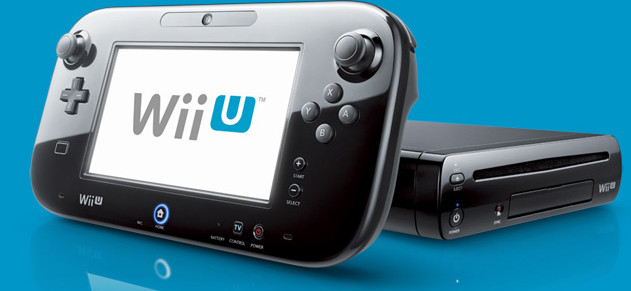
On November 18, Nintendo will rip the motion-sensing rug out from under the long international mystery that has been the thinking behind the Wii and unleash the Wii U to the gaming public. It’s a revolutionary new console that takes Nintendo’s love of two screens by, like, turning your TV screen into the top DS screen. Did you hear that popping sound? You just blacked out and hit your head on your desk, and are only regaining consciousness now, still barely able to wrap your mind around how revolutionary that is.
All kidding aside, as Nintendo leads the console race into the next generation, it’s a chance to wipe the slate clean with a high-tech rag and start all over again. Who knows where Nintendo will go from there, and how Microsoft and Sony will react in kind. But it’s also a chance to gaze into the past and go “huh!” at some of the strangest places that today’s biggest video-game companies hailed from. After all, those who don’t learn from history are doomed to end the introductory paragraphs they write with supremely lame clich?s.
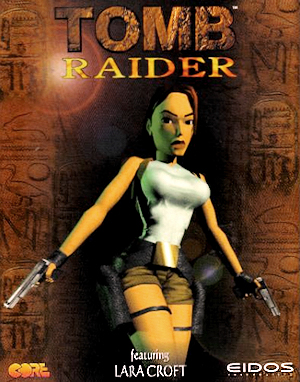 |
6. Eidos Interactive
This is positively riveting and also absolutely true: The company behind Thief, Deus Ex, and Tomb Raider started off in 1990 specializing in “video compression and non-linear editing systems.” It particularly did this for Acorn Archimedes, Acorn Computers’ first home computer that, according to my research, had a lot of circuits and junk in it. The company was so successful that it was even floated on the London Stock Exchange, and Eidos Sales/Marketing Director Nick Davis once boasted that the company’s Edit One system “does for video what desk-top publishing does for print.” (Yes, he actually hyphenated it.)
Folks, this is the same sort of excitement Eidos Interactive brought to its games — games like Let’s Edit Video In A Non-Linear Manner and Compression Hero.
 |
| Source |
5. Hudson Soft
Long before Hudson became Nintendo’s first third-party software developer for the NES, the Sapporo, Japan company was a single shop founded by brothers Hiroshi and Yuji Kudo that sold art, photographs, and telecom devices. The brothers were still in college, and that was 1973. By 1975, it was selling computers. By 1978, the company was developing and selling video games as well. Part of what credited the shift in the company’s output was Yuji visiting the U.S. to market the store’s telecom devices, which, according to Hudson pitch man Takahashi Meijin, was the first time Yuji saw personal computers available to the public. Strangely, so often in America we think of Japan as being the technological leaders and visionaries, but many of the companies on this list had a similar experience: They saw computers in America, and saw their potential here.
 |
| Source |
4. Konami
In 1969, Kagemasa K?zuki had a vision: To found a company in Osaka to repair and rent out jukeboxes. Over the years, the company started to manufacture “amusement machines” (read: not vibrators) for arcades, and by the early ’80s that also included games like Frogger, Super Cobra, and Scramble. Somewhere in all there, or after, was a particularly horrible night for a curse.
 |
3. Enix
The latter half of Square Enix has truly bizarre and humble beginnings: It was founded in 1975 by Japanese architect-turned-entrepreneur Yasuhiro Fukushima as a tabloids publisher to push real-estate ads. Fukushima tried to take the company nationwide in 1982, but when that failed, he changed its name to Enix (the name being a play on the words “phoenix” and “ENIAC,” which was the world’s first computer) and its focus to the gaming market. To build hype around the new company, Enix held a game-programming contest, which Yuji Horii won with Love Match Tennis. Horii went on to create Dragon Quest for the company, and here’s a bonus tidbit about that game: Dragon Quest was originally conceived as an elaborate real-estate agent exam.
2. Sega
We can’t discuss Nintendo without discussing its (once) biggest opponent: Sega. You don’t have to do too much digging to find out the weird-ass truth about how Sega came to be. Fundinguniverse.com, as it tends to, reveals all: “Sega of America traces its roots to two companies — Service Games Company and Rosen Enterprises, Ltd. — both founded in Japan by Americans during the 1950s.” Rosen Enterprises’ roots laid in a two-minute photo booth business in Japan, and, well, you can’t really run a business where you expect people to stick around for two minutes, can you?
So, David Rosen began to import coin-op arcade games, which, at the time were “largely unfamiliar to the Japanese public.” The gist of what came in the next few decades is that Rosen wasn’t satisfied with the games he imported so decided to merge with one of his contacts, Service Games, and produce better ones. That’s actually where Sega gets its name from: Service Games. Fun fact: “Genesis does what Nintendon’t” wasn’t an advertising slogan at all but instead an elaborate typo they kept because they “thought it sounded cool.”

1. Nintendo
Today, Nintendo is basically the video-game company equivalent of Rich Little: a completely inoffensive crowd-pleaser that Republicrats, Democrans, and Liberfarians alike can all enjoy.
But back when the company started in 1889, its message was a lot less define. To say that Nintendo dabbled before committing to consumer electronics would be a massive understatement, and also be doing a disservice to the notion of understating concepts. On Sept. 23, 1889 in Kyoto, Nintendo was founded — its name meaning “leave luck to heaven,” which makes a lot of sense considering the company started off manufacturing Hanafuda playing cards. By 1963, the company renamed itself to the Nintendo Playing Card Company (which was so successful it had licensed Disney characters to print on the cards), and within the next five years branched out further: Nintendo tried its hand at running a taxi company, a TV station, a food company that sold instant rice, and also a “love hotel” chain. (Love hotels are exactly what you think they are, and are nothing compared to maid caf?s.)
None of these really caught on — maybe people don’t like having sex beneath giant playing cards adorned with images of Disney characters eating instant rice in cabs? — and actually it’s the light-gun game market that helped Nintendo gain its 20th footing. After tinkering with the “Laser Clay Shooting System,” Nintendo found success with it in arcades and eventually use it for, yup, Duck Hunt.
The real question here, though: Where’s all that risk-taking today, Nintendo?
