
Movies Have Been Dead: 10 of Cinema’s Last Gasps
That the American cinema is deader than Dillinger is a fact no right-thinking observer unwilling to be laughed out of the room would even think of denying today. To do the current round of think piece writers one better, we will add that not only are the movies dead, but they also died in the cradle, and they’ve only been getting deader since—occasional signs of life having likely only been gas leaving the body.
Here’s a quick primer on 10 of cinema’s multiple last gasps. Per Ecclesiastes 1:9, “What has been will be again, what has been done will be done again; there is nothing new under the sun.”
1910s: Invented at the turn of the last century, the movies fail entirely to develop to their potential as a vehicle for narrative art, remaining instead a disreputable fairground attraction appealing only to the illiterate, scrofulous, and ill-bred. They’re also life-threatening at both ends of production, a fire risk when projected on silver nitrate while equally perilous for performers in front of the camera. (The San Francisco Chronicle of March 30, 1913, warns that “Dangers Lurk in Film Posing.”) Taken as anything but novelty, films themselves are, alas, “elementary peoples’ pleasure,” according to the Los Angeles Times: “The highbrows who do not want baby food, naturally enough, leave such [photo]plays alone” (July 23, 1919).
1920s: Radio arrives, tethering many entertainment-seekers to the parlor—and close behind looms the specter of the “Telechirograph.” According to the November 2, 1925, L.A. Times, this new German device will use wireless technology to project films “through the ether,” thus eliminating 35mm prints and the business of film distribution. Just as well. The screen drama persists in plying heretofore unimaginable levels of banality: ” missing-twin plots,” “sloppy endings,” “custard-pie throwers,” “tears and horseplay and melodrama” (L.A. Times, July 10, 1921). The following year, a critic in the same paper isolates “The Predicament of the Minority”: “They always felt that higher standards in the cinema art as in other lines of creation or production would at last prevail—that some time the golden age would arrive. Fatuous hope!”
1930s: Finally verging on that longed-for golden age, the increasingly eloquent silence of cinema is abruptly drowned out in tinny cacophony. New York Times critic Herman G. Weinberg opines, “The cinema’s vast potentialities as an art form were about to be realized when the advent of sound put a sudden end to further experiment. When the movie found it had a voice grafted to it by the laboratory, it began to talk, but it was the voice of a televox, and it gave forth sterile blabberings” (July 18, 1937). Talkies might have even hastened the next World War! Per the Chicago Tribune: “Instead of bringing universal peace to the world, talking pictures are creating riots” (November 2, 1930).
1940s: United States v. Paramount Pictures, Inc. breaks the back of the studio monopoly, which was at least efficient in producing dross. “People are staying away from the movies” (New York Times, July 1948), as postwar “auds” are too busy procreating, and movies fail to place in “competition with other forms of entertainment such as television, night dog racing, and night baseball” (Chicago Tribune, August 1948).
1950s: Between 1950 and 1960, the number of televisions in American homes jumped from 6 million to 60, and weekly film attendance halves between 1946 and ’56. (“Hollywood has indeed worked itself into such a lather of apprehension that a large measure of its hopes for a brighter tomorrow is riding on the Hecht-Lancaster production Trapeze, co-starring Burt Lancaster, Gina Lollobrigida, and Tony Curtis” [New York Times, July 1953].) Cheap “runaway productions” filmed in other countries make Tinseltown a ghost town. “The mess we’re facing in movies and other media promises to be the worst era in the history of art,” wrote Manny Farber in “Hard-Sell Cinema” from Perspectives in 1957.
 |
| A spectacular flop. |
1960s: Broke after spectacular flops like Cleopatra, the studios become the playthings of corporations whose widget-salesman decision-makers have no mind for showbiz; “not since the start of the talkies nearly four decades ago has the movie industry gone through a total overhaul like this—new policies, new faces, new corporate control,” wrote the Times‘ Peter Bart in 1966, just before quitting to go Hollywood, Dwight Macdonald asks in Esquire, “Why can’t we make movies anymore?” In L.A., Michael Bay is born.
1970s: Did we say 10? Oops.
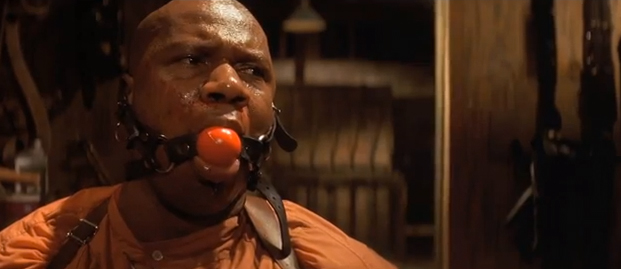
1980s: While VCRs, cable TV, and video game consoles conquer young eyeballs, a coke-hungover New Hollywood’s excess has allowed the blockbuster model to take over the new multiplexes. “The movies have been so rank the last couple of years that when I see people lining up to buy tickets, I sometimes think that the movies aren’t drawing an audience, they’re inheriting an audience. . . . There are direct results when conglomerates take over movie companies,” wrote Pauline Kael in “The Numbers” from The New Yorker in 1980.
 |
1990s: The success of postmodern, cheeky-violent Pulp Fiction unmoors genre films from social reality and moral relevance, signifying the onset of decadence. And PU! What’s that smell? Why, it’s “The Decay of Cinema,” announced by Susan Sontag in 1996 in The New York Review of Books: “Cinema’s 100 years seem to have the shape of a life cycle: an inevitable birth, the steady accumulation of glories and the onset in the last decade of an ignominious, irreversible decline.” David Mamet in an August 1995 L.A. Times is no less bleak: “The pornographic and the mass-market Hollywood-film string together titillating instances of sex, violence, and emotional exploitation—these instances separated by boring bits of nonsense called, in the trade, backstory, or narration. The contempt with which these interstices are treated is a reassurance to the consumer view that better will be coming soon.”
 |
| The Elder Scrolls V: Skyrim |
2000s: Video games outsell films. The digital revolution’s new advances undermine the hallowed veracity of the photographic, analog, celluloid image. The remaining theatrical audience begins its final, inexorable contraction as viewers retreat behind laptops, iPhones, YouTube, XTube, et al., and rampant piracy bites into profit margins. “Mumblecore” is deemed important, and defined-in-opposition festival/art house aridity reaches an all-time high. The exodus from print media shifts chicken-little rhetoric into the digital realm, Internet think pieces on the death of cinema, ad nauseam. After a long illness, cinema is finally to be laid to rest at a service outside the Edison Labs in West Orange, New Jersey, on November 14, 2012. It will be buried in a Black Maria.
This piece originally appeared in the Village Voice. While we look for a new editor for Topless Robot, we’ll occasionally be publishing stories from Voice Media Group sites.

