
The 10 Most Amazing Unreleased Things Ever Made
 By Todd Ciolek
A dead dream is a tragic sight, and in the often-frivolous world of entertainment, a dead dream is best embodied by those unfortunate projects that never see the light of day. In a just and fair world, every finished movie, videogame, TV show, song or piece of potential art would be aired out and then praised, ignored, or soundly detested as the public saw fit.
And there are a lot of dead dreams out there, moldering in warehouses, vaults, and half-corrupted hard drives. Most of them probably wouldn?t have a chance at greatness, but a few are so intriguing that we can?t help but take up their causes. And that?s what we?ll do here, whether the cause is for an Orson Welles movie or a Nintendo game about a pro-wrestling ape.
type="text/javascript">
10) Crank the Weasel
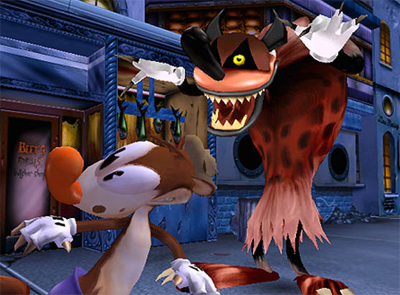
Grand Theft Auto III made the gaming industry sit up and notice ?sandbox? games, where it?s almost more fun to screw around with the environment than to push the game forward. Yet it was a cartoonish little 2003 action game called Crank the Weasel that embraced the idea the most?and paid the price for it.
A 3-D tribute to 1920s cartoons, Crank followed its weasel hero on a quest to cash in a ticket to the alluring Pleasure Island. To accomplish this, he wandered his hometown streets, stealing from his fellow cartoon characters, fencing his ill-gotten loot, and upholding the horrible sexist standards of the roaring ?20s by smacking women?s rears. Available power-ups included an Incredible Hulk transformation and a can of rabies that turned Weasel into a frothing loon that bit and infected other characters. The game even had a detailed design document for a strip club where the opening comedy act would die repeatedly while players did their best to button-mash Weasel into a manic, hooting lust machine worthy of Tex Avery.
It was this emphasis on free-roaming gameplay and side attractions that did in Crank the Weasel, as there simply wasn?t much of a traditional game to support it all. That was perhaps the point of the whole thing, but it didn?t stop Midway from canceling plans to release in on the Xbox, PlayStation 2 and GameCube.
Where It Is: In the hands of the people who worked on it, and the people who collect demos of dead games.
Why It?s Unreleased: Not enough space marines.
9) Lupin VIII
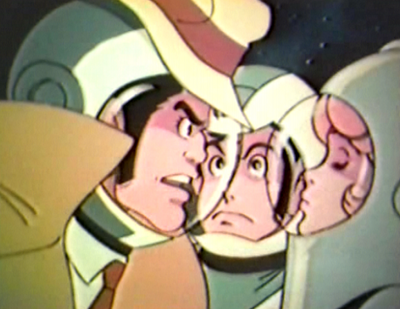
Lupin III is an anime icon in his native Japan, to the point where Tokyo Movie Shinsha gives him a new TV special every year. Yet he?s never quite taken off in America, where companies waited a bit too long to introduce his old ?70s TV series and classic films. Not that he doesn?t have fans (everyone likes Hayao Miyazaki?s Castle of Cagliostro Lupin flick, for example), but Lupin will never be as big a star in Western cartoon culture as he is in Japan.
Things might have been different if Lupin VIII had made it to TV back in the ?80s.
Produced by TMS and the French-American DiC Studios for an international audience, the TV show went centuries into the future, when Lupin III?s distant yet identical-looking descendant worked as a private detective in space colonies also with a supporting cast also identical to the old Lupin guard.
The project ran into trouble, both in the planning stages and in legal venues, as Lupin III?s creator, Monkey Punch, actually ripped off the character from French author Maurice Leblanc?s Arsene Lupin novels and has since tread on shaky ground. At least one episode was produced, but without any voice acting. Perhaps it wouldn?t have compared to Lupin?s better capers, though it?s hard to hate anything with Inspector Zenigata and gunman extraordinaire Jigen wearing their hats on top of their astronaut helmets.
Where it is: In the vaults at DIC or TMS. We hope. It also pops up online from time to time, though YouTube?s only current Lupin VIII material comes from someone?s homemade dub.
Why It?s Unreleased: Legal issues and general disinterest.
8) Broken: The Movie
Broken might be Trent Reznor?s best album. It?s a burst of angry, memorable noise that stands above the synthesized warbles of Pretty Hate Machine and the teen-atheist moaning of The Downward Spiral, and it marks that point in every Nine Inch Nails fan?s life when the industrial outrage seemed genuinely cool and disturbing.
That?s where the Broken movie comes in. It collects four music videos based on album tracks and bookends them with spliced-up scenes of torture and murder. Adding to the snuff-film notoriety of it all, the movie?s only available in bootlegged form, even though the individual music videos have seen multiple releases, including the banned-by-MTV delights of ?Happiness in Slavery.?
Where It Is: With Trent Reznor and a few people who received the movie as a special gift. Each version given away was missing a different section of video, thus enabling Reznor to keep track of those who betrayed him.
Why It?s Unreleased: There?s not much point now. The film was originally stifled so it wouldn?t take attention away from the album, but it?s been bootlegged and bittorrented ad nauseam over the years, and the latest leaked version supposedly came from Reznor himself. How thoughtful of him.
7) The Pixies? ?Watch What You?re Doing?

The Pixies weren?t just influential alt-rock revolutionaries of the ?80s. They were also a blessing to any early-1990s teenager who wanted something between They Might Be Giants and Nirvana, something that would still have indie cred and endure after they?d left high school and college. Part of the band?s appeal lay in the deliberately bizarre choice of subject matter, as their songs obliquely covered UFO, Biblical heroes, the antics of the homeless, middle-school sex fantasies, and reincarnation. Several are even about incest, though not the song that sounds like it?s clearly about incest. That one?s about masturbation.
Pixies fronters Kim ?Mrs. John Murphy? Deal and Charles ?Black Francis/Frank Black? Thompson were equally weird in their choice of covers, leaping from Neil Young to the beat from the NARC arcade game. Perhaps their most unexpected cover is one only heard by the people who put together the band?s early ?purple tape,? which included a Pixies? version of Christian singer Larry Norman?s ?Watch What You?re Doing.? It?s a standard cautionary tune about the dangers of single motherhood and the evil that lurks in every atheist?s heart.
Thanks to YouTube users who can?t spell ?you?re? properly, we can hear the version from Norman?s final U.S. concert in 2005, when Frank Black actually joined him on stage. It?s a nice tribute, but it?s not quite the same as it would?ve been when run through the half-screamed melodies and guitar whines of early Pixies.
Where it is: Sitting on record producer Gary?s Smith?s shelf.
Why It?s Unreleased: Smith supposedly found it in 2004, just when the Pixies? greatest-hits album came out. So we?ll have to wait another few years for another cash-in to include ?Watch What You?re Doing.?
6) Bounty Arms

The mid-1990s were a tough time for hand-drawn, two-dimensional videogames, which became neglected older children in the face of newly arrived 3-D industry darlings like Ridge Racer and Virtua Fighter. So no one really noticed in 1994 when a Japanese company called Data West announced a PlayStation game called Bounty Arms.
Bounty Arms resembles an old-fashioned overhead shooting game in the style of Commando or Ikari Warriors, albeit with tiny-nosed anime women in place of bare-chested Rambo knockoffs. There was more to Bounty Arms: instead of shooting enemies, heroines Rei Misazaki and Chris HerLastNameIsUntranslatableGibberish use telescoping robotic ?Relic Arms? as whips, flamethrowers, and grappling hooks. While the game?s setting appeared to be a typical blend of robot-filled jungles and factories, the Relic Arm play mechanic made it unlike any other game on the market. Perhaps that?s why Data West canceled the whole thing in 1995.
Where it is: Possibly in a storeroom at Data West, though it?s likely that the company, which doesn?t even make games anymore, just deleted everything.
Why It?s Unreleased: Hunting down rare, unreleased videogames is hard in America. Hunting them down in Japan?s secretive world of collectors is nearly impossible.
—-
5) The Sweatbox
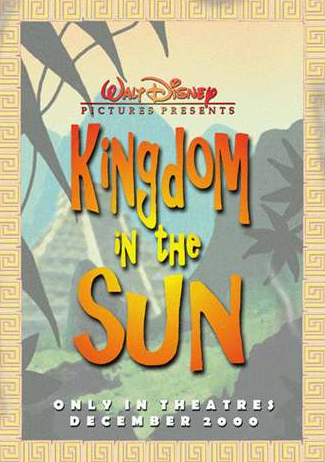
Disney?s often mocked in ways both clever and lazy, but it?s rarely done with The Mouse?s own blessing. A documentary called The Sweatbox might come the closest. When Sting was tapped to write songs for an in-progress Disney film called Kingdom of the Sun, his wife, director Trudie Styler, came along to film a behind-the-scenes special about the movie. That was 1997. In the years that followed, the film?s story was shredded, director Roger Allers quit, Sting?s songs were dumped, and a fairly dark film about prince-and-pauper switcheroos and a sun-devouring demon became the goofy road movie we know as 2002?s The Emperor?s New Groove. And Styler captured all of it in The Sweatbox, itself named after the room where in-progress Disney films are reviewed and ?re-tooled? by executives.
Where it is: In Disney?s vaults.
Why It?s Unreleased: The movie was screened on two separate occasions, but there?s no wider release in sight. For a movie that lays bare the meddling and creative squabbles behind a troubled Disney production, it?s not surprising that the most we?ll likely see of Styler?s footage is the polite, trimmed-down short on The Emperor?s New Groove DVD.
4) Mardock Scramble

The anime studio called Gonzo is known among fans for making big, glossy series that seldom end well, but even their staunchest critics must admit that Gonzo knows how to sell itself to a wide audience. It?s not a studio known for smaller, less commercial products, and that makes Mardock Scramble all the more interesting.
A six-part, direct-to-video series (or Original Video Animation, if you want to get all anime-fan about it) set to mark Gonzo?s 15th anniversary, Mardock Scramble was based on an award-winning novel by writer Tow Ubukata, also known for mixing gender-swapping with pre-Revolution France in Le Chevalier D?Eon. Mardock is one of his weirder creations, a tale of revenge set in a cocoon-like city, where a dead prostitute is resurrected by the authorities so she can hunt down the man who killed her. There?s a talking mouse named Oeuf Coque, an electricity-controlling heroine in love with her own murderer, and a lot of other disturbing stuff that probably scared Gonzo away from completing the project. Amid rumors of sponsors backing out, Mardock was canceled in 2006, and its director, Yasufumi Soejima, was later seen making a music video for Dream Theater.
Where it is: Sitting idle at Gonzo, we imagine.
Why It?s Unreleased: It?s unprofitable and probably unfinished, not that being incomplete has stopped other anime productions from coming out.
3) Bio Force Ape

Other consoles surpassed the Nintendo Entertainment System in technical abilities way back in 1986, but none of them will ever have the NES?s grip on an entire nation?s nostalgia. Perhaps that?s why unreleased NES games carry a touch more mystique than other titles, and why they inspire savage arguments over whether the games should be released to the public via emulation or remain in the hands of petty, ghoulish, greasy-fingered collectors. Not that we are biased against any party.
Seta?s Bio Force Ape, originally scheduled to come out in 1991, stands above other never-seen NES games for two reasons. One, it?s a side-scrolling action title full of the bizarre things that really only worked in old-school NES games: unexplained mine cart rides, giant apples, and a genetically engineer super-chimp who uses wrestling moves to rescue his kidnapped human family. Seta was barely a B-list game company, but Bio Force Ape might?ve charmed us regardless of its quality.
The second and more important reason: Bio Force Ape inspired the most amusing prank ever pulled among hardcore game collectors. It began in 2005, when a seemingly innocent fellow posted a thread on the Digital Press forums, including photos of a prototype Bio Force Ape cartridge that he had supposedly picked up at a swap meet for three dollars. Collectors made sneakily low offers, debates raged over who deserved the game, and the screenshots of the rare Bio Force Ape in action grew stranger and strange, resulting in this masterpiece of modern 8-bit art:
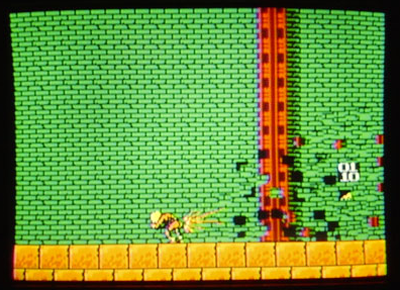
And from there, it only got better. If you have a half-hour to spare, read the whole thing here.
Where it is: Prototypes of the game were released to the media in 1991, so there?s a chance that someone has a copy.
Why It?s Unreleased: If someone has it, they ain?t saying.
2) The Other Side of the Wind
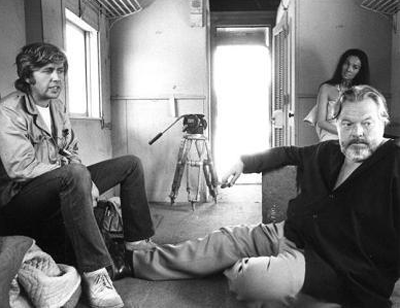
As much as we like to laugh at Orson Welles? late-career roles, there?s always a touch of respect, and perhaps sadness in them all, even when Welles is screaming about frozen peas or grumbling out the lines of a planet-eating toy in Transformers: The Movie. After all, Welles was a legend of film, the theater, and radio-made mass hysteria before he was thirty, and his drift into obscurity after the 1950s makes it a shame that we should miss out on any of his later works.
Shot in the ?70s, The Other Side of the Wind starred John Huston as a fading director in search of a comeback, and it?s hard to avoid seeing some autobiographical touches in the story. Was it, like Fellini?s 8 ?, a movie about the struggle to make a movie? Well, we have no way of knowing, since the film was unfinished upon Welles? death, and a completed version is now held up by legal troubles. Great film or not, The Other Side of the Wind deserves to be seen, both for the legacy it evokes and the story behind it, a story that involves everything from conventional production woes to the Iranian Revolution of 1979.
Where it is: In the hands of actor/writer/producer Peter Bogdanovich, who also appeared in the film.
Why It?s Unreleased: Bogdanovich isn?t done restoring it yet.
1) The Day the Clown Cried

Perhaps the most legendary of all unreleased films, Jerry Lewis? The Day The Clown Cried has the sort of reputation that seems impossible for anything to fulfill. According to the few who?ve seen it, though, this comedy about a concentration camp clown is every bit as fascinatingly terrible as anyone could hope.
The movie began life as a somewhat serious screenplay about a failed circus clown imprisoned by the Nazis. Shunned by his fellow inmates, he sates his ego by entertaining the imprisoned Jewish children, and, at the film?s end, he?s coerced into leading his young audience into an Auschwitz gas chamber. Envisioning it as his leap from buffoonish comedy to scathing drama, Lewis directed and starred in the movie, seeing it through to rough-cut completion despite health problems, actor walkoffs, vanishing funds, and legal threats from the production company.
The movie?s never seen the light of day beyond some private screenings, due in part to financial disputes and lawsuits. Yet the real reason for its obscurity may lie with Lewis, who owns a VHS copy of the movie?s early cut and is reportedly embarrassed by it.
Where It Is: Locked in Lewis? office and possibly the stockroom of some Swedish film company.
Why It?s Unreleased: Some things are best left as legends.
About The Author

Robert Bricken is one of the original co-founders of the site formerly known as Topless Robot, and its first editor-in-chief, serving from 2008-12. He brought the site to prominence with “nerd news, humor and self-loathing” as its motto, raising it from total internet obscurity to a readership in the millions, with help from his savage “FAQ” movie reviews and Fan Fiction Fridays. Under his tenure Topless Robot was covered by Gawker, Wired, Defamer, New York magazine, ABC News, and others, and his articles have been praised by Roger Ebert, Avengers actor Clark Gregg, comedian and The Daily Show correspondent John Hodgman, the stars of Mystery Science Theater 3000 and Rifftrax, and others. He is currently the managing editor of io9.com. Despite decades as both an amateur and professional nerd, he continues to be completely unprepared for either the zombie apocalypse or the robot uprising.