
Resident Evil 6: Is It Really That Bad? | BACKLOG.TXT
Prefer to view? Well, you can watch the video version of this breakdown on 2 Headed Hero!
Is Resident Evil 6 Really THAT BAD?
Resident Evil 2 was one of my most cherished games from my childhood, full-stop. This was back before zombies became mainstream on TV, and before a film series kind of shit all over the Resident Evil name.
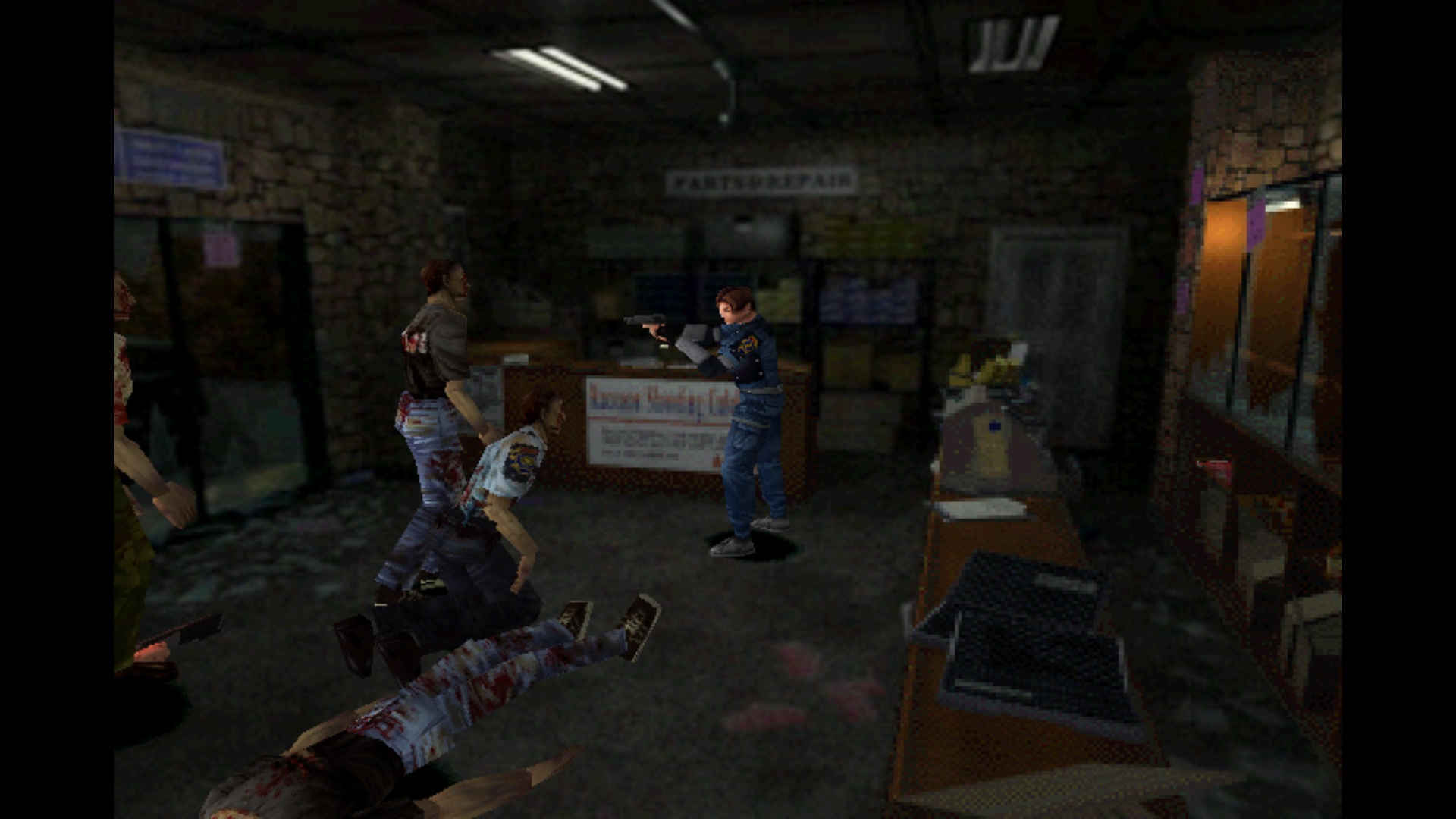
(You could say I was beyond excited when Capcom announced the remake in 2015.)
As a kid, I loved the messy combat, the B-movie camera angles, the haunting environments and atmospheric sound – even the jumpscares were pretty enjoyable. The stories told within Resident Evil 2 were filled with conspiracies, mad science, betrayals, and government cover-ups. I loved how playing each character revealed a little piece of the big picture, and the way RE2 allowed you to experience the same events from a different perspective was pretty revolutionary for the period.
Each time I played through, it seemed that there was something new. I would discover something I had overlooked before, or a challenge I had yet to complete. It was like re-reading a favorite book – new details would jump out at me each time the game was experienced.
Looking Backwards
The remake’s release date was announced back in June of 2018, so to get myself in the mood, I decided to jump into some of the prior entries in the series. Taking inventory of my library (yikes), I noticed I had never even booted up Resident Evil 6. So I asked myself: Is Resident Evil 6 really that bad?
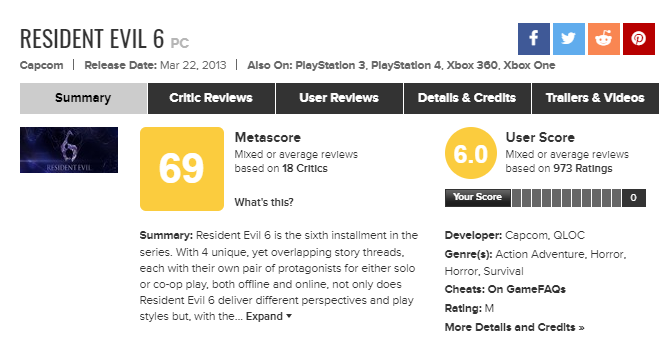
As of this writing, the game has a Metacritic score of 69 which is on the high side of average, but critic and user reviews were all over the place.
Reporting Port Issues
The PC version of Resident Evil 6 is an obvious console port.
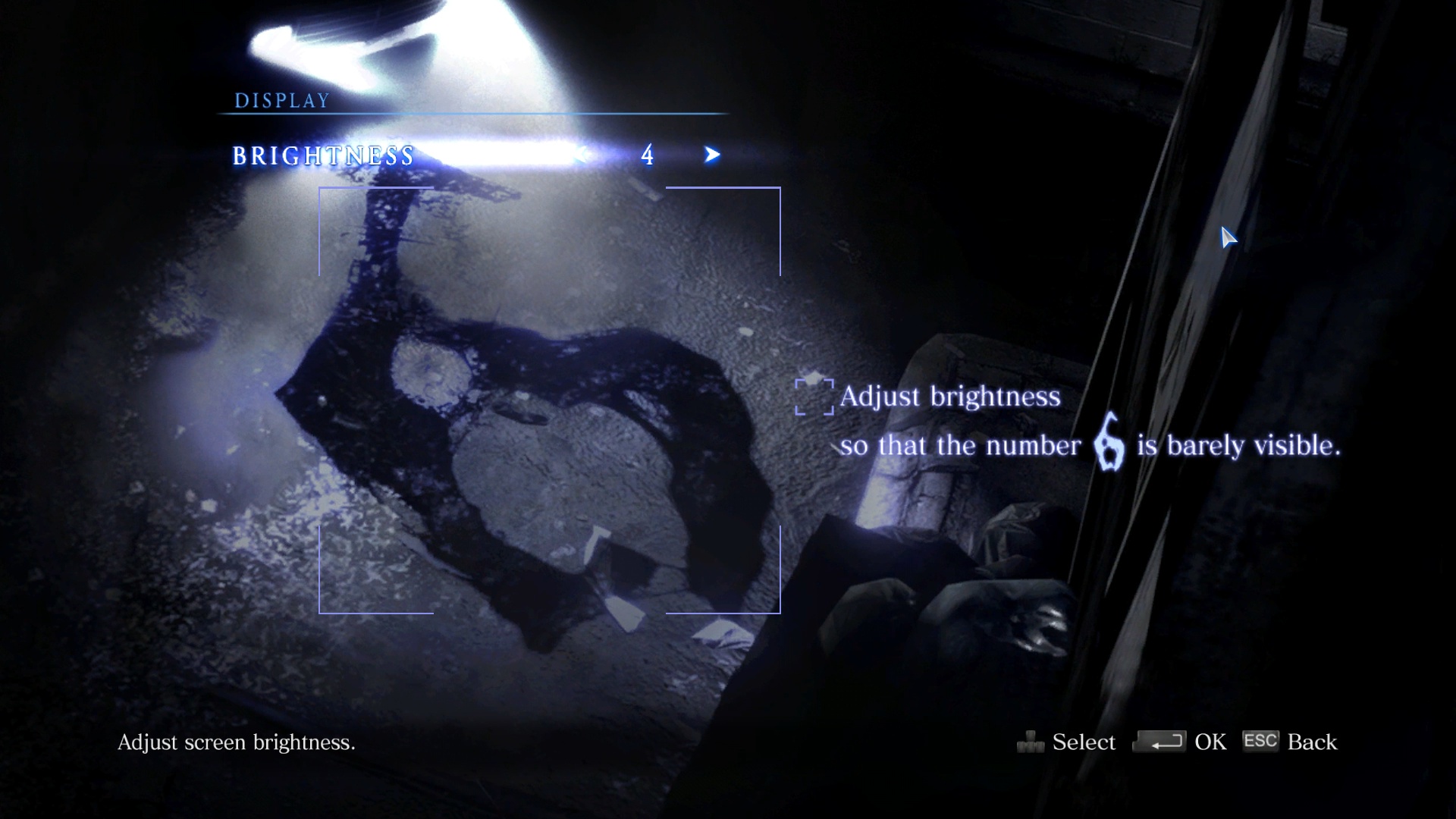
The game starts up with this calibration screen: “Adjust until the 6 is barely visible.” Well, even with brightness all the way down, I can see the 6 – clear as day.
The on-screen instructions don’t seem to be telling enough about what effect my actions will make, and require a bit of trial and error. This screen is sort of a metaphor for Resident Evil 6 on the whole: a fairly fun game, with problems that require some guesswork. On the control side, gamers comfy with a mouse and keyboard are going to be pretty bummed about how clunky the keyboard/mouse support feels. Fortunately, my Xbox One controller worked just fine.
On the graphics side, the port actually holds up. There’s a lot of settings to play with (including field of view), and that’s something you don’t see often in console ports from this era. From the beginning, players are treated to some impressive set pieces, and the urban areas in particular looked excellent. I was surprised to even see working mirrors in the school bathroom. The game runs well, and on the whole, the visuals capture the grimy Resident Evil style that fans have come to know and love. Still, some sections side a bit too much on the dark end of things, which can make it difficult to see what’s going on.
Sounds Spooky
The soundtrack, while not super memorable, is a mix of some fairly effective orchestral tracks and synth stuff. It serves its purpose of setting the action-movie tone. The sound design overall works well here – weapons are impactful, monsters are sufficiently scary sounding, and the voice acting performances were top notch. The writing seemed a little awkward and cliched at times, but this cheesy B-movie dialog style is a common thread throughout the whole franchise. If you were expecting Shakespeare, you won’t find it here, and if you hate the exposition style in the past games, Resident Evil 6 won’t change your mind.
The Meat of the Game
Resident Evil 6 opens with a Michael Bay wet dream: A vehicle explodes, and a city street full of zombies blazes with flames – all to the rhythm of a helicopter engine as firepower churns overhead. A prompt tells you to pick up the nearby beautiful unconscious woman and drag her to safety. Then, we get the big reveal of our dashing hero.
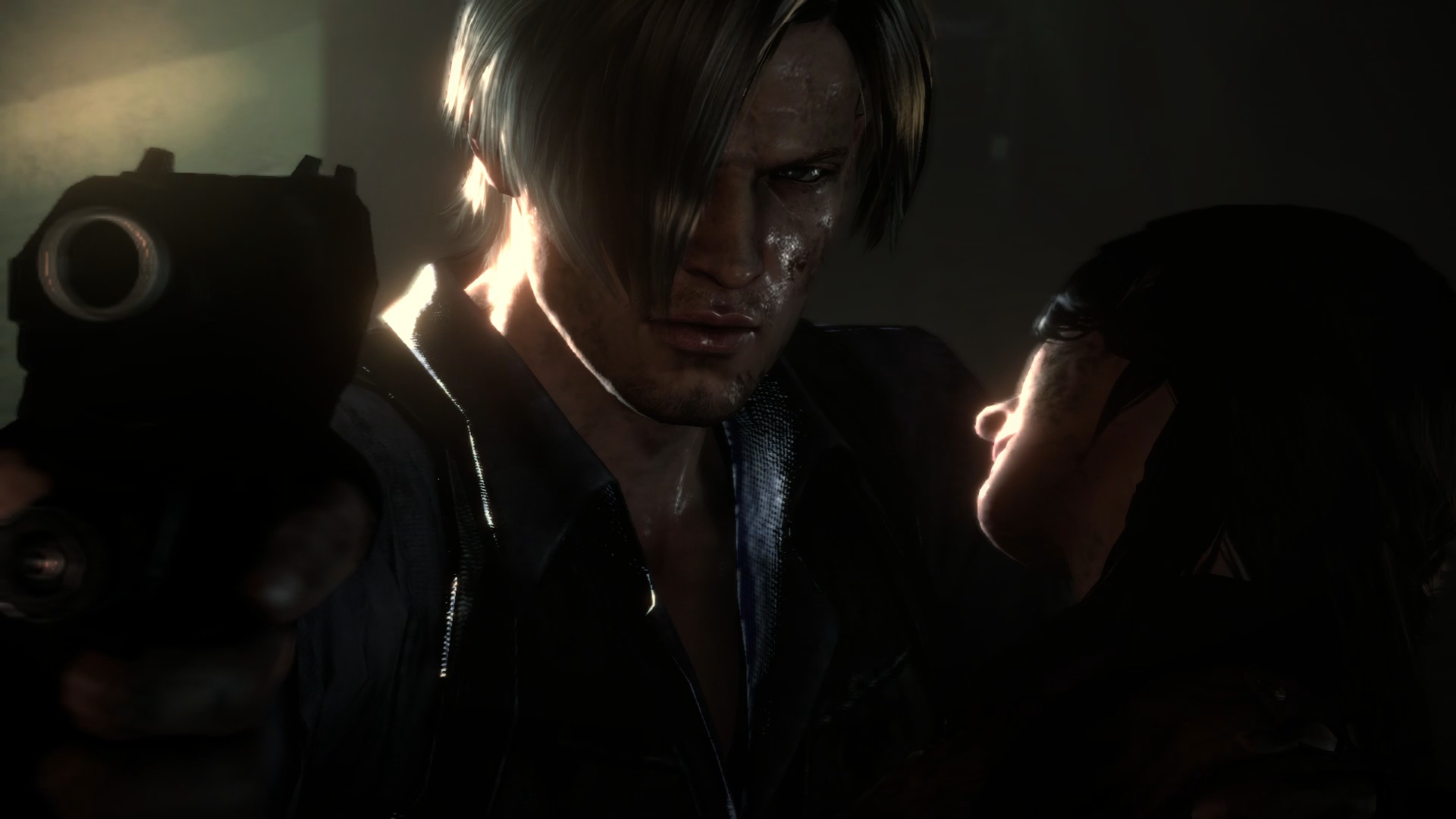
Leon S. Kennedy returns for more punishment in another Resident Evil installment here, and his story serves as the main plot of Resident Evil 6.
While the game has four separate campaigns, the other stories all seem to sort of take a back seat to Leon’s tale. All four playable storylines overlap and crisscross each other, and playing each one through provides a little more insight into the overall plot.
Most of these campaigns can be played with a coop partner, which further spices things up, and I was pretty surprised to see people playing even today. You can also turn coop on or off at the beginning of each chapter, which is real nice if someone is lagging your game… or refuses to use push-to-talk.
After finishing a campaign, New Game Plus becomes available. There’s also some multiplayer modes, but RE6 is a seven year old game. Most of those are now deserted, so unfortunately I wasn’t able to get a feel for any of the other multiplayer modes besides coop.
Hunting for Agents, Nowhere to be Found
Agent Hunt also becomes available when you finish a campaign. This mode allows you to play as one of the monsters and try to find and kill the protagonists, which sounds awesome. I know the mode still works because my games got invaded by players a ton of times, but when I tried to get into Agent Hunt to play as a monster myself? No dice.
Even if you don’t have a friend to coop with, the companion AI is improved from what we saw in Resident Evil 5. You don’t need to babysit the AI player or mess around with their inventory, and they’re pretty good at pulling you back up if you hit zero health. You can even issue some simple commands to your partner, if you wish.
Bugs were a little more prevalent in the enemy AI – one particular boss would get stuck on walls and stairs. It also often feels like the bad guys take turns attacking you, as if the player’s in a Bruce Lee movie rather than surviving a Night of the Living Dead. The Bio-Organic Weapons you encounter can also take a lot of punishment, including multiple head shots, and the heroes are comparatively fragile.
That’s not to say that players are helpless. Far from it. Controlling Leon and the other leads in Resident Evil 6 feels much more tuned than the last few games. Each character plays a little bit differently. Arsenals, close combat moves, and even the user interface changes between campaigns – a nice little touch.
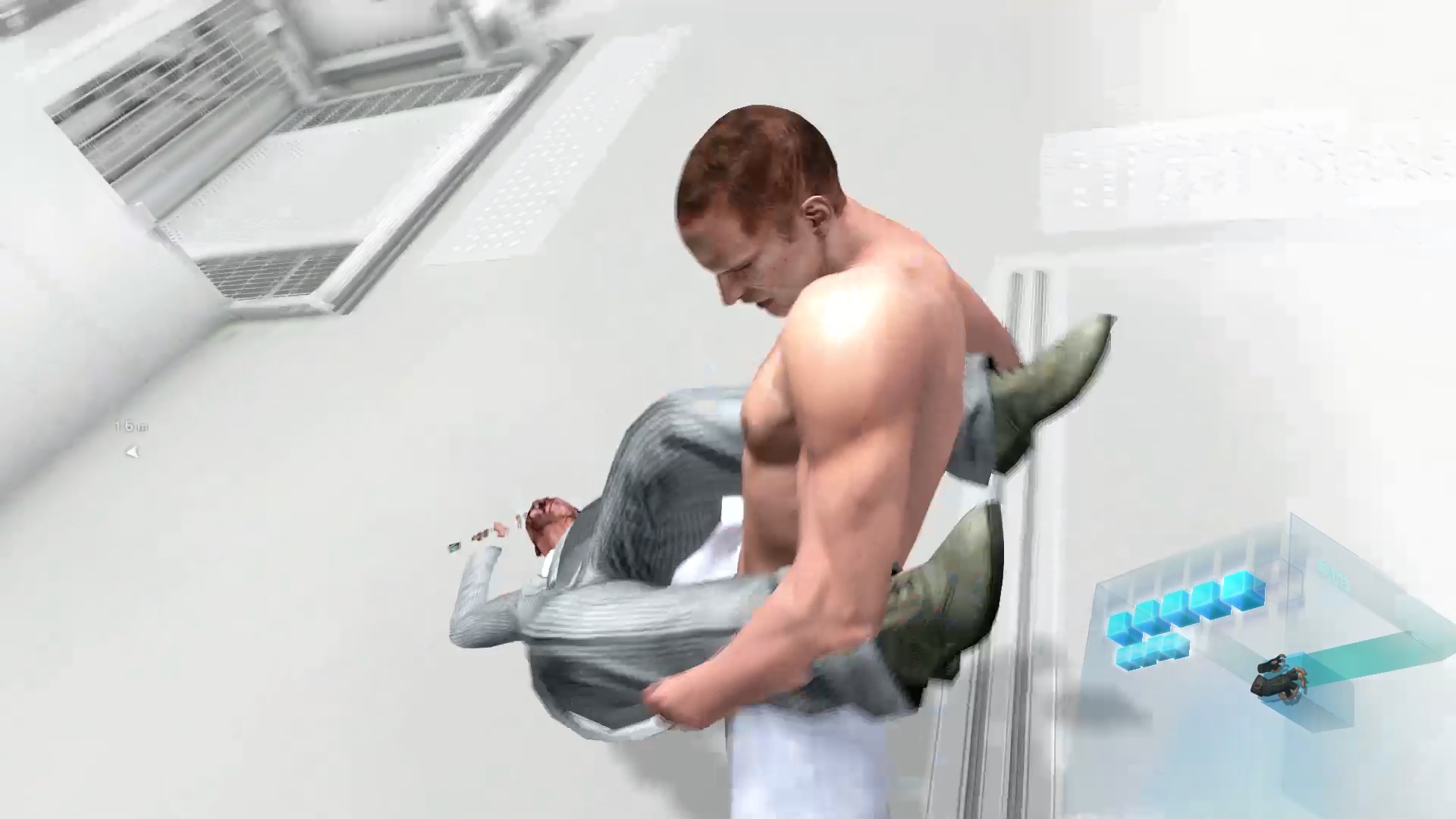
What do you call this move?
There’s now some decent hand to hand moves that you can use to stagger and knockdown enemies, and even some environmental finishers. These range from brutal to ridiculous, but I kind of love that Leon can throw the meanest suplex this side of Monday Night Raw.
Hand to hand works fine for the most part, but since there’s no sort of lock-on system, it’s possible to miss what you’re flailing around at. The finisher prompts can also be a little picky, since they seem to require that you stand at a certain range. Still, these are both just minor annoyances – not major issues.
Running and Gunning
Gunplay also feels better – characters can move while firing, dive, slide, and sprint. Weapons all handle differently, and even the lowly handgun is pretty efficient at bashing the B.O.Ws. Switching between weapons and special items is done with a touch of the directional pad – easy, and effective.
The unrefined cover system feels out of place. When standing close to a wall. trying to aim can pop you into cover when you need to be shooting. Why does there even need to be a cover mechanic? This is supposed to be Resident Evil, not Gears of War!
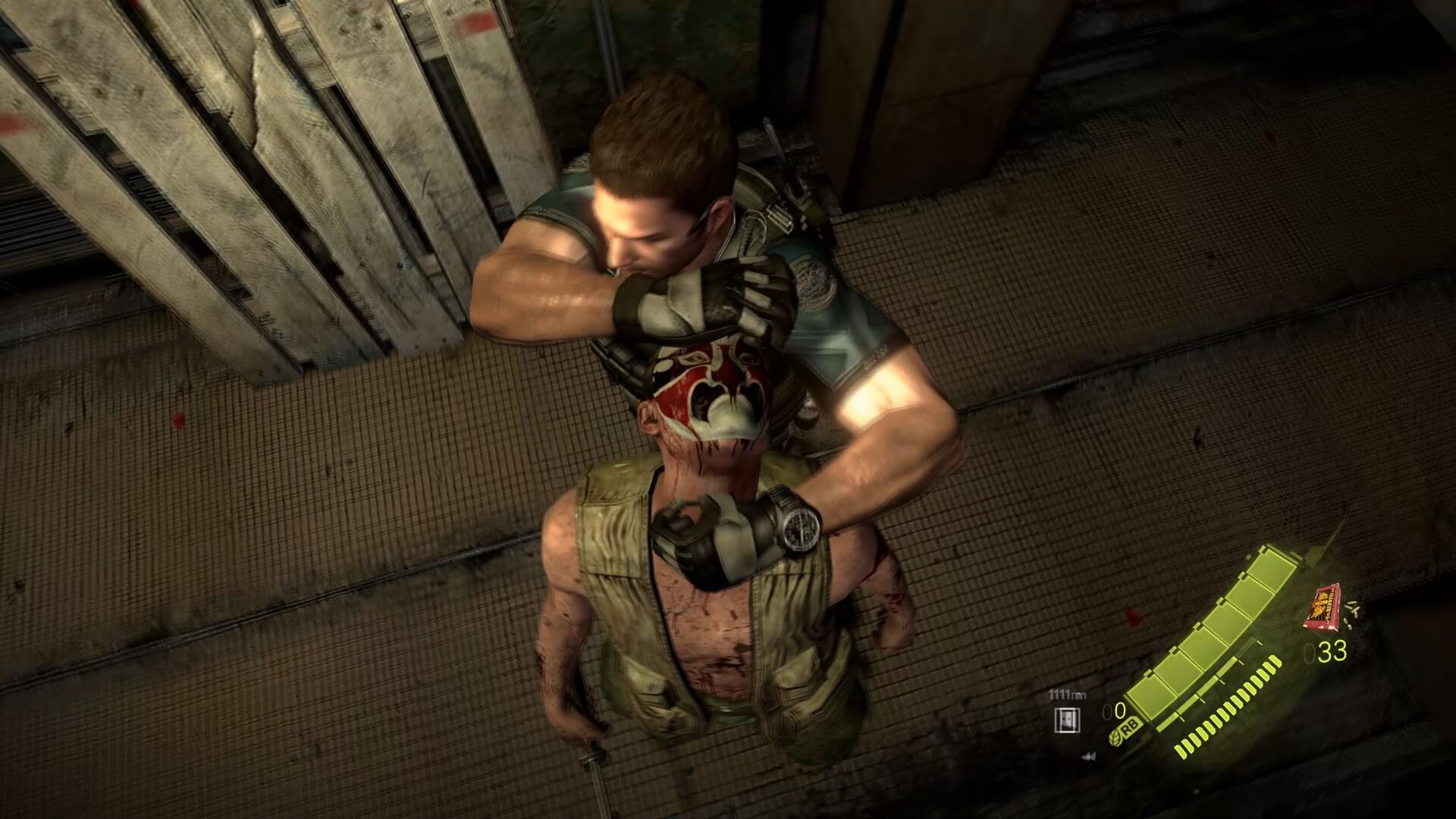
Solid Chris feels sort of out-of-place in RE6.
Well, it’s because half of the game has you fighting the J’avo: basically, mutated mercs with guns. The J’avo sections are pretty numerous, and during each one, Resident Evil 6 feels like a pretty average cover shooter.
Quick time events are everywhere – and I mean EVERYWHERE – in Resident Evil 6. This seemed to be a core complaint when the game was released. Normally QTEs don’t bother me too much, but I will admit that some that appear in RE6 are a bitch. I got handed more than one cheap death due to a blink-and-you’ll-miss-it QTE that came out of nowhere. On the other hand, checkpoints are really liberal, and when playing on the lowest difficulty RE6 simply solves QTEs automatically, so I don’t see this as a game breaker.
The larger offenders were the boss battle QTEs. The game’s reliance on these in certain boss fights make it feel like you’re just along for the ride and not really defeating the boss yourself. It’s somewhat unsatisfying and removes the sense of player agency.
Tell Me a Tale
In general, everything in Resident Evil 6 seems to move at a faster pace – combat, exploration, quicktime events, and even the plot. There’s a big cast of characters: some good, some bad, some from previous games in the series, some newcomers. A lot happens in a short amount of time, and each campaign only gives you a hint to the overall plot. The game even tries to address this by having a spot in the main menu where you can watch all the unlocked cutscenes on a timeline. If you’re worried about the story making the most sense, the four campaigns are best experienced if you play them in order. Unfortunately, the best campaigns are at the beginning and the end, making the middle two campaigns seem like the center of a sloppy sandwich.
Leon S. Kennedy: The Return of the King
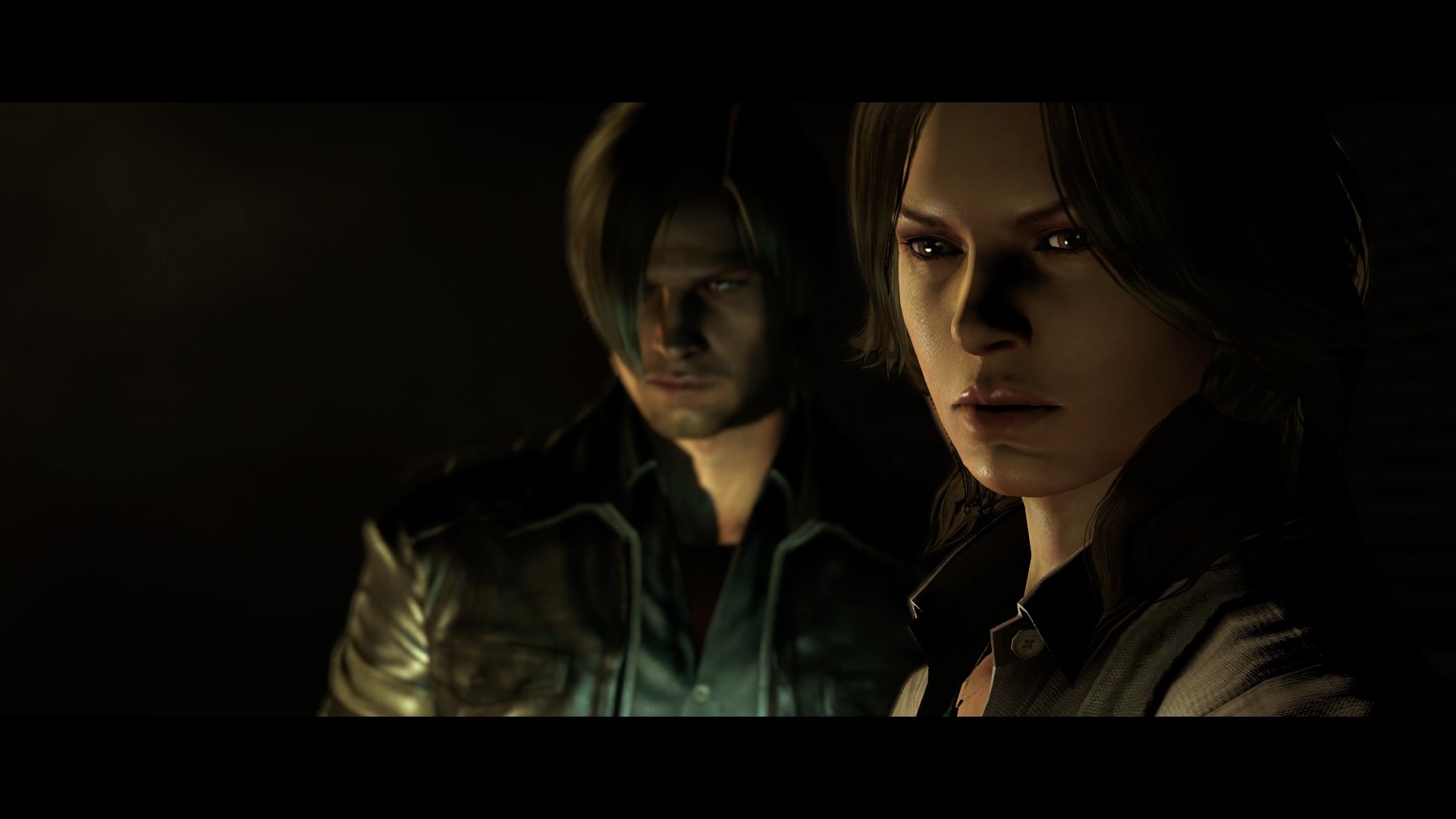
Leon’s campaign was probably the most polished and enjoyable of the four, and felt like a continuation from his previous saga in the excellent Resident Evil 4.
The opening chapters have Leon S. Kennedy and series newcomer Helena Harper fighting their way out of a zombie infested city. Accused of killing the president, Leon and Helena uncover a plot involving viral experiments headed by a powerful National Security adviser, Derek Simmons, who works for the shadowy Neo-Umbrella organization.
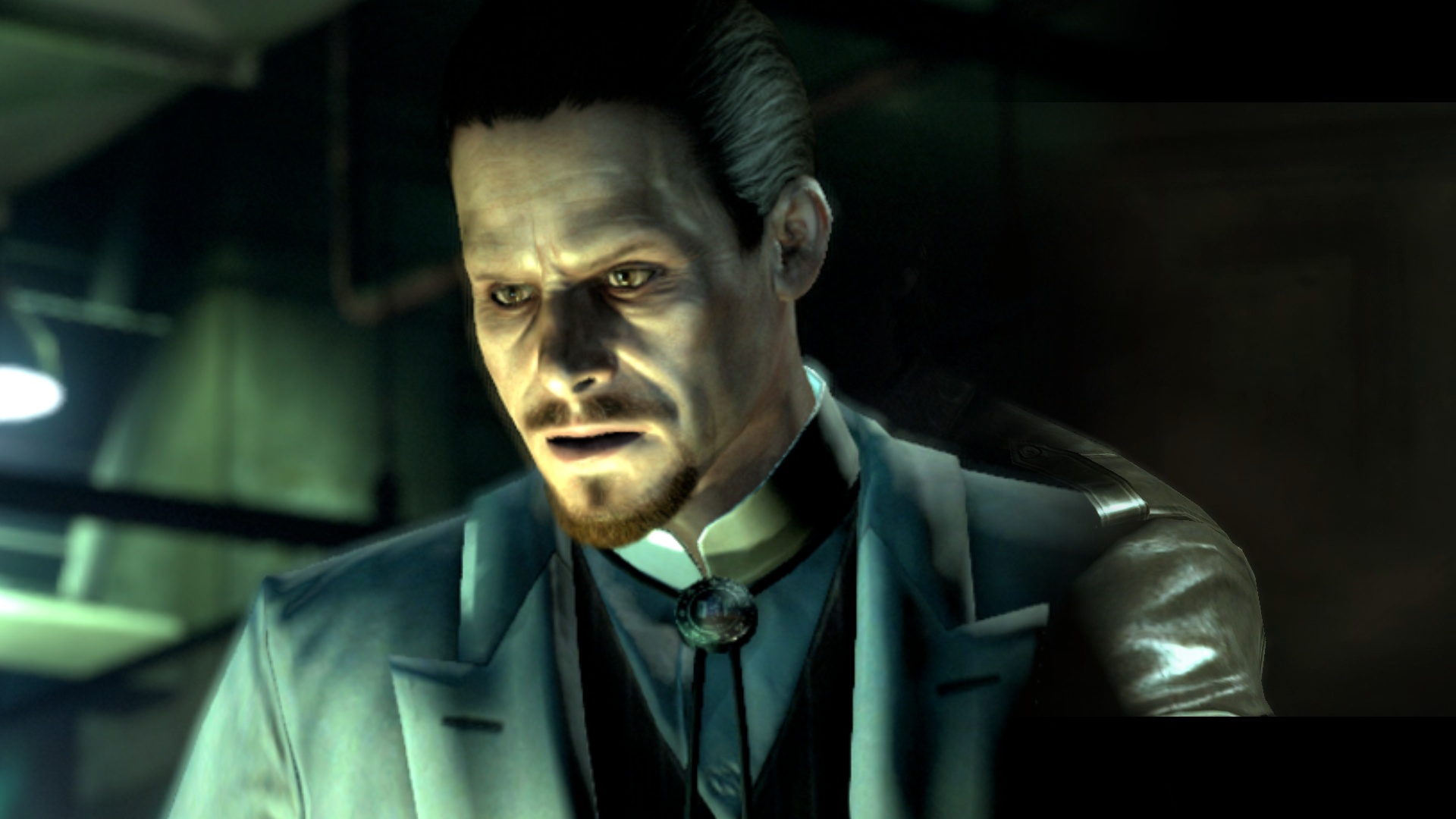
The face of evil in, uh, Resident Evil… 6.
Of course, the virus gets out of hand, so Leon and Helena chase Simmons to China and reveal his plan to spread the virus worldwide. With the intervention of super-spy Ada Wong, the agents confront a now-infected Simmons at the top of Quad Tower – the place where all his experiments began – in an attempt to save the human race and clear their names.
The story in Resident Evil 6 is convoluted, to put it lightly. There’s a lot to unpack in Leon’s campaign alone. The cutscenes and long dialogs are wrapped around some pretty cool gameplay sections, though.
Leon also drops some blazin’ verses.
Compared to most of the other Resident Evil games, exploration is limited, and the puzzles are juvenile – mostly “find the switch or key” kind of stuff. Sections like the Cathedral boss fight help make up for these shortcomings. During this battle, civilians run around while firing wildly and panicking before getting transformed into zombies by a weird gassy fat-berg. Those newly-minted zombies then continue to spray weapons fire into the crowd. It’s chaos, it’s fun, and if you manage to save some of the survivors… well, you can hear them grieve over the loved ones they just lost.
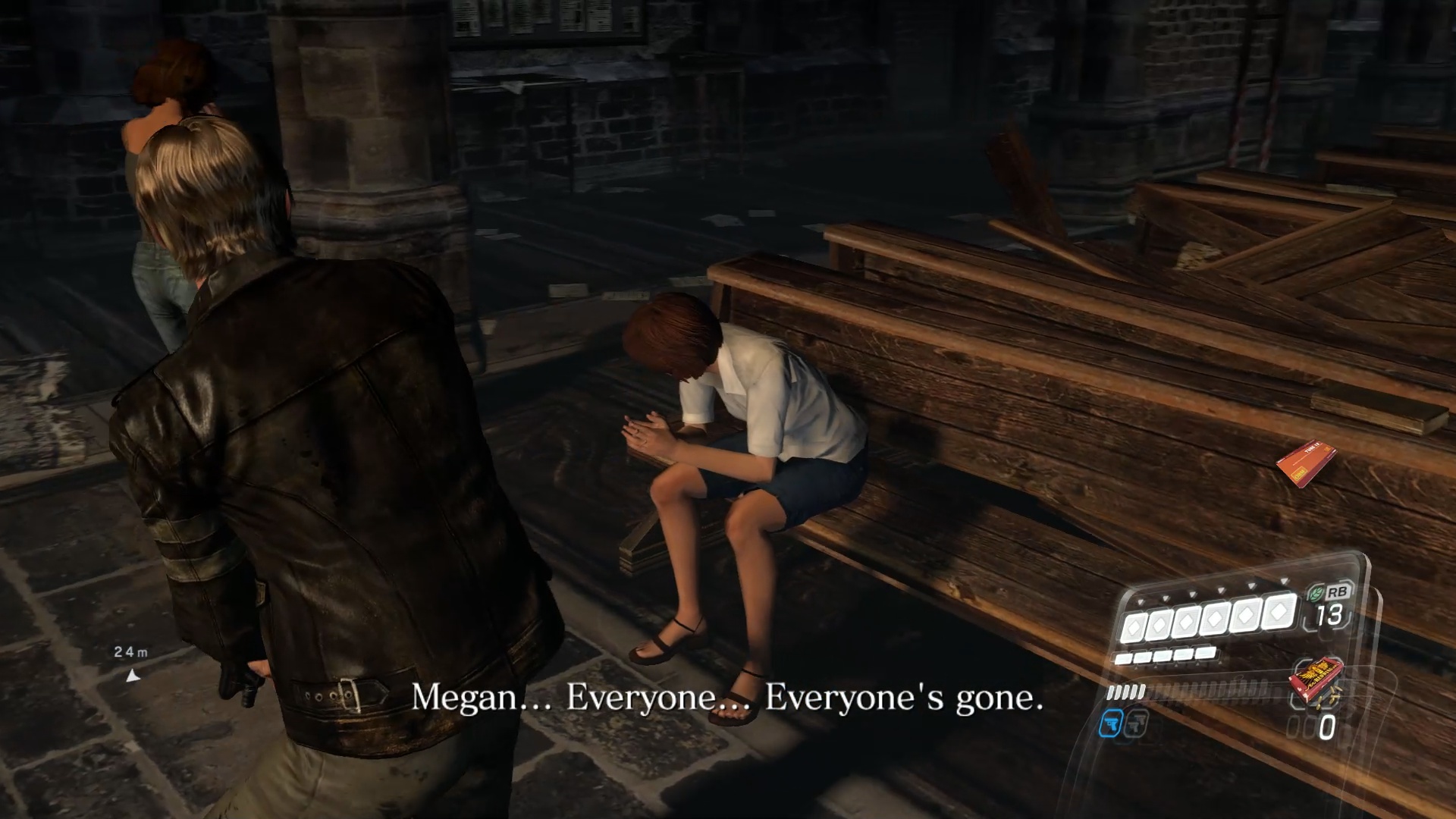
Yikes.
I was also a big fan of the plane section. The QTE at the end of this part is simply priceless. While the first few chapters of the game erase a lot of Leon’s previously established wit and charm, this is the point where his personality starts to show through once more. We do get a little insight into his feelings towards his haircut twin, Ada Wong, in a super off-key moment (ins footage from elevator), before Leon rides off into the sunset with his new friend, Helena.
Chris Redfield: The Ballad of Muscleman and Scarf Lad
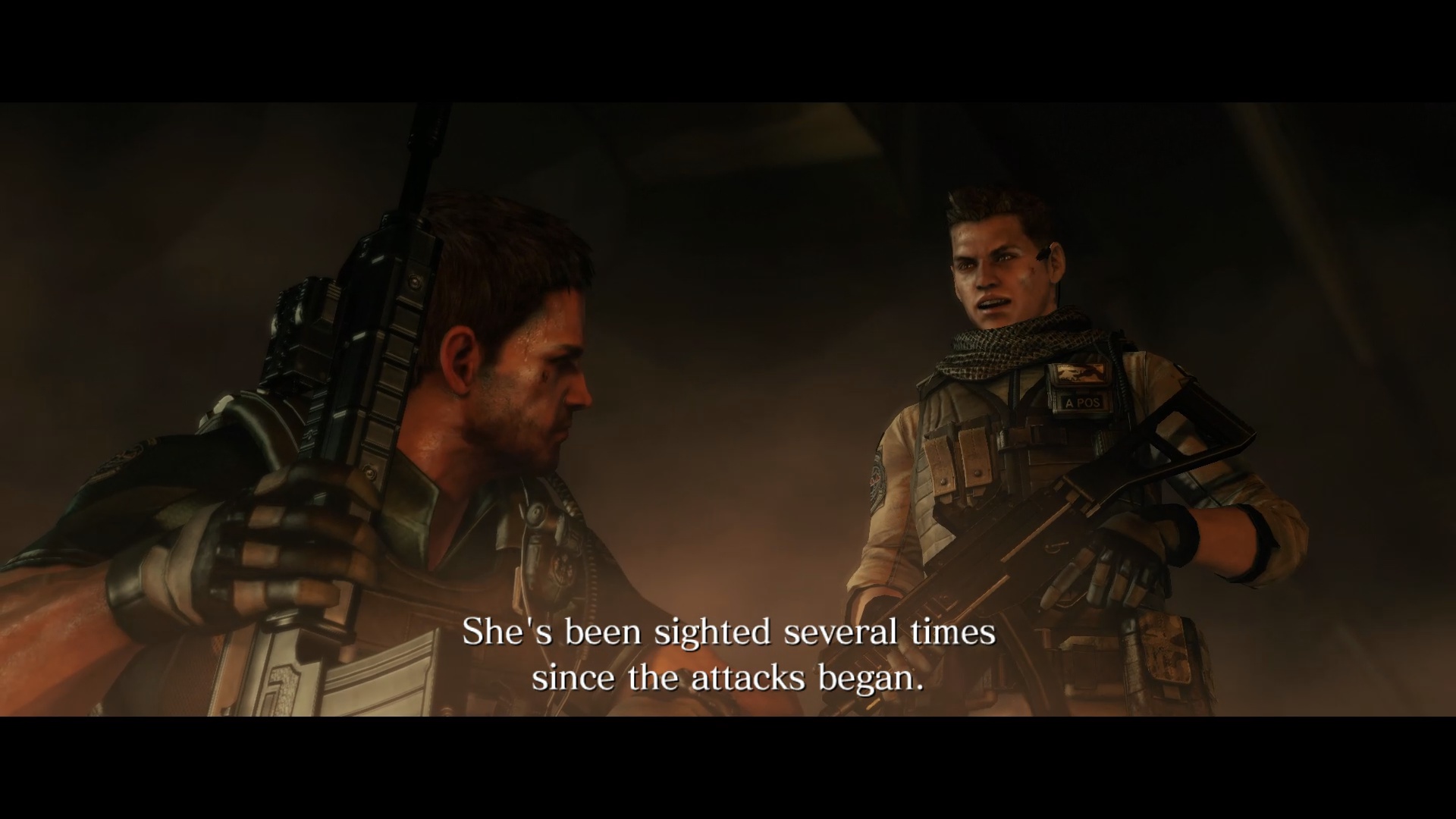
If the Leon campaign is the best Resident Evil 6 has to offer, the Chris campaign is probably the worst.
Get ready to pop on the combat boots of Chris Redfield, longtime series veteran and captain of the Bioterrorism Security Assessment Alliance (that’s a mouthful). He’s 200 lbs of pure testosterone with biceps the size of Christmas hams. Together with his BSAA scarf model buddy Piers, he aims to stop a lethal virus attack from hitting the Chinese mainland.
Players can expect to grind through a fairly bland and humorless six hour cover-shooter campaign. Instead of zombies, Chris gets to fight the J’avo – virus junkie mercenaries with facefuls of eyeballs. For the most part, it feels like these enemies are just dudes with guns, but some of the J’avo can further transform into weird insectoid horrors.
Problems pop up early on, with the rest of your AI teammates getting in the way of doors – and firefights. The fussy cover mechanic rears its ugly head often, and there’s some sections where enemies can hit you out of a cutscene before you have any chance to retaliate. It’s not entirely bad: There’s some high points that occur in the Chinese tenements. One sequence, reminiscent of Predator, even brings back a new spin on an old enemy from Resident Evil 1.
Still, Chris’s campaign has a lot that drags it down, including a lackluster turret sequence and a dumb as hell hostage scenario that has you shooting at hostages. The final boss is completely stupid looking. I won’t spoil it here, but imagine like… a couple of those sticky slap hands taped to a Halloween decoration.
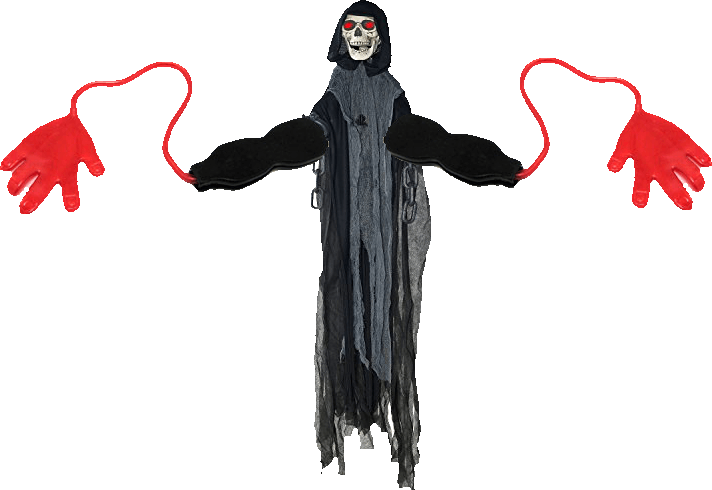
Here, we have an accurate representation of the final boss from the end of Chris’s campaign.
The final fight drags out to the point of being excruciating, and the ending leaves a lot to be desired. Overall, Chris’s campaign feels rushed, and it takes a backseat to the more interesting Leon story.
Jake Muller: Reluctant Edgelord Hero
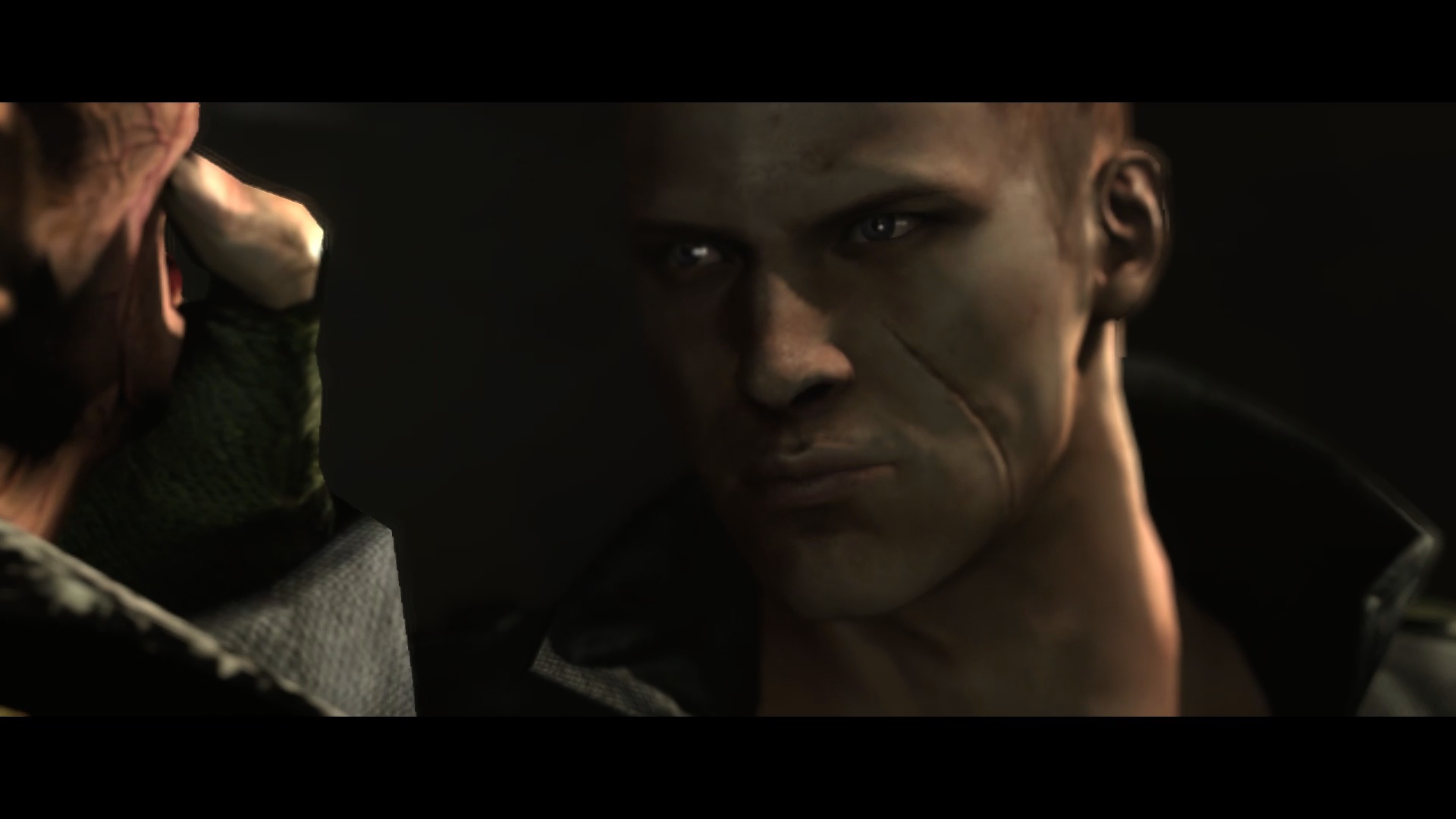
Jake Muller is a new face in the Resident Evil franchise, and on the quality scale, his campaign lies somewhere between Leon’s and Chris’s.Jake is a rather unlikable hard-boiled mercenary whose unit serves as a guinea pig for the C-Virus. He finds out by accident that his blood contains vital antibodies, so he teams up with an all-grown-up Sherry Birkin (from RE2) in order to stop the spread of J’avo and claim a healthy paycheck.

Jake is written as an obnoxious edgelord, and adding Sherry’s squeaky girl-child voice to the mix makes the dialog fairly cringe-worthy. While a lot of the gameplay for Jake’s storyline was enjoyable, the action-spam cutscenes and flat conversations didn’t feel like much of a reward.
Jake’s campaign has a lot of the same cover-shooter feeling as Chris’s did, and even includes some of the same encounters, but there are some worthy attempts to change it up. Jake’s move set includes some advanced hand-to-hand take-downs, and he packs a revolver that would make the Joker envious. There’s a jailbreak section that forces you to rely on your fists, and even a rudimentary stealth sequence.
The highlight of Jake’s story is Ustanak: an invincible behemoth with a plug-and-play arm. The boss fights and chase sequences involving Ustanak are pretty fun, even if they rely a bit much on QTEs. Running from an unstoppable foe gives this campaign some hints of Claire Redfield’s battles with the Tyrant from Resident Evil 2.
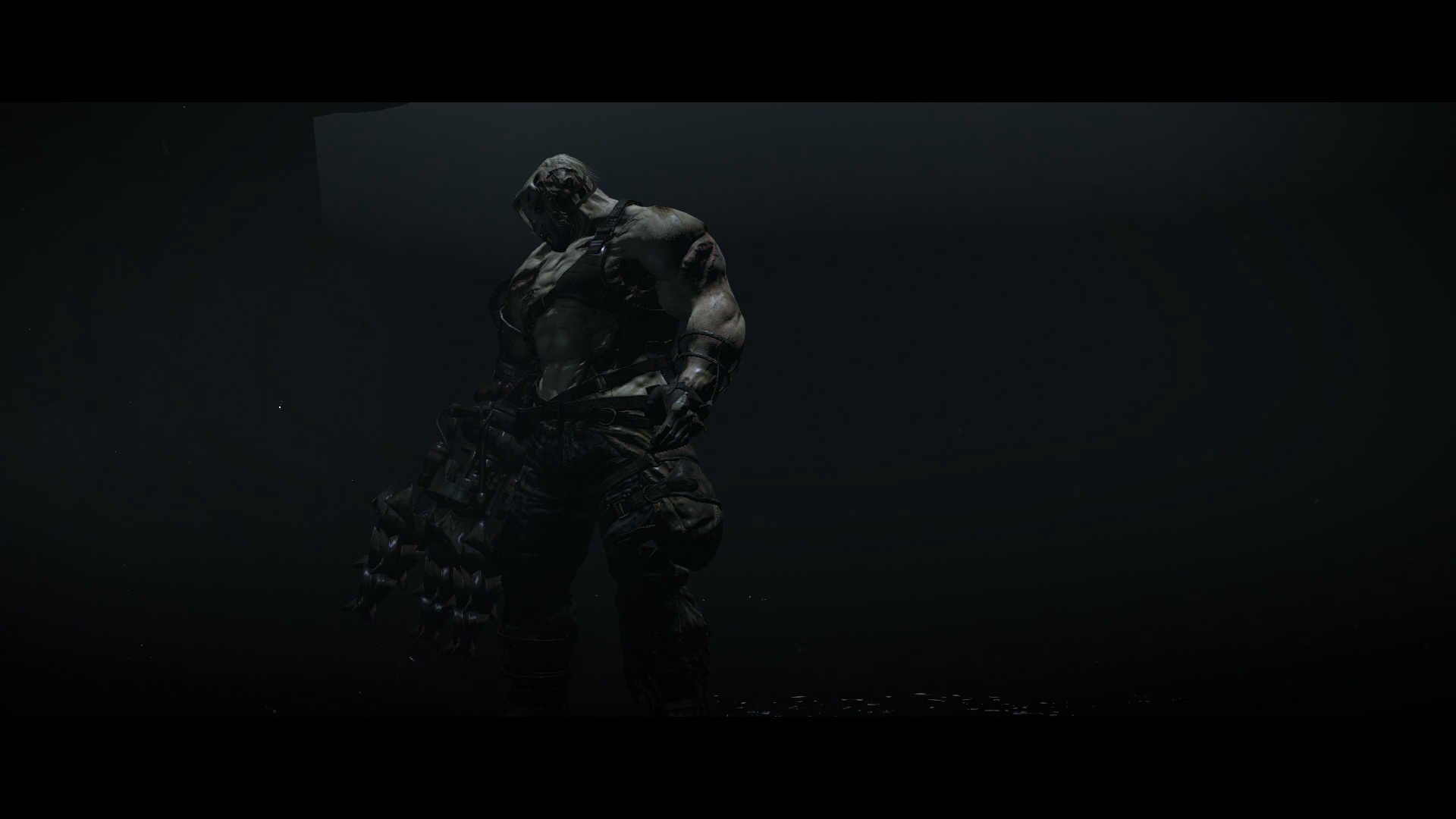
Plus, just look at this guy. Ustanak’s awesome.
Ada Wong: Globetrotting In Leather Pants
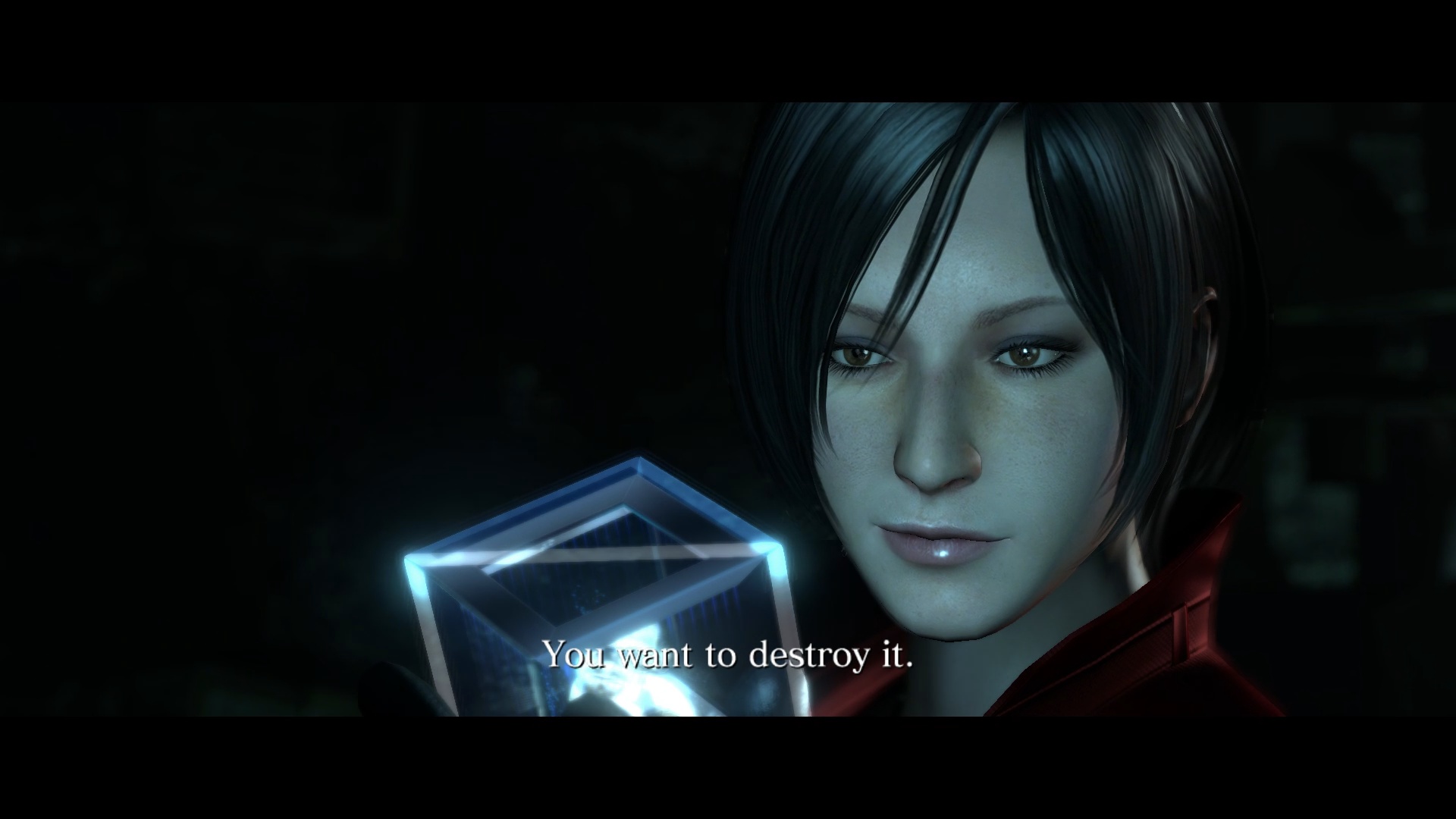
Ada Wong’s campaign is the final of the four.
Ada, an elite super-spy for hire, is baited into investigating a mysterious assignment that has her name all over it. Only problem is, she never took the job. Ada’s campaign crisscrosses the other three stories as she pursues her impostor around the world, stepping in at key moments to help the other half-dozen protagonists. As far as quality and fun factor, I’d say Ada’s tale squeaks in right above Jake’s campaign and just below Leon’s.
There’s a good balance of simple puzzle and action sequences in this campaign. The inclusion of all the other B.O.W.s from the rest of the game, and some new ones, provides better enemy variety. Making use of Ada’s spy toys feels pretty darn cool.
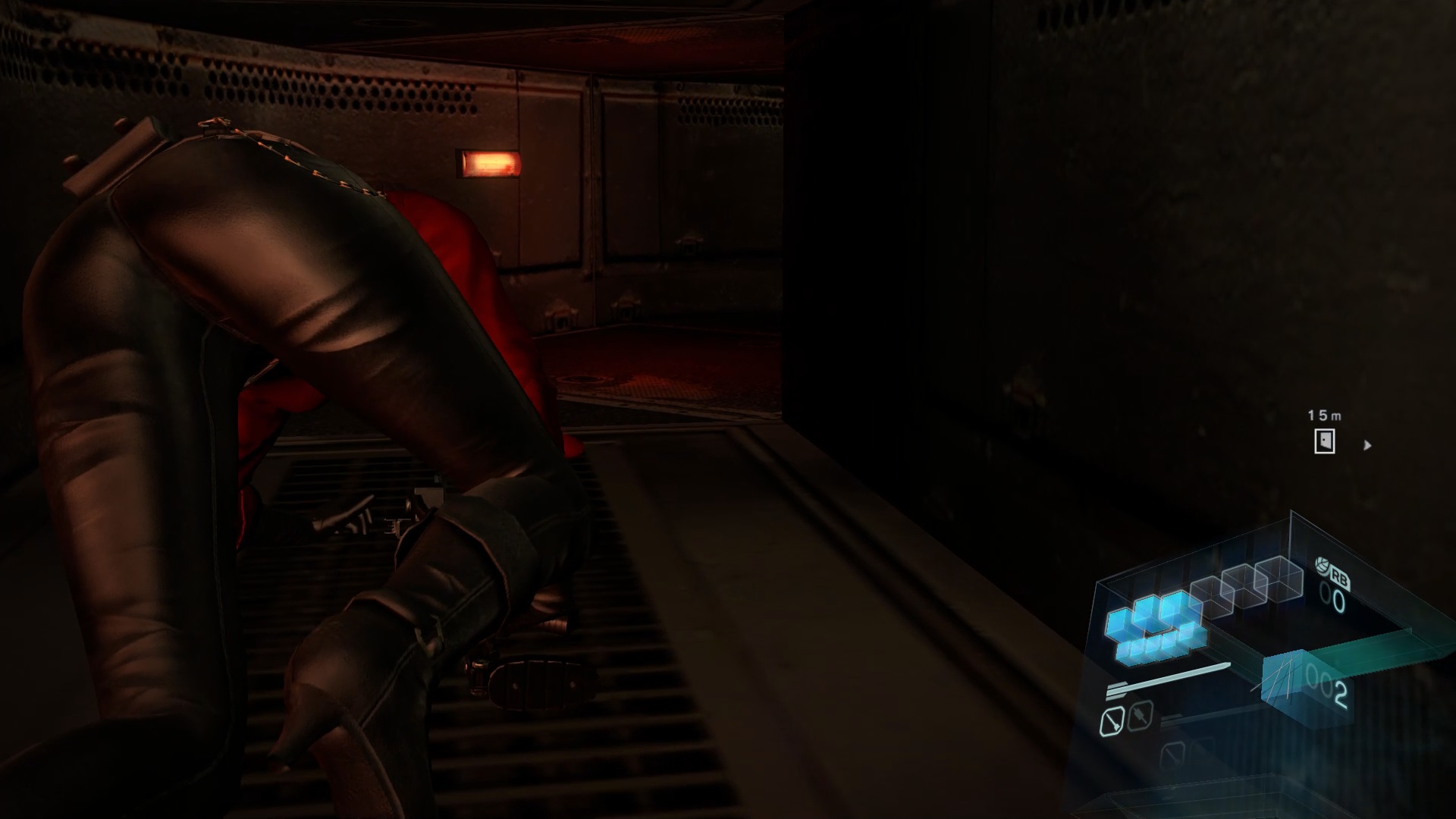
There’s also a goodly amount of vent crawling, which I’m guessing can be attributed to some of the developer’s long lonely nights.
It’s kind of unfortunate that Ada’s campaign is the shortest of them all, clocking in at about 4 hours. Some of the boss fights are just repeats from Leon’s campaign, which gives a lot of sections a feeling of deja-vu. Still, Ada’s story does a pretty decent job of tying up loose ends while still keeping her air of mystery intact. Plus, there’s a level where you get to fight obese cellar dwellers as a tiny Asian girl – what could be better?
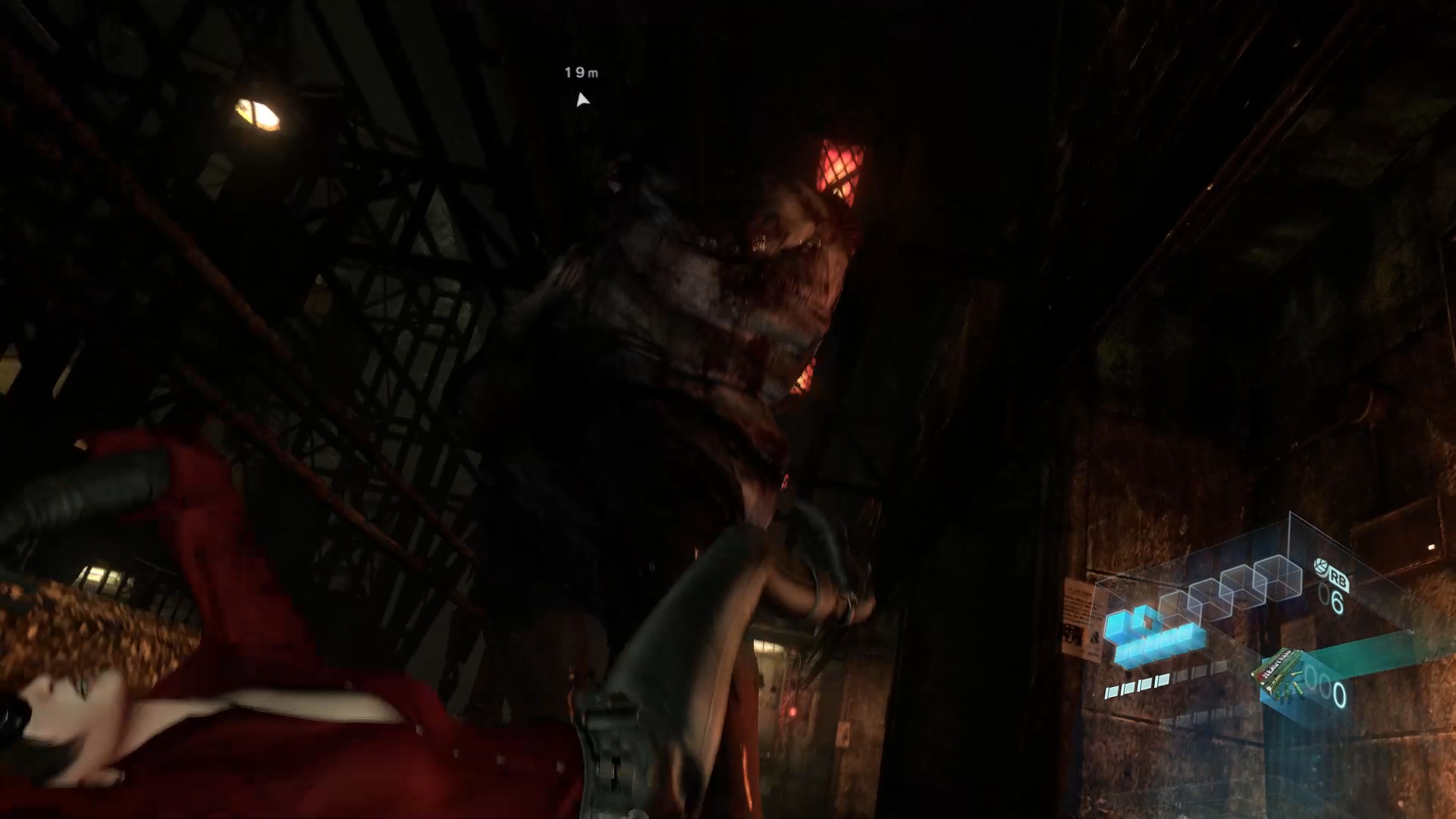
Waifu! Husbando wants a hug.
Resident Evil 6: Undeserving of its Reputation?
Upon its completion, I found far less faults with Resident Evil 6 than I was expecting. On its own, this is still a somewhat-flawed-yet-fun action game, and I believe I can explain the backlash from fans and critics.
Since the release of Resident Evil 4, the series has gradually stepped away from its survival-horror and adventure roots. Level design in RE4, 5 and 6 was more of a straight path rather than the intricately-built puzzle boxes of the first games. Puzzles are nearly nonexistent, and the ones that appear are elementary. Ammunition is plentiful, making the games reward fight instead of flight. What we’re left with in RE6 is a (mostly) competent action romp that still contains a ton of value. There’s a lot of game here, and action horror fans would still do well to pick this one up on sale.
Resident Evil 6’s design is the straw that broke the camel’s back, so to speak: it’s completely linear and leaned too hard into spectacle, taking much of what made up the soul of the series out of the formula. Fans finally had enough of the style over substance approach, forcing Capcom back to the drawing board for the next entry.
Fortunately, Capcom was wise enough to listen to fans with Resident Evil 7: a masterpiece that reclaimed the survival-horror throne.
Time will tell if Resident Evil 2’s promising remake holds up as well as the 1998 classic, and you can count me among the gamers that are itching to take the remake through its paces.
https://www.youtube.com/watch?v=85Qzg6eJIwk
- Chandon, also known as Bawss Sawss, is a pretty big Resident Evil dork. He’s also a sauce aficionado, gamer, writer, musician, and one head of the 2 Headed Hero gaming channel on YouTube. He can be reached on Twitter, Instagram, or Facebook. NEW!! You can now directly email questions/concerns/playful insults to [email protected] !
- 2 Headed Hero’s quieter half, Rollinkunz, is the channel’s illustrator, gamer, writer, and boardgame designer, He can also be reached on Twitter, Instagram, or Facebook.
BACKLOG.TXT: Regular Human Basketball is 1-on-1, Human Style
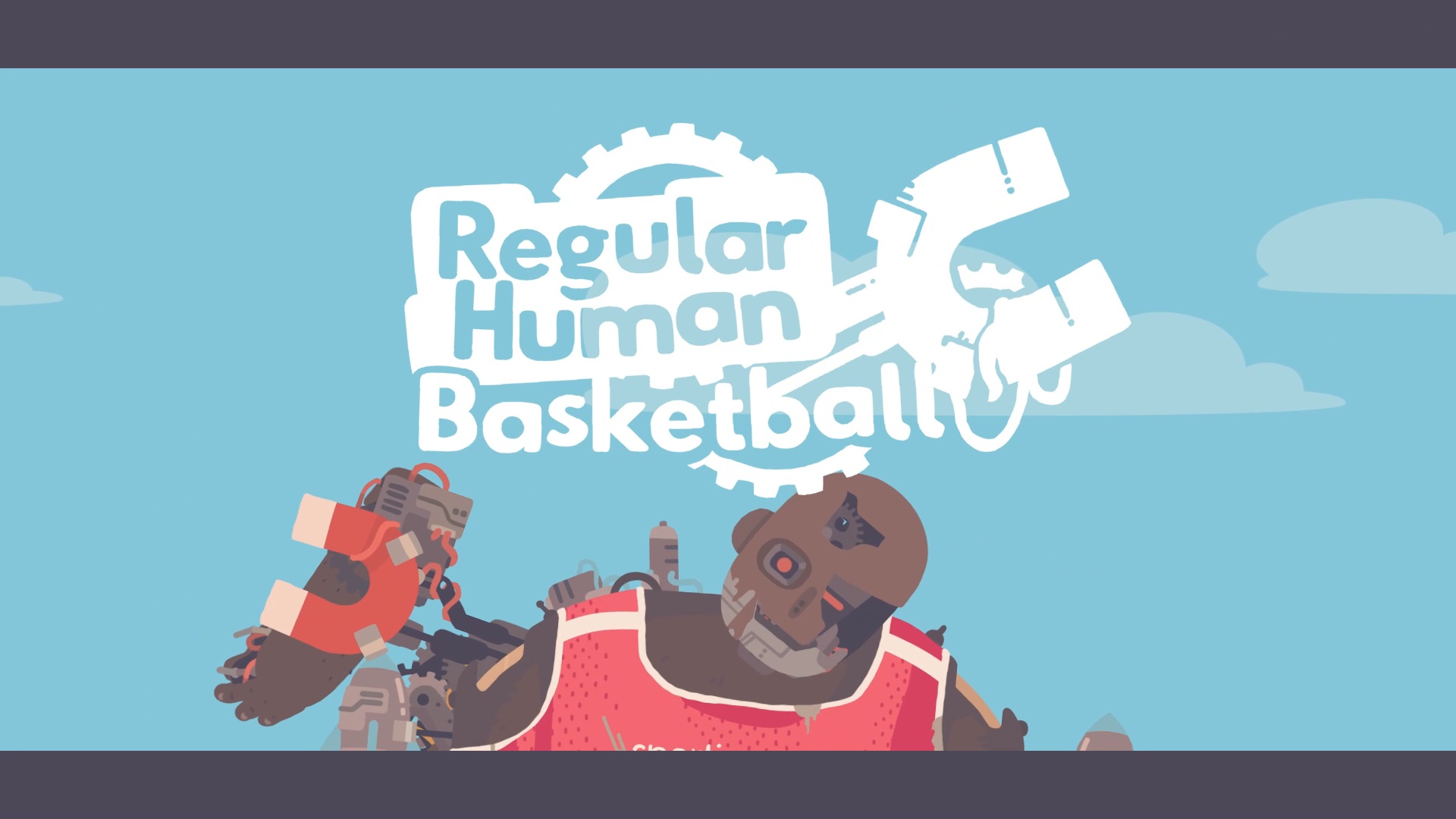
Previously on Backlog Quest, we took a look at Regular Human Basketball, which, as the title suggests, is a game about a couple of regular, average humans that are… definitely not robot suits controlled by tiny aliens… facing off with some one-on-one on the b-ball court. Prefer to watch? Check out the episode on the 2 Headed Hero YouTube channel!
Regular Human Basketball: Could It Be the First Entirely 100% Human Sports Game?
Regular Human Basketball is a multiplayer-focused competitive platformer and physics puzzler. This relatively new indie title, released on August 1, 2018, represents the second effort by the Australian two man team Powerhoof Games– the first being the rather novel 2017 dungeon diver Crawl.
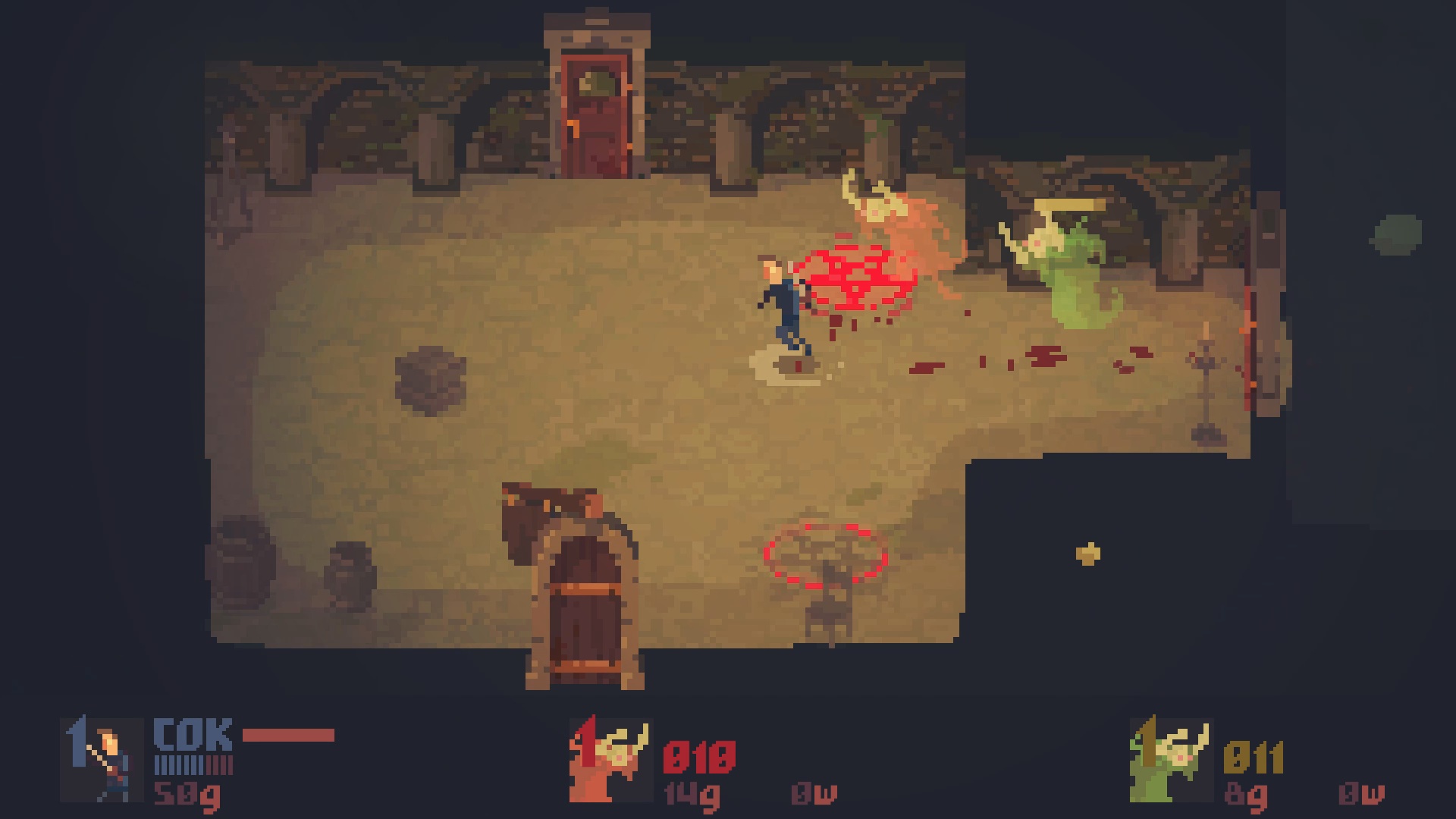
Crawl: The ideal dungeon hack-and-slasher if you want to turn friends into enemies!
Both games feature detailed 2D art and a multiplayer focus, but this is where similarities end. Crawl focuses on a peculiar brand of competitive couch-only multiplayer with monster possession mechanics, king of the hill victories, and rampant hacking and slashing, with each player attempting to take down the leader in a battle for score dominance and bragging rights.
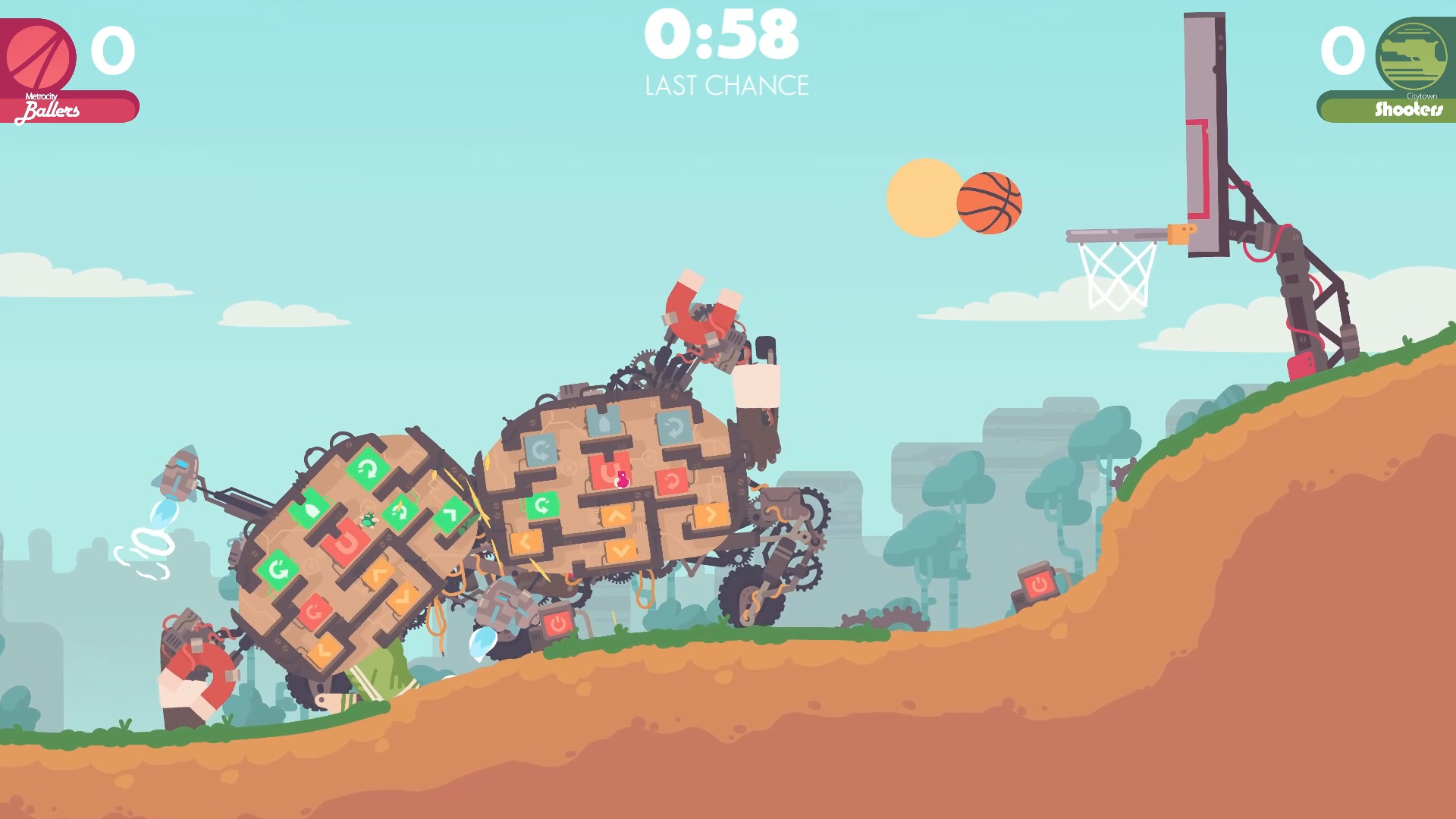
Alternative game title: Hoopin’ With Humans. Powerhoof, take note: I’m available as an idea man.
Healthy Regular Human Competition
In contrast, Regular Human Basketball takes a team-based approach. Two squads of up to five players each face off locally, or online, in a curious combination of platforming, wobbly physics, spirited competition and jolly cooperation. The goal? To see which of their “humans” can dunk-em-up the most before the end of the match.
Rather than directly controlling the “human”, players instead take on the roles of tiny, fragile aliens that can easily be crushed by the basketball itself.
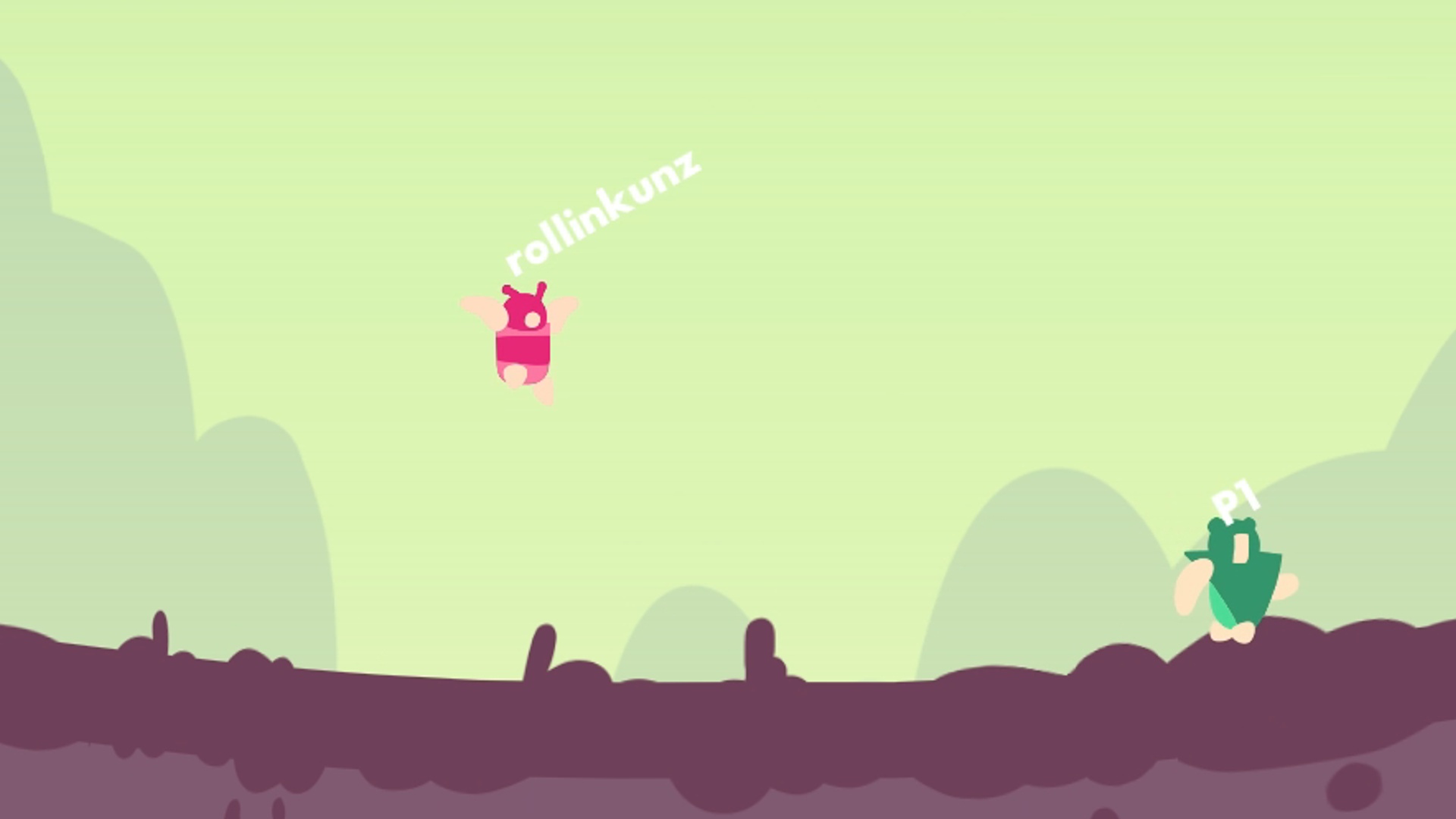
These itty-bitty ETs jump inside of the “humans” in order to aim their boosters, swing their magnets, and put their wheels into gear.
All this is accomplished by manipulating various switches inside the “human”. Therefore the path to victory can be a challenging and often hilarious one, as players have to master a combination of frantic multitasking and concise timing, all while anticipating the movements of both your own “human”… and your opponent’s.
True Touches of Humanity
Rounding out the game’s clean and attractive visual presentation are a few other clever touches. There is a small selection of courts to choose from, each with different terrain or features to help mix up the matches. The sound design here is also really solid, containing the clanks and clunks of colliding humans and rebounding b-balls. The bouncy 80s-style hiphop soundtrack is often hilariously punctuated by the giggle-worthy outbursts of a couple regular “human” announcers.

The real icing on the cake is the absolutely wonderful fast-time instant replay feature – watching one “human” triumph with a buzzer beater or boost dunking high above an opposing team’s head is just… simply… magnificent.
Praising Regular Human Innovation
I can appreciate a good concept in gaming. Praising innovation is something we often strive for throughout our never-ending Backlog Quest, and Regular Human Basketball simply exudes creativity. Its presentation is funny and endearing, its controls are simple to learn but hard to master, and despite the very occasional lag spike or disconnect, the game ran well.
Still, I unfortunately had a rather frustrating time with Regular Human Basketball. I just could not seem to get a good enough handle on the mental gymnastics required to succeed, or even legitimately score, in a single one on one match.
Examining Games I Suck At Playing: An Important Realization
When putting a game under the microscope, it’s important to create some distance and objectivity and realize that sometimes it’s not the game that’s at fault, but the player. When I run into a title like this, where I can see all this the potential fun lurking beneath the glass but can’t touch it for the life of me, it’s both frustrating and heartbreaking.
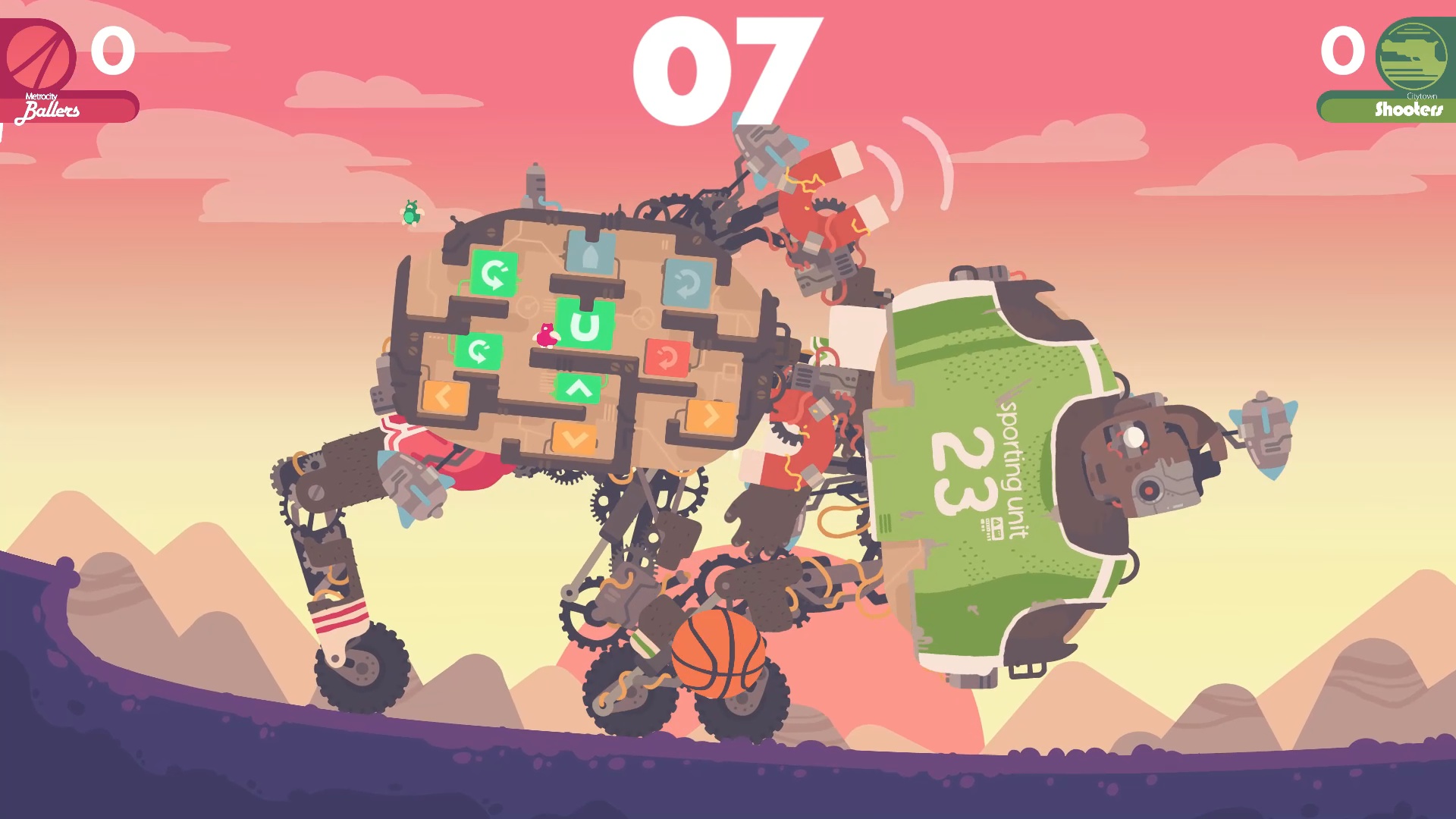
Unfortunately, Regular Human Basketball‘s main issues lie with its lack of marketing and near-silent launch.
Some of the issues I found with the game are not without merit, however. Player base is the lifeblood of any multiplayer game, and the Achilles Heel for Regular Human Basketball – almost no one is playing this game. After the initial hilarity factor wore off and we sat in the barren matchmaking trying to team up for a two on two for far too long, I couldn’t help but repeatedly think how much more fun could be had with Regular Human Basketball if it had the player base to support its ambitions, or even an option to play cooperatively against bots.
Regular Human Value
Regular Human Basketball has a simple creative charm that got a lot of laughs out of me, despite my inability to even master its basic strategies. This game would be the perfect timekiller with a group of friends. Passing out controllers on the couch in front of Regular Human Basketball would definitely set a great and goofy tone while waiting for your cab to show up before a night on the town – or even later on during that same night, after waiting for that necessary post-crawl pizza delivery.
Regular Human Basketball is quite a good, polished deal for its $4.99 asking price, better if you have a pile of controllers and a TV handy. Although it might not be the preferred flavor for this gamer, I respectfully give this game a salute of my sweatband.
- Chandon, also known as Bawss Sawss, is a sauce aficionado, gamer, writer, musician, and one head of the 2 Headed Hero gaming channel on YouTube. He can be reached on Twitter, Instagram, or Facebook.
- 2 Headed Hero’s quieter half, Rollinkunz, is the channel’s illustrator, gamer, writer, boardgame designer, He can also be reached on Twitter, Instagram, or Facebook.
BACKLOG.TXT: Noctropolis, a Forgotten Gothic Adventure
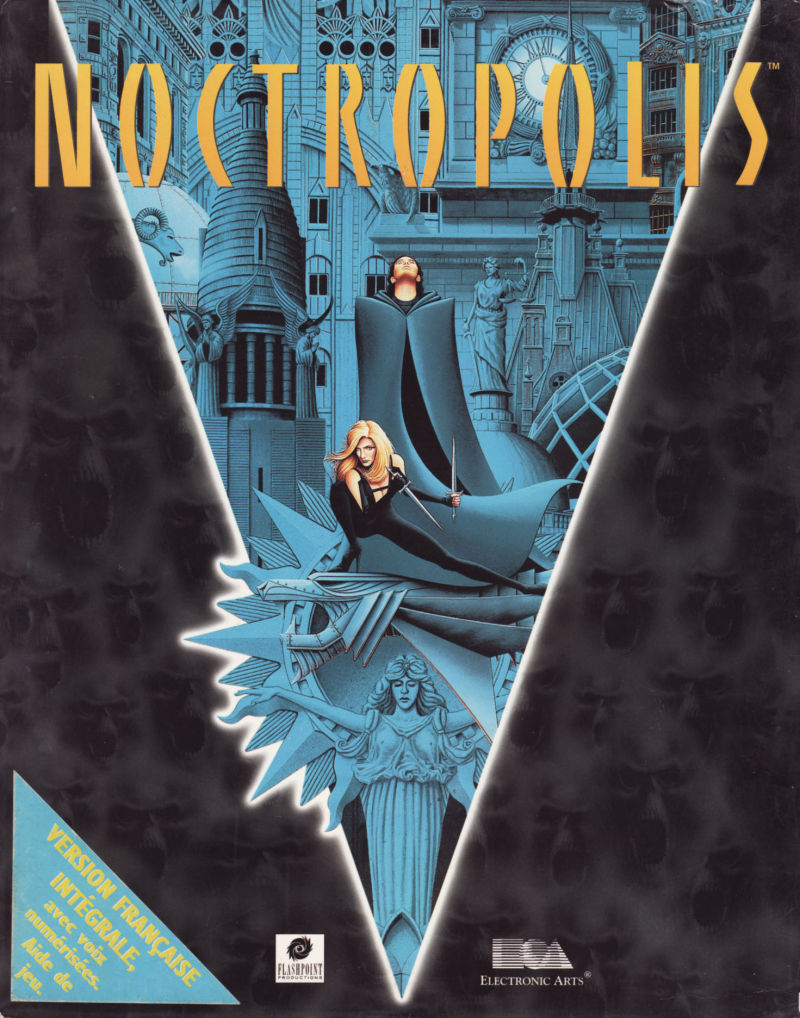
Noctropolis – a forgotten gothic superhero adventure from the full motion video era. What a mouthful.
Today on Backlog Quest, we dig deep into the past to unearth Noctropolis, a flawed – yet fascinating – footnote from the old days of MS-DOS point and click adventures. Noctropolis sticks players squarely in the shoes of Peter Grey, a down-on-his luck bookstore owner and fulltime comic nerd. After a mysterious package arrives at his door, Peter finds himself transported to the dark setting of his favorite comic. Taking it upon himself to fill the shoes of his favorite superhero, Darksheer, Grey sets out to stop a gang of powerful villains from taking over Noctropolis.
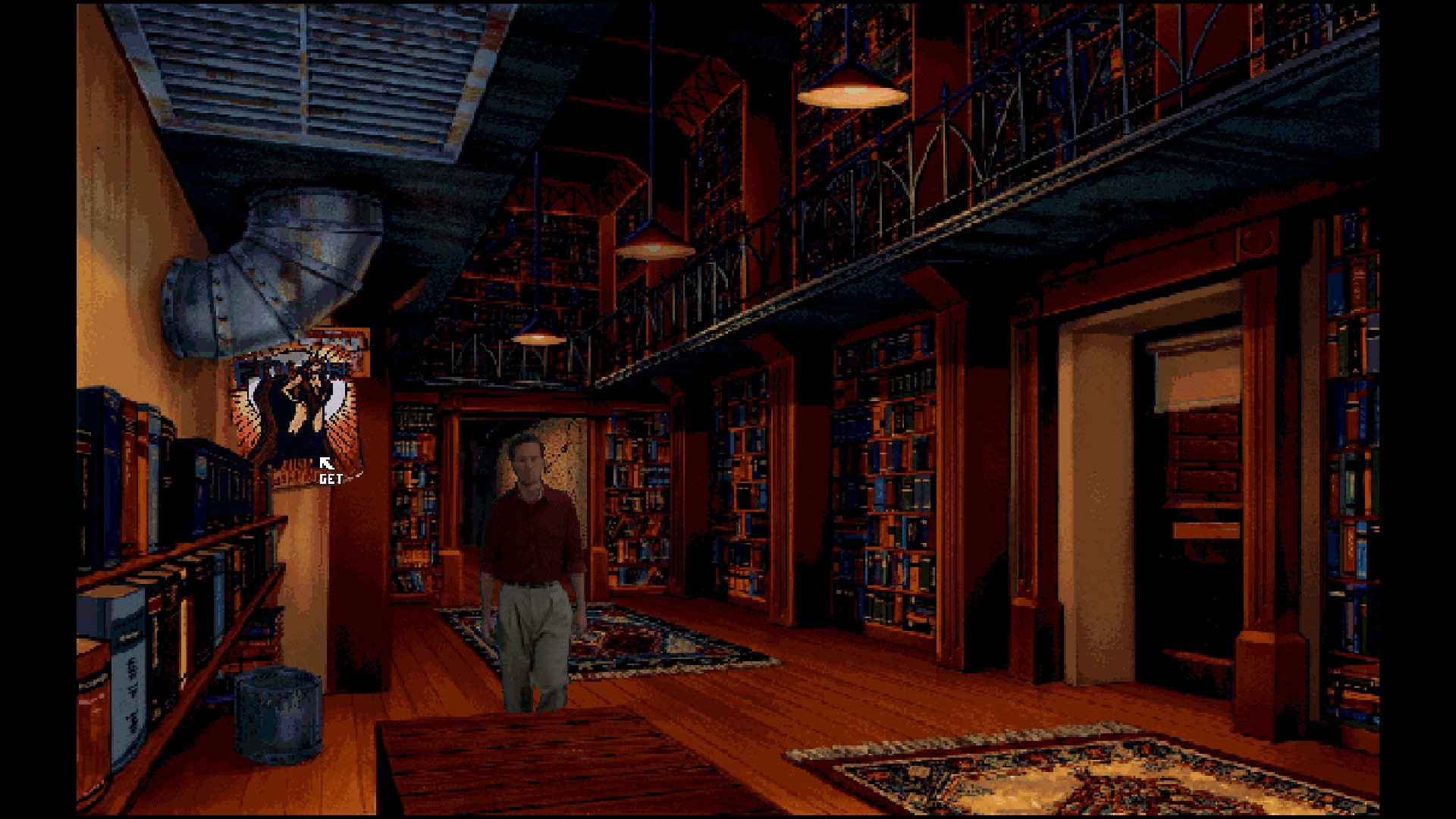
The intrepid hero Peter Grey, khakis ready for action.
Unearthing Digital Relics: Nightdive’s Back At It Again
Flashpoint Productions initially birthed Noctropolis back in 1994, pushing it screaming and kicking headfirst into the world with the help of Electronic Arts. Unfortunately, the game was quickly forgotten in the shadow of its contemporaries. Adventure gaming monoliths Lucasarts and Sierra were in full swing at this point of gaming history, and it would still be several years until the genre’s fall from grace. Flashpoint Productions would also dissolve from view and become Bethesda’s west wing of development in 1995 – just months after Noctropolis was released.

Keep an eye out for Night Dive – these guys are doing great things.
Everything old is new again, however. PC gaming resurrectionists from Night Dive Studios worked with the original developers to acquire the game’s source code and exhume Noctropolis from its dusty digital grave in 2015. This release was an enhanced edition of the game that fixed bugs and fail states, remastered the soundtrack, and added compatibility with modern operating systems.

Another charming locale in Noctropolis.
Visuals in Noctropolis are a mixed bag. Many of the beautiful backgrounds evoke a dark gothic industrial feel. The game uses enough distorted perspectives and fisheye lens cityscapes to make Salvador Dali sweat. However, it’s apparent that some of the backgrounds were hastily photo-bashed, and the digitized actors have glacially slow animations. This can cause the characters to look somewhat strange and often out-of-place.
Noctropolis came out during the rise of CD-ROMs and full motion video. This mix of visual styles definitely shows its age, but isn’t without a charm all its own. Both the quality of the video itself and the uh…”acting” contained within can be somewhat hit or miss.
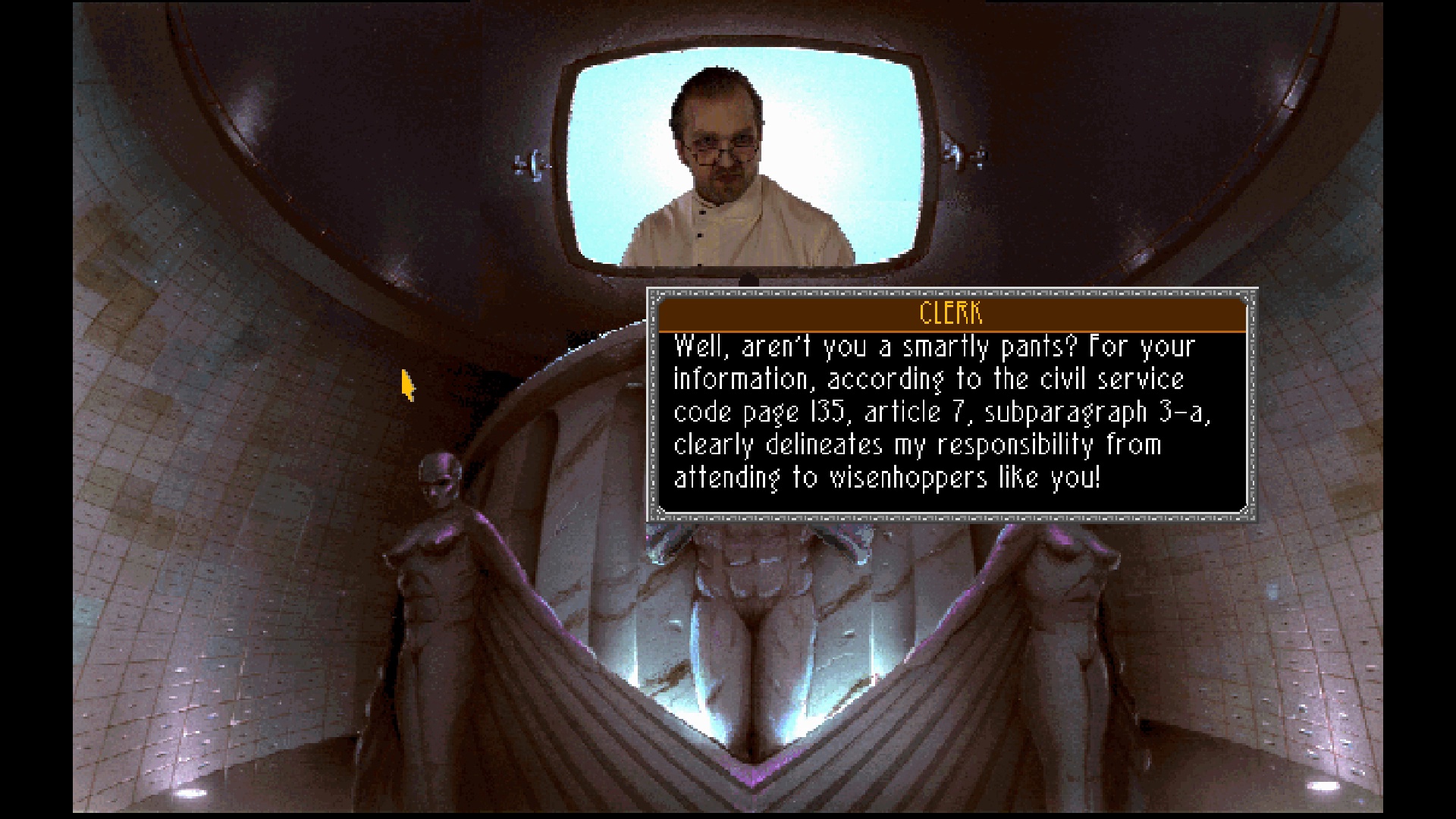
Some of the bit characters have some of the best performances in Noctropolis. Also, If anyone knows what a “wisenhopper” is, drop us a comment!In contrast, the remastered soundtrack is quite polished. Ron Saltman’s work mixes beautiful movie score themes with a sprinkling of bouncy, quirky tunes to create an overall tonal effect reminiscent of Tim Burton movies.
Big Ugly Grey Triangle
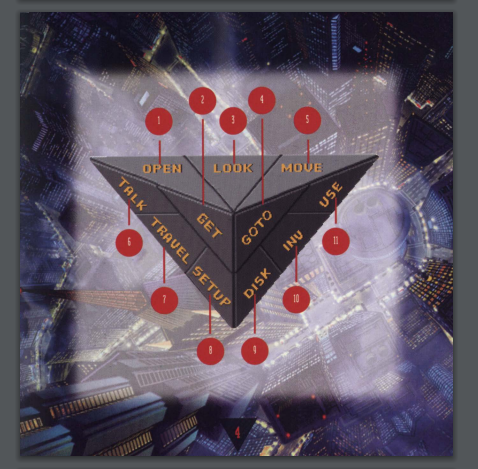
The interface: A pyramid of horrors.
Other reviewers have pigeonholed Noctropolis as a standard point-and-click adventure, and that is mostly true. However, there are some very strange design choices for the time. The interface is a big, grey, ugly triangle. Bringing up this ludicrous triangle allows the player to switch their cursor to perform different actions, but “move”, “go to”, and “travel” all share similar names while having completely different functions.
The conversations can be entertaining in themselves. However, they often have to be “solved” by brute forcing through the dialogs over and over again until you gain the desired keyword or advance the plot. Characters you talk to often have instant amnesia after your conversation is done, no matter the outcome.
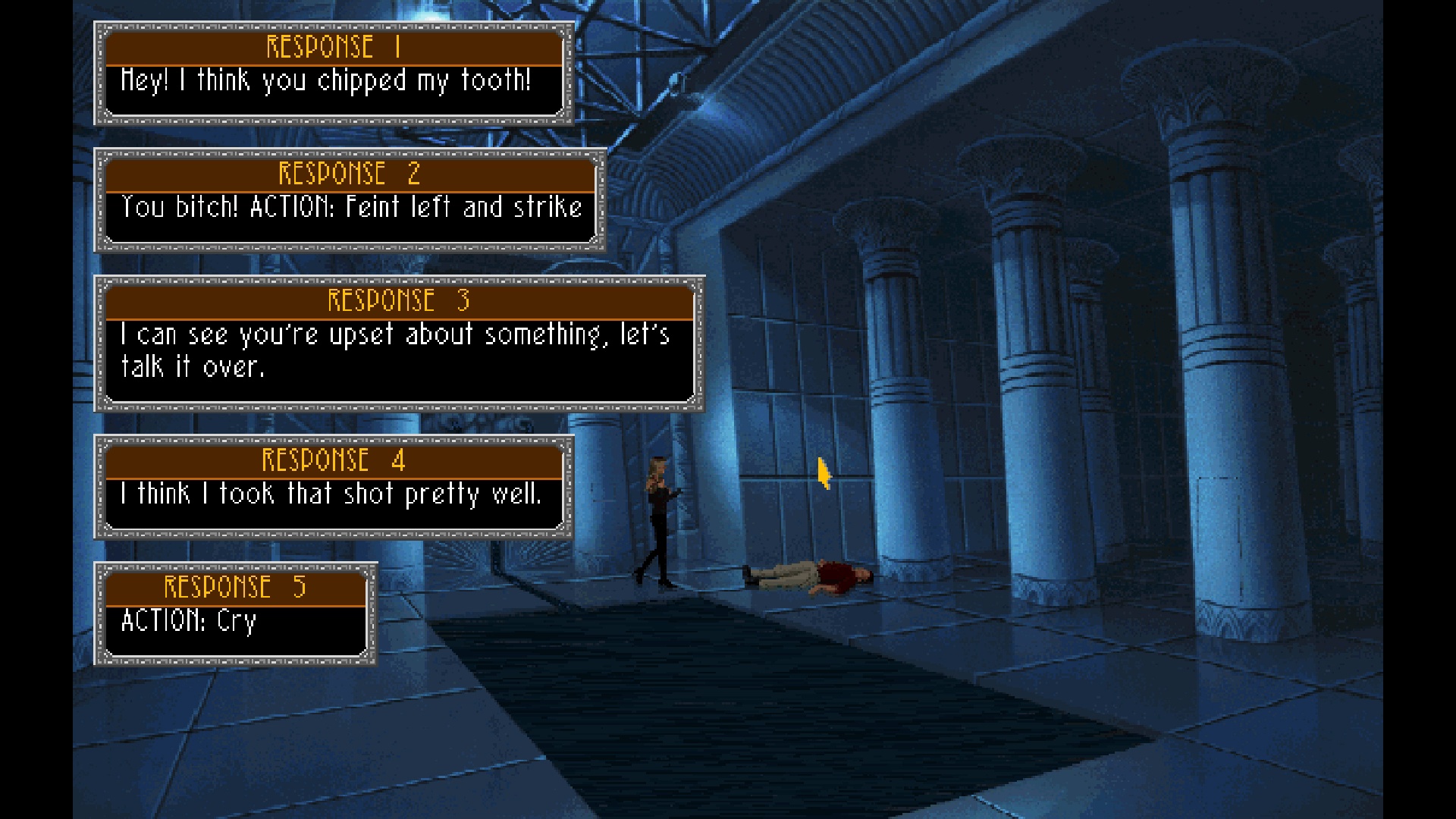
This is probably the only game I can think of that has ever let me successfully cry my way to victory.
Items are used automatically, if you click them while Peter’s on the correct screen. This takes a lot of the guesswork out of the standard adventure game strategy of “trying every item on every point of interest possible”, but the game unfortunately counters itself with a large amount of pixel hunting, a few abstract and illogical puzzles, and numerous sudden deaths for Peter. The game is short, about 6 hours total, but be prepared to wander around Noctropolis scratching your head for longer if you don’t plan to use a guide.
Overall, Noctropolis plays less like a traditional point-and-clicker and more like one of those hidden object or escape games that are popular on mobile devices. Still, let’s put all that aside.
A Look Back Into the 90s
I find games from the 80s and 90s to be incredibly fascinating. This was a period of time where developers were often challenged to come up with creative solutions due to technological limitations and budget constraints. Making a good game that sold copies was still the best, and often only, sales strategy. The mid 90s were also a pivotal time for games. Developers, now drunk with power due to the advent of CD-ROMs, did all they could to make games more like movies – and did so with varying degrees of success. Noctropolis represents a time when the landscape of gaming all began to change.
Noctropolis: Not All Negatives
While I’m aware this article might sound like a lot of complaining, I still really enjoyed my time with Noctropolis. The true guts of any point-and-click adventure game lie in the story. So does Noctropolis deliver? Well, that depends on your tastes in movies. Noctropolis has all the cheesy charm of a favorite late night C-list flick playing on a roadtrip hotel room’s TV. Starting the game as a helpless dork that turns into an exaggerated grimdark superhero is a well worn trope, but the game wears it and bears it without shame.
Whether the story is intentionally funny or not, I kept wanting to stick around to see the next goofy villain or awkward dialog. Walking into the weird settings and watching the story unfold is a good time for anyone that appreciates a high level of cheese. As an added bonus, the superior Nightdive version of Noctropolis often goes on a deep sale when purchased from GOG.
it’s clear that there was a lot of passion behind the creation of the world and its inhabitants. For that alone, I can give Noctropolis a playful dip of my dome.
Prefer to watch rather than read? Check out the accompanying animated Backlog Quest episode on 2 Headed Hero for the full effect!
- Chandon, also known as Bawss Sawss, is a sauce aficionado, gamer, writer, musician, and one head of the 2 Headed Hero gaming channel on YouTube. He can be reached on Twitter, Instagram, or Facebook.
- 2 Headed Hero’s quieter half, Rollinkunz, is the channel’s illustrator, gamer, writer, boardgame designer, He can also be reached on Twitter, Instagram, or Facebook.
Backbone Prologue: A Trash Panda Detective Tale | BACKLOG.TXT
Today’s BACKLOG.TXT deals with a teaser: the highly original adventure/stealth hybrid Backbone: Prologue. On 2 Headed Hero, we tend to keep an eye out for indies that might otherwise slip by. Fortunately we’ve dumpster-dived through enough of the garbage to sniff out a quality clue. Prefer to watch? Click the video above or visit us on 2 Headed Hero’s YouTube channel!
Be Free, Eat Trash
Backbone was successfully Kickstarted by Canadian developer Eggnut in 2017, and the full game is aiming for a multi platform release in 2020. While Backbone: Prologue is only about the first forty-five minutes of the full upcoming game, this noir trash-panda detective tale is shaping up to be a clever delight.
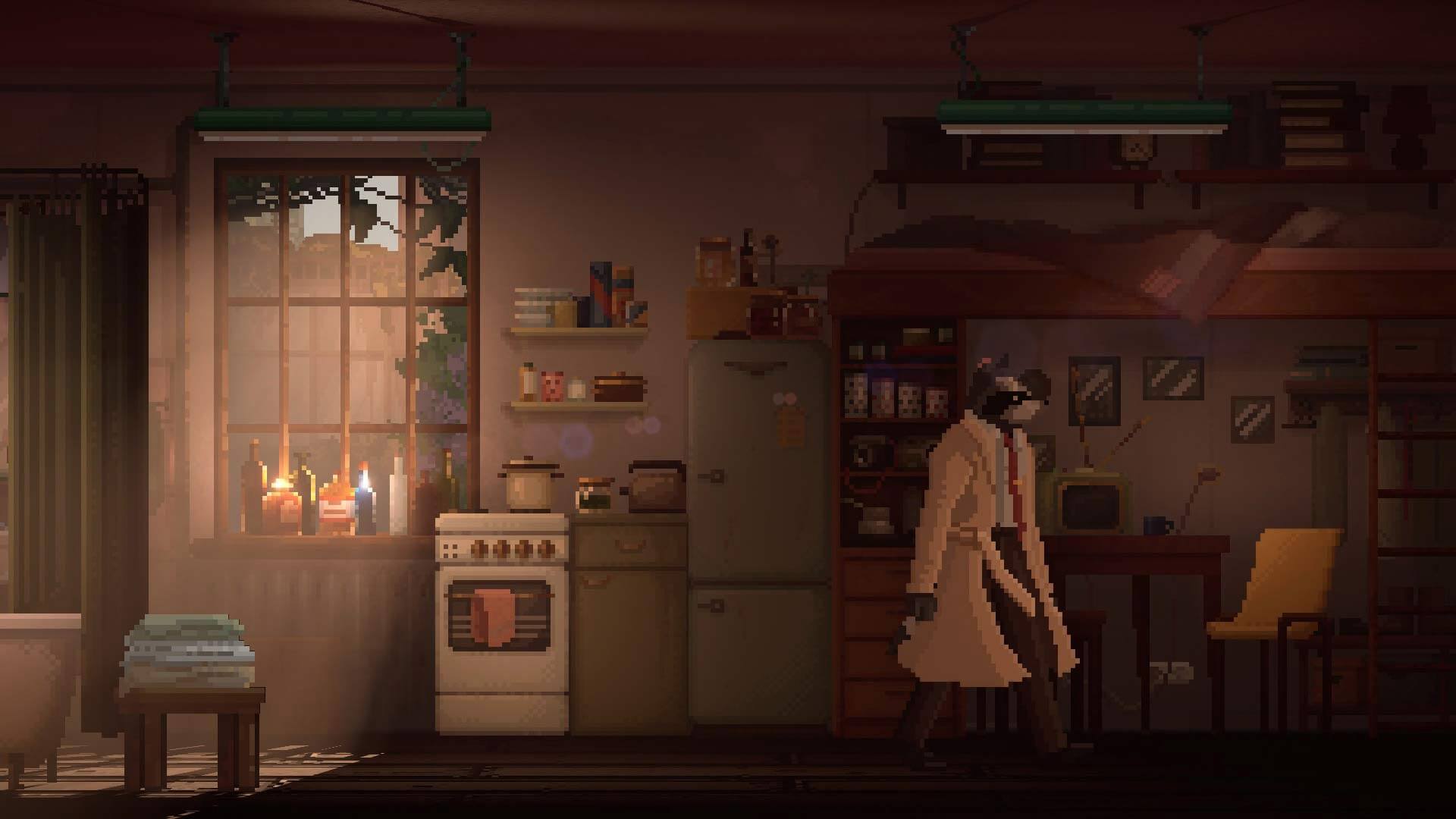
Players step into the shoes of anthropomorphic private investigator Howard Lotor and stumble across a dark and sinister mystery in a re-imagined Vancouver. The world is now populated by a flurry of fursonas, without a single normal human in sight, but the gritty tone Backbone Prologue sets is definitely not kiddie fare.
Unreal Techniques
Backbone: Prologue uses a modern pixel art style – no black outlines here – and the visuals are smartly enhanced by Unreal Engine lighting effects. The sprites in each scene are set up as flat set pieces and objects in a 3D space with a fixed-distance camera. This allows for the sort of subtle lighting and dynamic shadows that can really help players buy into these environments while still maintaining the pixel-platformer format.
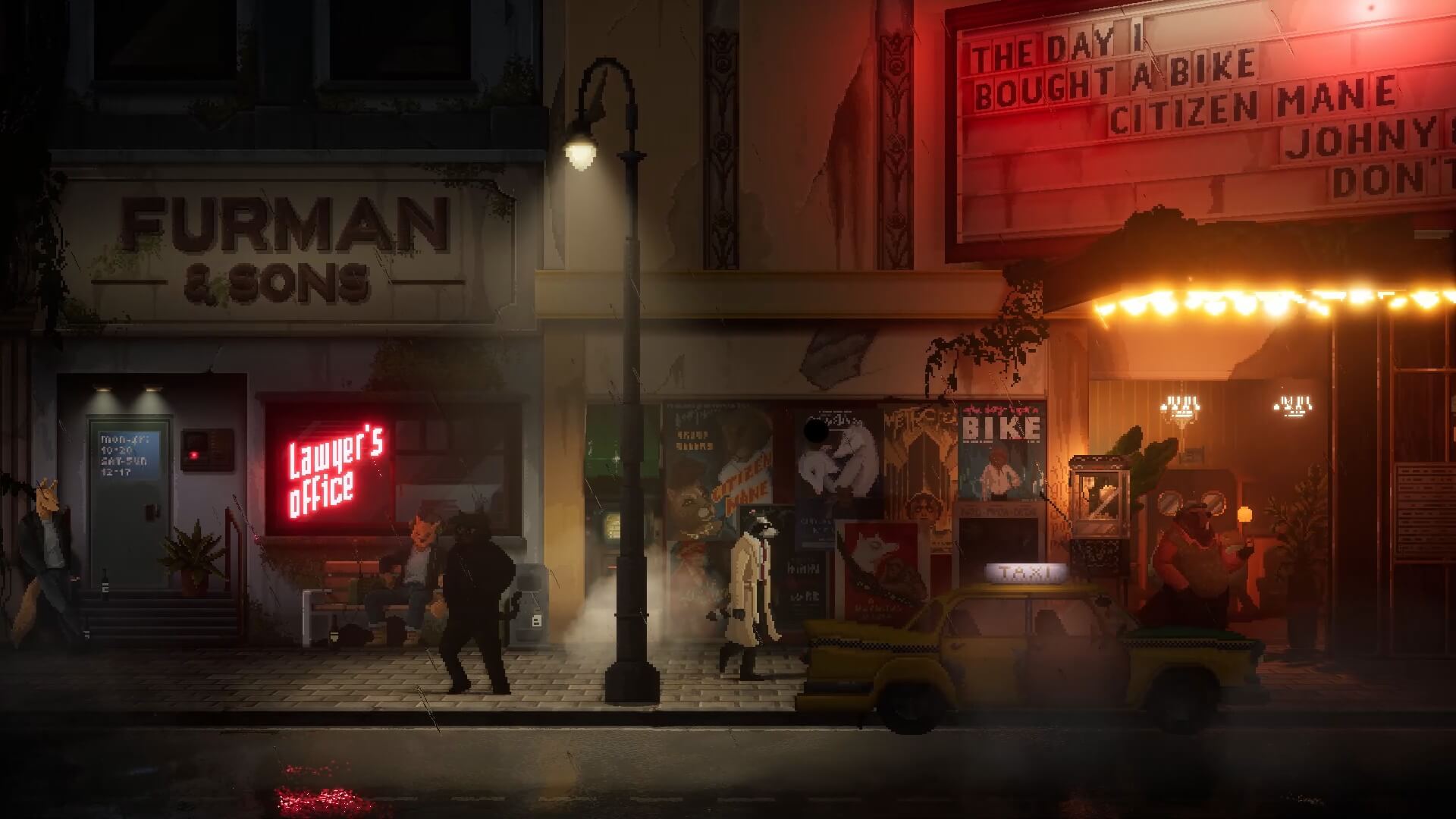
These techniques, along with an impressive number of animated background actors, further bring the setting to life. The result is a gritty, bustling pixel-noir – an interesting juxtaposition between the childish and the very-much-not-so.
Smooth Jazz

The jazz soundtrack is phenomenal, even containing lyrics.
Sounds in Backbone: Prologue ooze with atmosphere. The moody jazz soundtrack compliments the bustle of the city and the pitter-patter of gently falling rain. The wet slaps of your garbage-loving gumshoe’s feet hitting the pavement are balanced just right in the audio mix. Once inside the interior of the nightclub, Backbone: Prologue’s musical numbers shine through, even including a gorgeous jazz tune complete with lyrics.

While there’s no voiceovers – yet – the team met their Kickstarter stretch goal to include full voicework. Voiceovers can often make or break a game’s atmosphere, and while the tiny taste in Backbone: Prologue stands on its own, I still eagerly look forward to hearing how actors approach the dialog here.
Play It Cool
As it stands, Backbone: Prologue currently features three flavors of gameplay: dialog, puzzles, and stealth sections.
Dialogue trees provide options for handling your clients and the city’s denizens, though it’s unclear how much your choices actually matter. Presumably, you can’t back yourself into an unwinnable situation no matter how hard-boiled a private dick you choose to be. Since brute force dialog puzzles are often an annoyance in adventure games that bring pacing to a halt, it’s nice to see Backbone: Prologue’s gentler approach.

That’s a big big bunny.
Backbone: Prologue’s stealth sections were puzzle-like and precise, but not entirely devoid of necessary wiggle-room. Distraction items in the environment help Howard get in where he’s not wanted, and failing these merely boots you back to the start of the sequence. Overall, they broke up our session nicely.
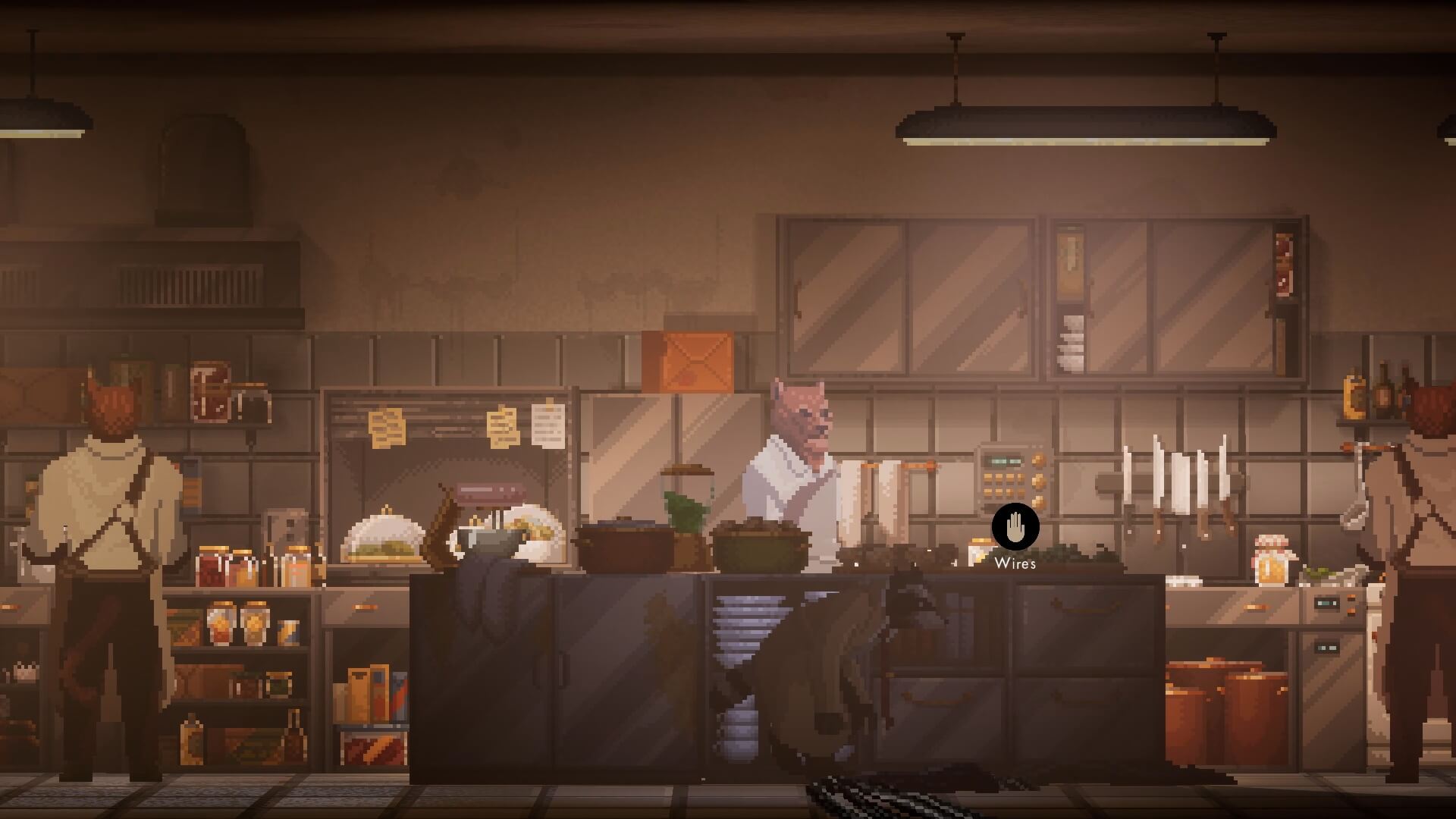
The single non-dialogue puzzle in the demo was a satisfying combination of physical arrangement and logic. While I won’t spoil the solution here, the answer is a clever nod to fans of immersive sims and brought a smile to my face.
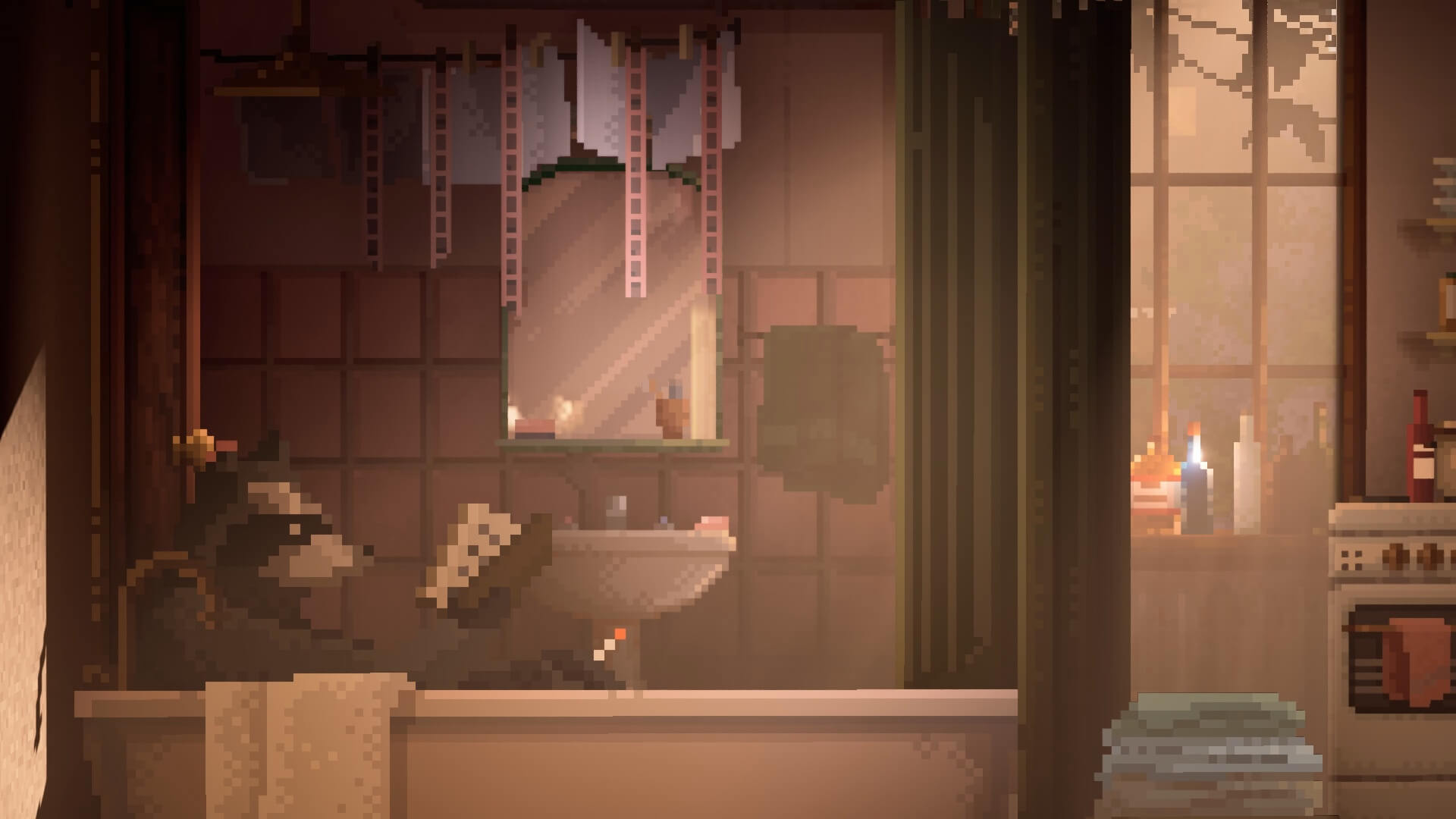
Overall, Backbone: Prologue is a game to watch – the novel combination of stealth and adventure combined with the imaginative setting is shaping up to win over adventure fans when the game releases next year.
- Chandon, also known as Bawss Sawss, is definitely not three raccoons stacked in a trench coat. He’s also a sauce aficionado, gamer, writer, musician, and one head of the 2 Headed Hero gaming channel on YouTube. He can be reached on Twitter, Instagram, or Facebook. NEW!! You can now directly email questions/concerns/playful insults to [email protected] !
- 2 Headed Hero’s quieter half, Rollinkunz, is the channel’s illustrator, gamer, writer, and boardgame designer, He can also be reached on Twitter, Instagram, or Facebook.
Vaporum: Rapture By Degrees | BACKLOG.TXT
Tighten up your bolts and hold onto your top-hats: today’s Backlog Quest focuses in on Vaporum: the journey of an amnesiac pest-control professional. Prefer to watch? Check out the video breakdown at the link above, or visit 2 Headed Hero on YouTube!
Vaporum: Rapture In 90 Degree Increments
Vaporum is another entry into the growing revival of new indie grid-based dungeon crawlers. This genre has deep roots, reaching all the way back to the graph paper beginnings of RPGs themselves, and many old grognards still carry fond memories of titles such as Eye of the Beholder. One of my all-time favorites, Lands of Lore: The Throne of Chaos, remains enjoyable even to this day.
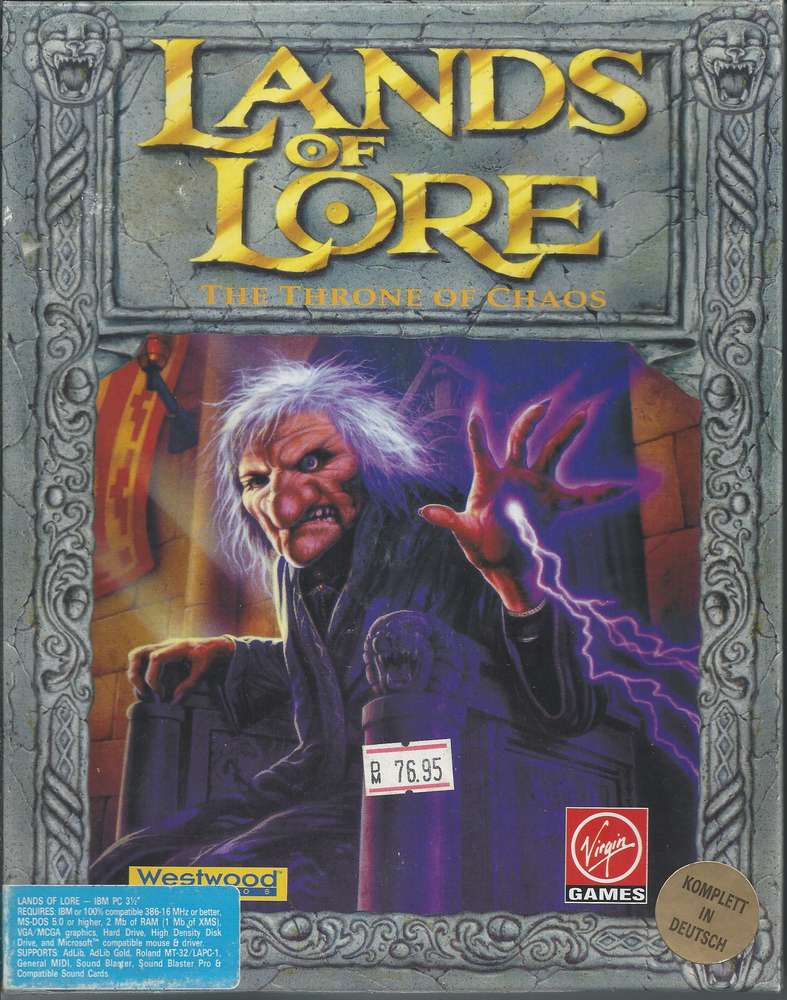
The humble beginnings of the grid-based dungeon crawler now see new life due to an explosion of indie titles.
The genre went back underground following the onslaught of first-person shooters, seeing few releases of note for several years. That is, until the 2012 indie title Legend of Grimrock reignited interest in this particular style of gameplay. Grimrock opened the floodgates for dozens of similar grid-based CRPGs in the indie gamespace.
Vaporum is a 2017 entry into the rediscovered realm of dungeon crawlers from small Slovakian developer Fatbot Games. Over the last couple years, the game has undergone many improvements, and has now found a new life on consoles. This week brought us console releases on Xbox One, Playstation 4, and the Nintendo Switch. So – how is it? Let’s lace up those corsets and dig right in.
Full Steampunk Ahead
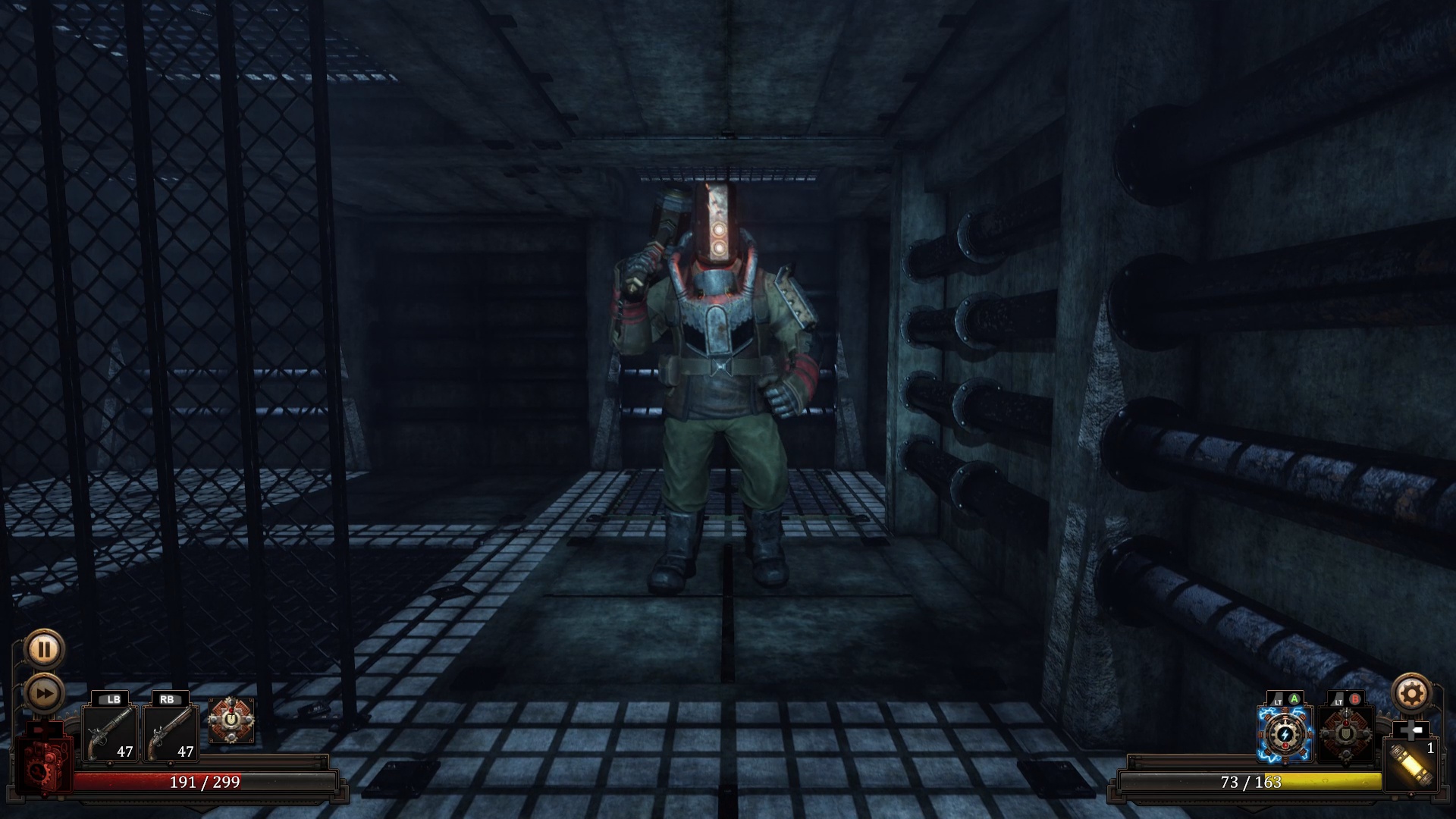
Rather than controlling a party of adventurers, Vaporum players are stuffed into the clanky brass boots of a single survivor. After waking up on a particularly cozy patch of wet rocks, our intrepid roach-wrecker realizes he has a clear choice to make: either step inside the doors of this unwashed mechanical nightmare, or await a murky death at the bottom of the sea.
Our mouse-mashing hero proceeds to double duty as the titanic tower’s handyman- rearranging cargo, fixing engines, and eradicating various other OSHA hazards throughout his journey. At every turn, he battles a variety of horrific delusions: overgrown cockroaches, bloodthirsty spider-toasters, and even the odd psychotic lamp. Truly, Vaporum aims to place the player face to face with the terrifying repercussions of a massive memory-loss-causing head wound.
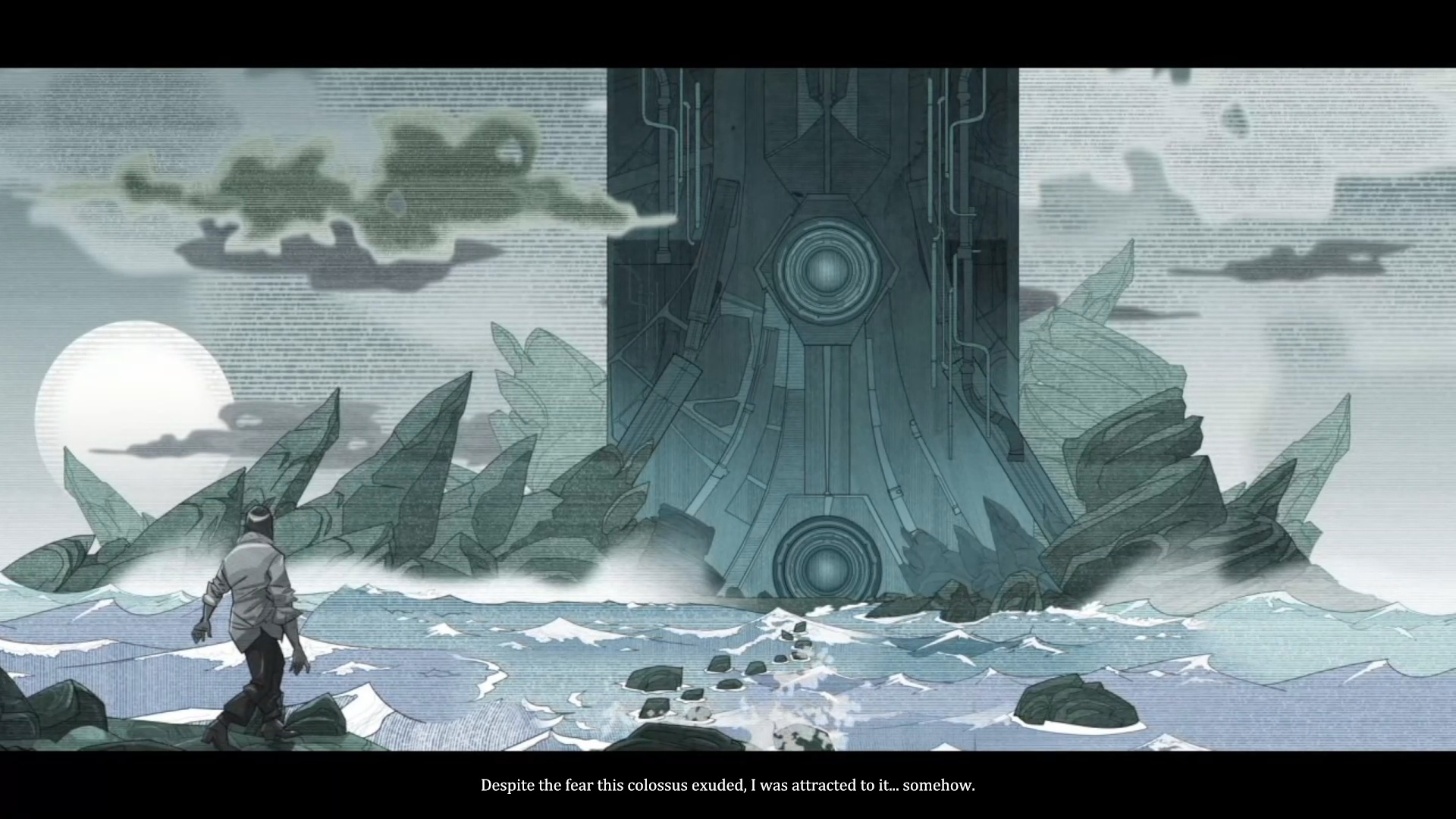
During the game’s tutorial, you strap yourself into one of four different work rigs, roll up your cummerbund, and get to work. Combat generally plays out in real-time, with actions, movements and attacks having both a wind up and a cooldown, but the action can be paused at the tap of a button when encounters get hot.
Stick It To Em
The addition of native controller support is an excellent one. Since Vaporum lands squarely in a genre long dominated by keyboard and mouse controls, I was blown away by how well this works. Left Trigger is mapped as a sort of modifier key for major functions, and Right Trigger brings up a free cursor to help suss out secret buttons and levers. Inventory management is also fairly minimal. Grid movement on a joystick can feel a little strange at first, but once accustomed to it, you’ll be flying down Vaporum’s rusty hallways and sidestepping its angry denizens with ease.
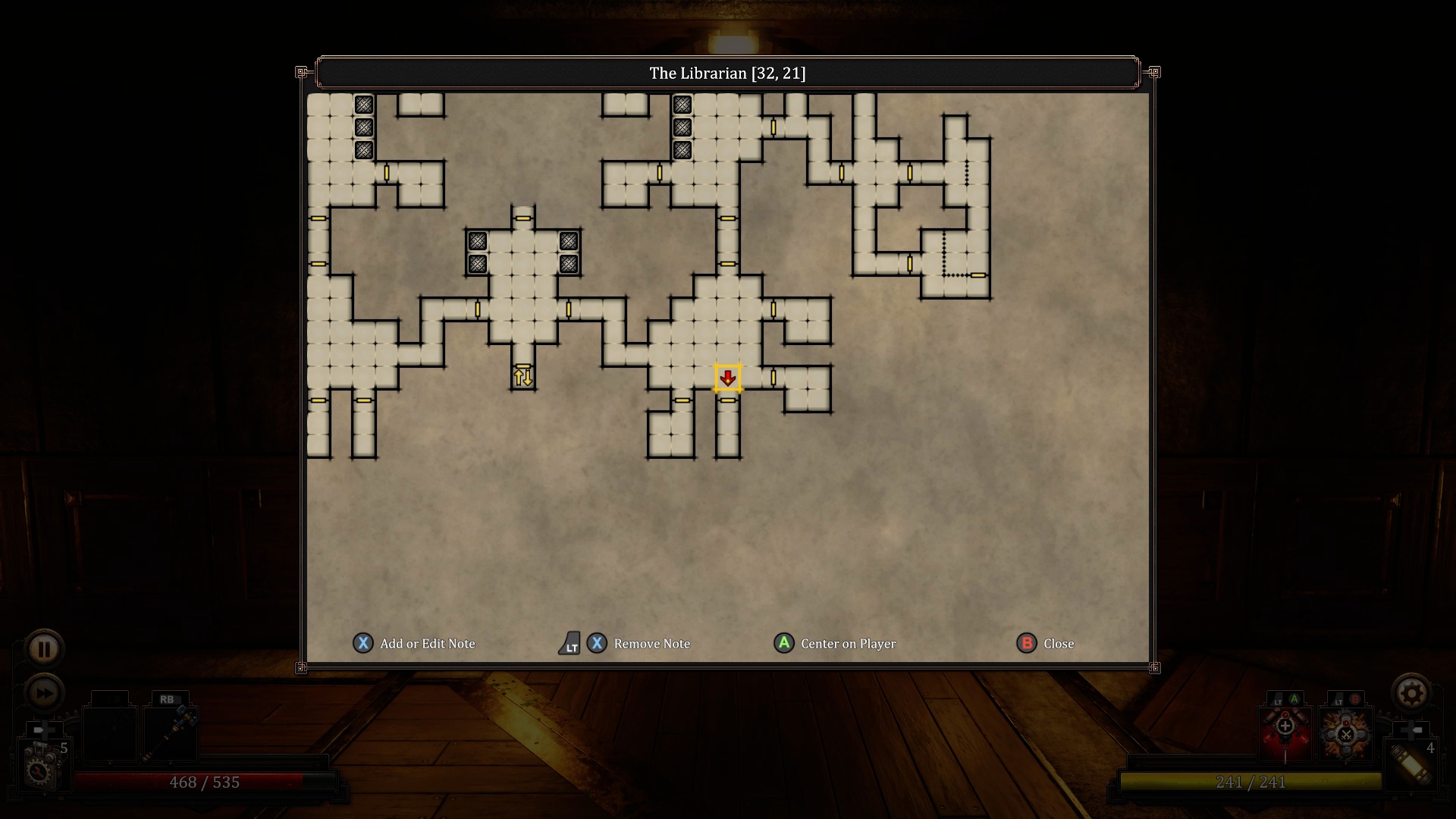
Navigation isn’t all sunshine and rainbows. Vaporum completely lacks a compass, and the automap feels pretty bare-bones. Even the creaky old dungeon crawlers it emulates had better versions of these features. As it is, players might find themselves referring to the map pretty often, which can break up the action.
Down to the Nuts and Bolts
Visually, Vaporum approaches style over realism. I mean, we are talking about a fantasy steampunk horror setting, here. There’s a good amount of detail in the environments. Various valves and other greebles line the walls and help bring the setting to life. The odd stray toolbox, forgotten book, or discarded trinket gives the game a lived-in look. There’s a few lackluster textures here and there, but the style is quite cohesive – even if it can be a bit dark.
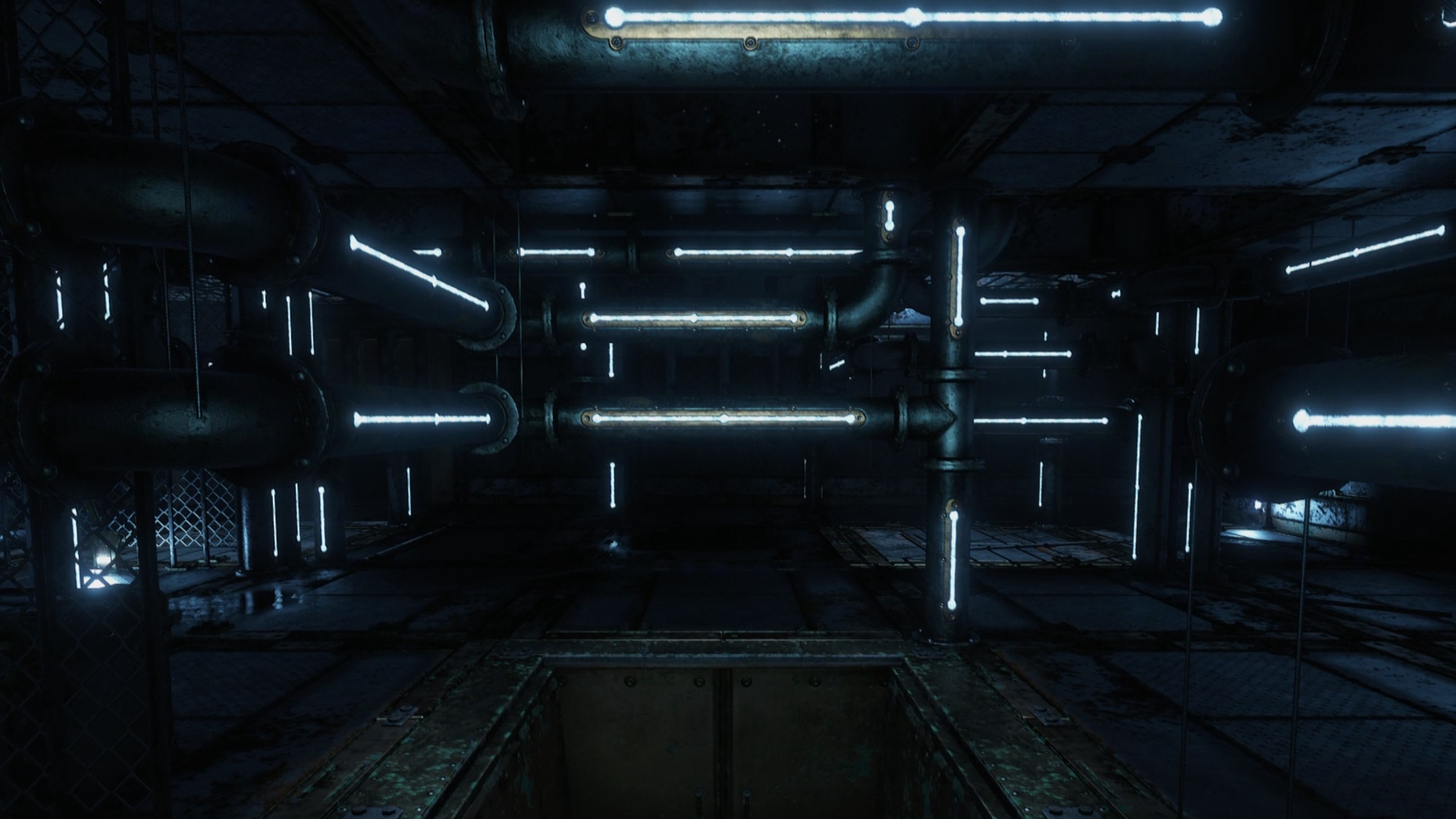
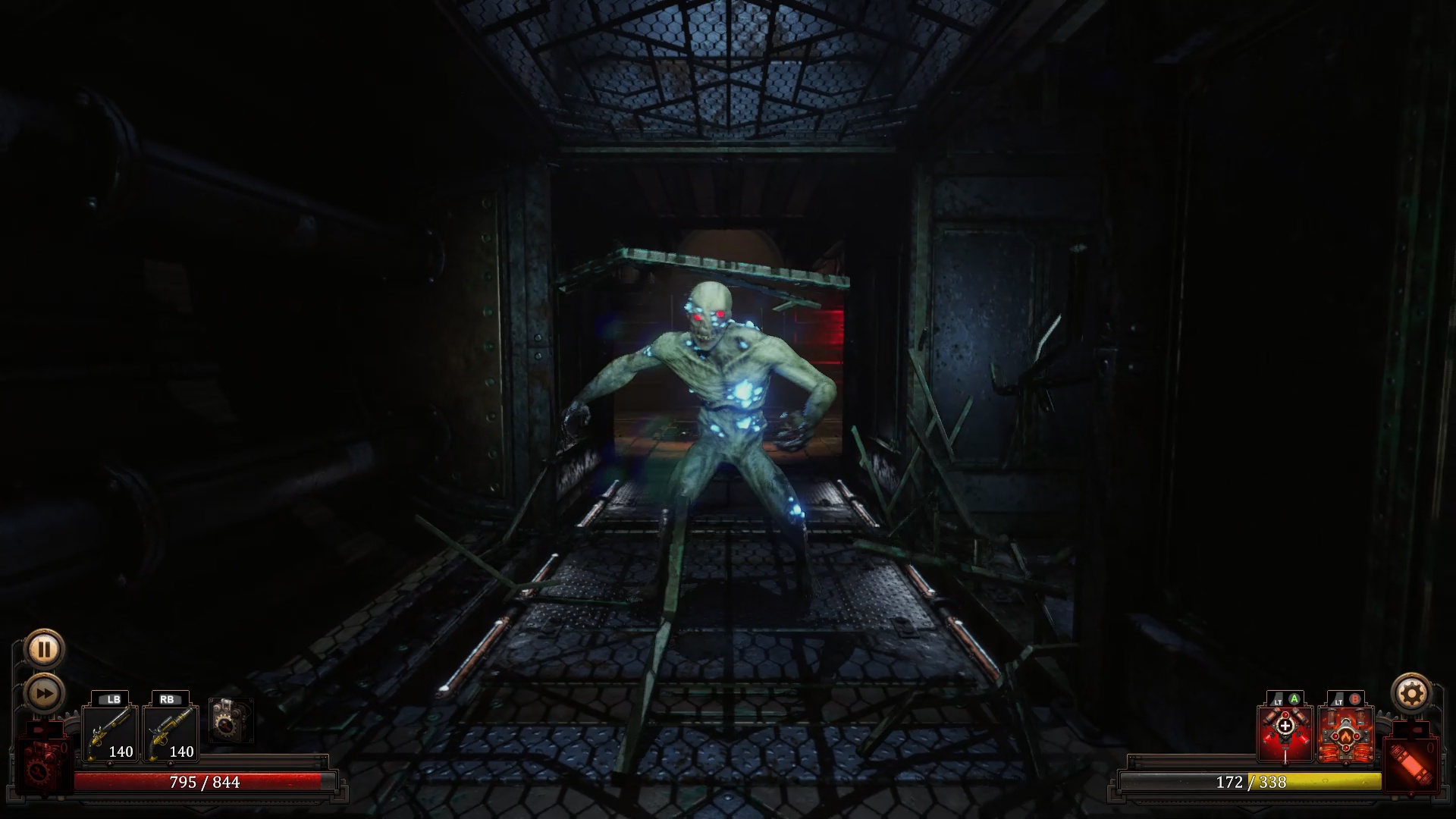
Enemy models have some unique designs that fit the theme, sporting brass cogs and smoking furnaces galore. There’s occasional stiff animations when an enemy is moving, likely exacerbated by Vaporum’s grid-based movement system. It would have been nice to have some sort of swinging animation for the weapons rather than just the white streak that flashes across the screen, but this is a pretty common approach to weapon animations in crawlers of this caliber – and overall a small nitpick.

On the sound side, Vaporum has fairly adequate effects. There’s a satisfying clang when club meets automaton, or when your rig gadgets send forth waves of lightning. Music is nearly nonexistent, save for some industrial noise track during boss fights and a very catchy main menu song. This subtle approach definitely lends itself to the horror overtones, but I still would have liked a little more mood music.
The game also contains a fairly large amount of voicework throughout its short length. Most of these reside in the internal dialog of the player character, and audio logs that litter the environments (as seen in Bioshock or System Shock). The voiceover work serves to add a step of polish and immersion, and helps Vaporum rise above the normal expectation of a small-team indie game.
Vaporum Skill Emporium
First and foremost: this game will wreck you. Even on Normal difficulty, players are going to be tested. Each enemy encounter can easily bring your hapless handyman to his knees, or drain your scarce resources. On the bright side, there’s numerous difficulty settings, including a casual mode that makes combat completely trivial and allows Vaporum to be completed as a puzzle game.
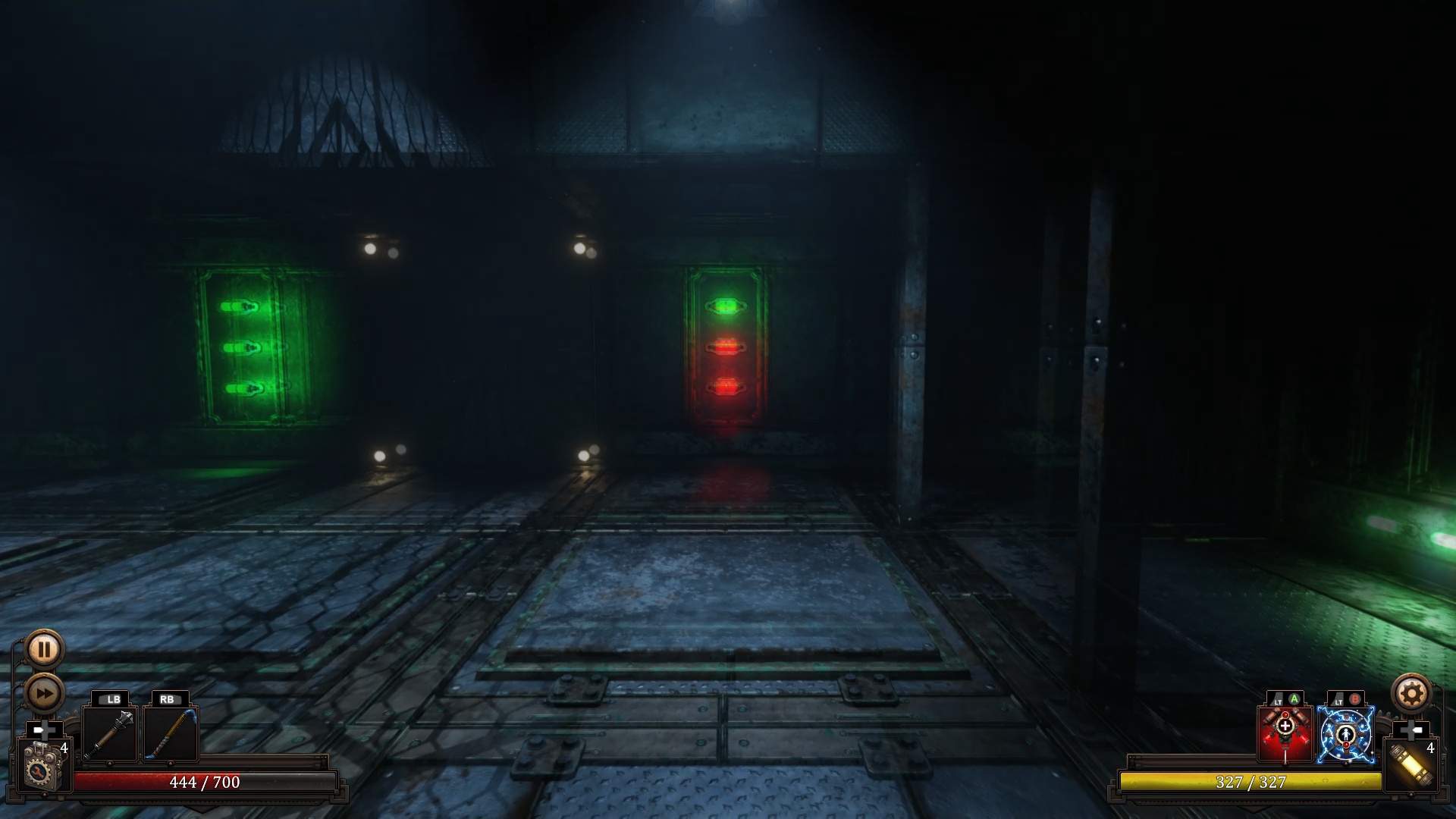
Several of Vaporum‘s devious riddles stand between you and the top of the spire. While most of these are well-constructed and enjoyable, several involve some tedious crate-pushing. For me, the box shoving puzzles were the most frustrating, and brought the game’s pace to a crawl.
On the bright side, many of the levels also contain secrets (and some contain secrets within secrets), which is naturally where all the best stuff can be found. The completionist in me felt compelled to poke and prod at the game’s dark corners in search of hidden switches and concealed treasures – well worth it considering the risk that combat presents.
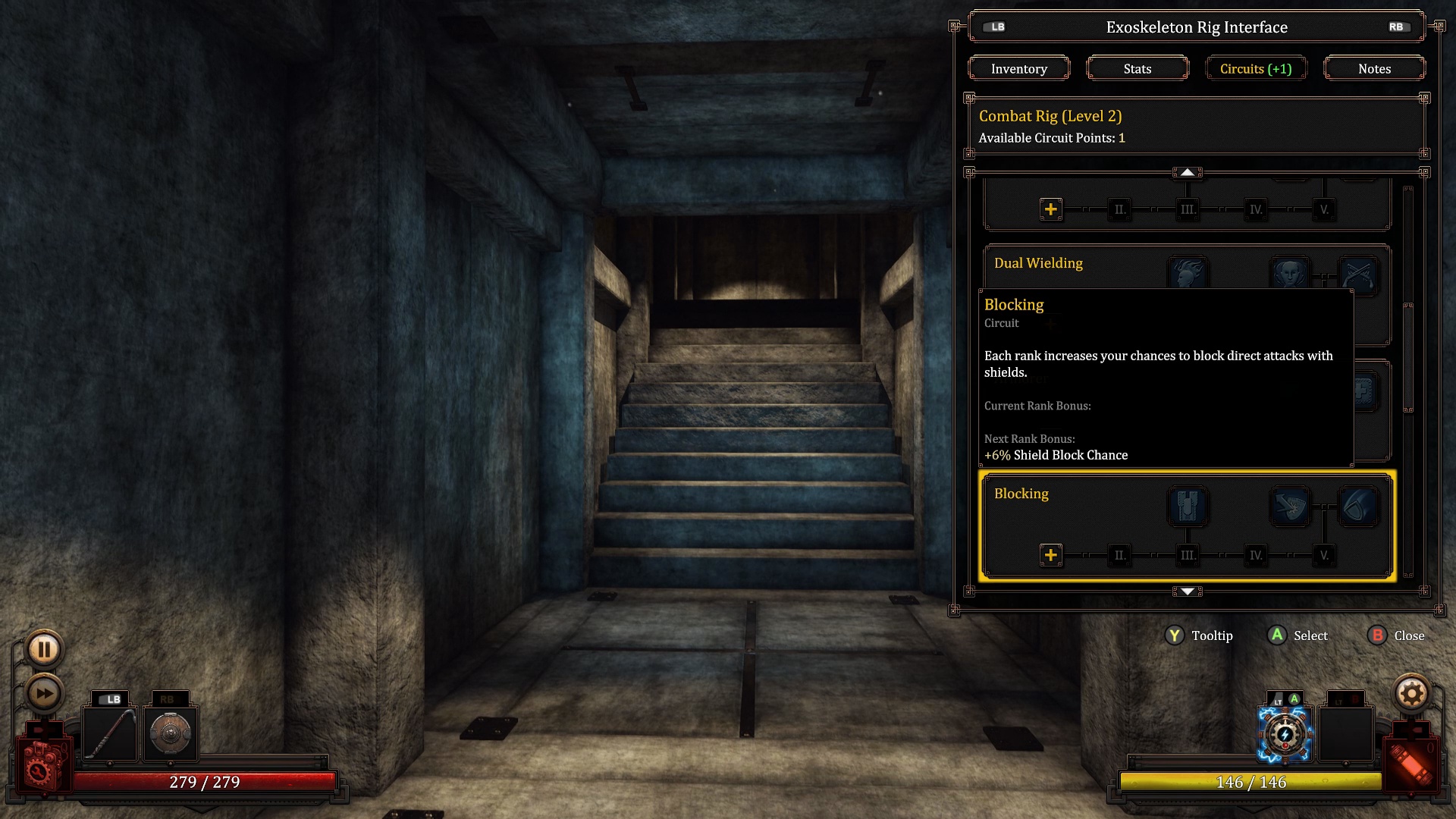
Vaporum has a heaping amount of skill trees to focus on, and the early choices are the most important ones. You’ll need to zero in on one or two trees at most, and at least one of those should involve survivability. I loved how the skill bonuses gave out some nice meaty numbers, making it feel like an accomplishment upon level up. Unfortunately, Vaporum keeps with true old-school design and offers no respec option, so be warned: you’ll be forced to live with your choices.
Bot Bashin’
Once I gained enough experience – uh, “Fumium” to flesh out my rig build, the combat became pretty enjoyable. I went with a dual-wield build, and two-fisting flintlocks or pummeling the various bots and abominations with clubs and crowbars was pretty satisfying. The enemies tend toward damage sponginess, but encounters are normally small. Therefore, you’ll have to learn to sidestep your way around combatants to defeat them with a sound combination of positioning, attacks, and ability use.
Oh Heal No
Much of Vaporum’s challenge lies in the lack of healing skills. Repair kits are hidden in the levels or dropped by enemies, but are precious few. Abilities can be attained in the mid-game to drain life from foes, but the risk of combat must be weighed carefully. Unlike many old-school crawlers, there’s no rest feature or healing spells. By leaning on puzzles and exploration and making battles risky, Vaporum has much more in common with survivor-horror game mechanics than it does with the dungeon hacks of old.
Vaporum Escaporum
While it’s easy to dismiss 2017’s Vaporum as another “me-too” entry, Fatbot Games has taken heavy strides to differentiate their dungeon diver from the growing pack. Vaporum leans towards a Lovecraftian survival-horror approach, and coats it in a grimy steampunk veneer. For those looking to face down armed automatons and brutal behemoths within a labyrinth of perplexing puzzles, this is a solid choice. And for those that are looking for a challenge, they will certainly find it here.
- Chandon, also known as Bawss Sawss, has an embarrassingly large Steam library. He’s also a sauce aficionado, gamer, writer, musician, and one head of the 2 Headed Hero gaming channel on YouTube. He can be reached on Twitter, Instagram, or Facebook. NEW!! You can now directly email questions/concerns/playful insults to [email protected] !
- 2 Headed Hero’s quieter half, Rollinkunz, is the channel’s illustrator, gamer, writer, and boardgame designer, He can also be reached on Twitter, Instagram, or Facebook.